

Tech startups are racing to scale their operations, but most are leaving their digital doors wide open. Ransomware attacks on small businesses jumped 13% year-over-year in 2025, and the average cost of a data breach now exceeds $4.45 million.
At Tower Insurance Associates, Inc., we’ve seen too many founders learn this lesson the hard way. Cyber liability startup insurance isn’t optional anymore-it’s a business necessity.
Why Cyberattacks on Startups Aren’t a Future Problem-They’re Happening Now
The Numbers Tell a Stark Story
The threat isn’t theoretical. In 2025, the US saw 3,322 data compromises with roughly 297.5 million breach notices, and we’re only six months into 2026-the total incidents already exceed all of 2025, according to the Identity Theft Resource Center. Ransomware attacks targeting small businesses jumped 13% year-over-year in 2025, and 43% of all internet attacks now target small businesses. For tech startups with limited security budgets and skeleton IT teams, this reality is brutal. The average cost of a data breach in 2025 hit $10.22 million, with healthcare breaches averaging $7.42 million per incident according to IBM’s Cost of a Data Breach report. Even a mid-sized breach can drain cash reserves in weeks.
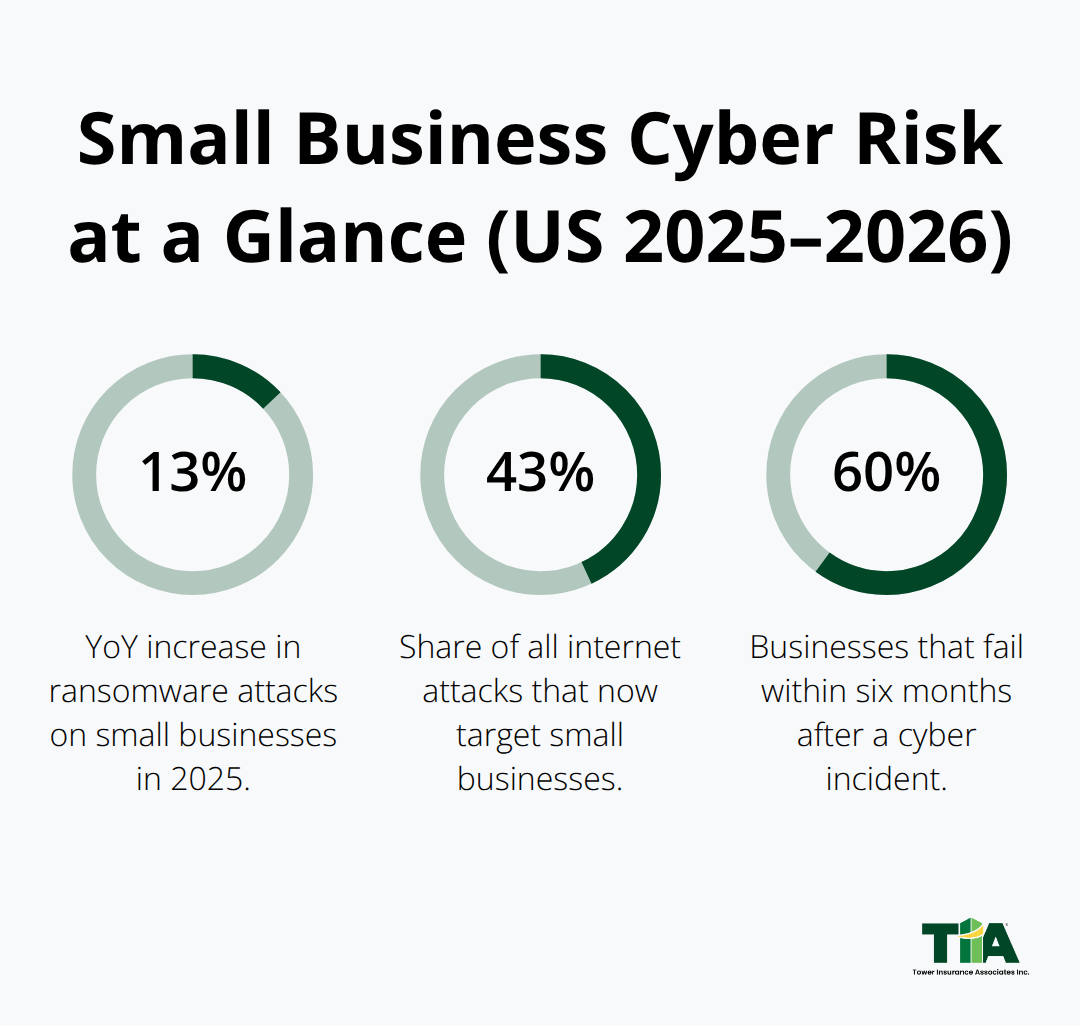
About 60% of businesses fail within six months after a cyber incident, which means your startup doesn’t get a second chance to recover.
Where Startups Fall Short on Security
Startups face specific vulnerabilities that larger competitors can absorb. Only 14% of small firms equip themselves against cyber threats, leaving the rest dangerously exposed. Your team likely reuses passwords across services, stores customer data in cloud environments without multi-factor authentication, and relies on third-party integrations-each a direct path for attackers. The MOVEit Transfer vulnerability in 2023 affected 93 million individuals across 2,700+ organizations, demonstrating how a single compromised vendor tool can expose tens of thousands of records overnight.
How Breaches Start at Companies Like Yours
The Target breach started with stolen credentials from an HVAC contractor; the Capital One breach stemmed from a misconfigured cloud environment. Startups rarely have the resources to catch these mistakes before attackers exploit them. Your founders focus on product development and revenue, not continuous security monitoring. That gap between your startup’s actual risk and your security posture is where attackers operate. This vulnerability gap also explains why cyber liability insurance becomes your financial lifeline when an incident strikes-not if, but when.
What Cyber Liability Insurance Actually Pays For
Forensic Investigations and Breach Notification
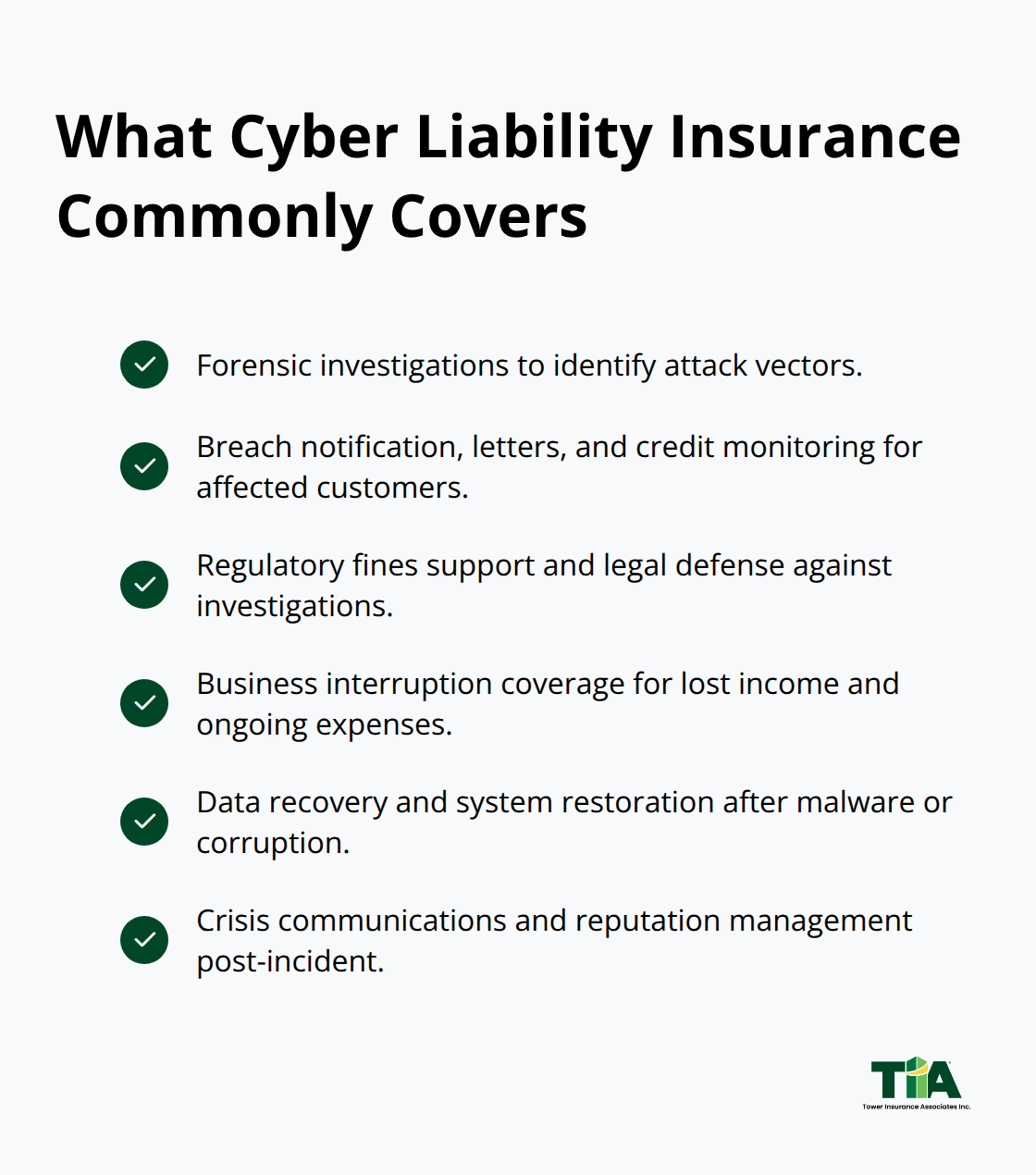
When a breach hits your startup, cyber liability insurance covers the financial fallout that most founders don’t anticipate. The policy pays for forensic investigations to determine how attackers entered your systems, often costing around $45,000 per incident depending on complexity. It covers breach notification expenses-the legal requirement to contact affected customers, which includes credit monitoring services, notification letters, and call-center support. For a startup handling customer data, these notification costs alone can reach $100,000 to $500,000 when you notify thousands of people.
Regulatory Fines and Legal Defense
The policy covers regulatory fines and defense costs if state attorneys general or the FTC investigate your incident. If your startup processes payment cards, PCI compliance violations can trigger fines up to $100,000 per month. Cyber liability covers your legal defense against these penalties, though defense costs count against your policy limits-heavy legal spending reduces money available for settlements. First-party coverage includes breach response costs, though confirm your policy includes specific endorsements like Breach Response or Event Management coverage before you need them.
Business Interruption and Revenue Recovery
Business interruption losses transform cyber liability into a financial lifeline for startups. If ransomware locks your systems for days or weeks, your revenue stops but your expenses continue. Cyber liability covers lost income during downtime, ongoing payroll, rent, and vendor payments while you remain offline. The average ransomware attack takes 21 days to resolve, meaning a startup generating $50,000 monthly in revenue faces $35,000 in unrecovered losses plus recovery costs.
Data Recovery and Crisis Communications
Digital data recovery coverage reimburses you for restoring corrupted files and rebuilding software when malware destroys your infrastructure. Crisis communications and reputation management are also covered-your startup receives professional help managing media inquiries and customer communications after a breach. A botched public response after an incident often costs more in lost customers than the breach itself, making this coverage essential for protecting your brand and customer relationships.
Your startup’s data recovery timeline and recovery costs should guide your coverage limit selection, because underestimating business interruption exposure becomes an expensive mistake later. The next section examines why so many founders delay purchasing this protection despite these clear financial risks.
Why Founders Think They Don’t Need Cyber Insurance Yet
The Size Misconception
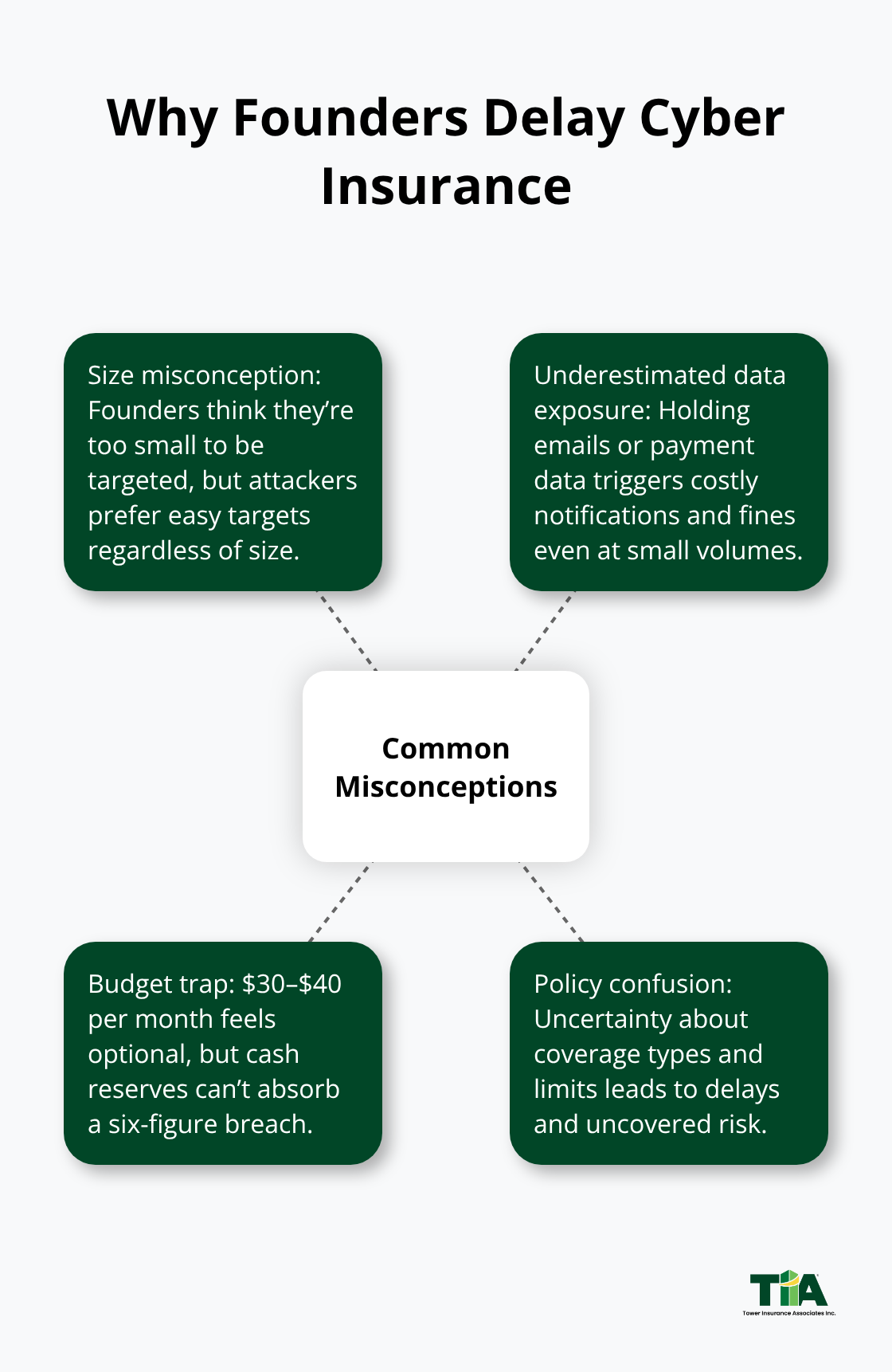
Most founders believe their startup is too small to attract attackers. This misconception is dangerous and wrong. Attackers don’t discriminate by company size-they exploit whatever target is easiest. The Hiscox Cyber Readiness Report found that small-to-medium US companies face at least one cyberattack per year, yet 43% of all internet attacks target small businesses specifically because attackers assume they lack robust defenses. Your startup’s skeleton IT team and limited security budget make you an attractive target, not a safe one.
Underestimating Your Data Exposure
Startups consistently underestimate their data exposure. If you process customer payments, store email addresses, or maintain user accounts, you hold personal data that regulators care about. A breach affecting even 500 customers triggers notification requirements and potential regulatory fines-costs that can exceed $200,000 before your policy even pays a settlement. Many founders think cyber insurance is a luxury for Fortune 500 companies managing massive datasets, but the reality is that startups face proportionally higher financial impact from breaches because your cash reserves cannot absorb a $500,000 incident.
The Budget Trap
Early-stage founders juggle limited capital across product development, marketing, and hiring. Cyber liability premiums seem like an unnecessary expense when you could hire another engineer instead. This calculation ignores that cyber insurance costs as little as $30 to $40 per month for small startups with $250,000 coverage limits and a $10,000 deductible-roughly the cost of a single cup of coffee daily. The real expense isn’t the premium; it’s the uninsured breach. 60% of businesses fail within six months after a cyber incident, which means your startup doesn’t survive a major attack without financial protection.
Policy Confusion and Coverage Gaps
Many founders don’t understand what cyber liability actually covers or how policies differ across carriers. You might assume cyber insurance only pays for breach notifications, missing that it covers forensic investigations, regulatory defense, business interruption losses, and data recovery-the actual expenses that drain your cash reserves. Policy options range from standalone cyber liability to bundled management liability packages that include cyber coverage alongside general liability and other protections. Without clear guidance, founders postpone purchasing coverage because they’re unsure what they need, how much it costs, or which carrier fits their risk profile.
Final Thoughts
Waiting to purchase cyber liability startup insurance is a financial decision your startup cannot afford. A single ransomware attack or data breach costs $200,000 to $500,000 in forensic investigations, breach notifications, regulatory fines, and business interruption losses-amounts that destroy most early-stage companies. Your cash reserves cannot absorb this impact, and 60% of businesses fail within six months after a cyber incident, so the math is simple: cyber liability insurance costs $30 to $40 monthly, while an uninsured breach destroys your company.
Choosing the right coverage means matching your policy to your actual data exposure and business model. If you process customer payments or store user information, you need coverage that includes breach response costs, regulatory defense, and business interruption protection. Your coverage limits should reflect your revenue and the volume of customer data you handle, since a startup generating $100,000 monthly needs higher business interruption limits than one still in pre-revenue mode.
Start by assessing what data your startup collects and processes-map your customer information, payment card data, and employee records. Then contact an independent insurance agency that represents multiple carriers and understands startup risk profiles. We at Tower Insurance Associates, Inc. have guided startups through this process since 1961, and we can help you select tailored cyber liability coverage that fits your budget and risk exposure.
Disclaimer: This blog post is for general informational purposes only and does not represent actual coverage, policy terms, or legal requirements. Insurance details vary by individual and jurisdiction. Please consult a licensed insurance professional for advice specific to your situation.