

Law firms face mounting pressure from client disputes, missed deadlines, and procedural errors that can devastate both finances and reputation. Legal professional liability claims are becoming more frequent, with firms of all sizes vulnerable to costly litigation.
At Tower Insurance Associates, Inc., we’ve seen firsthand how the right risk management strategies and insurance coverage protect firms from these threats. This guide walks you through practical steps to safeguard your practice.
What Qualifies as Legal Professional Liability
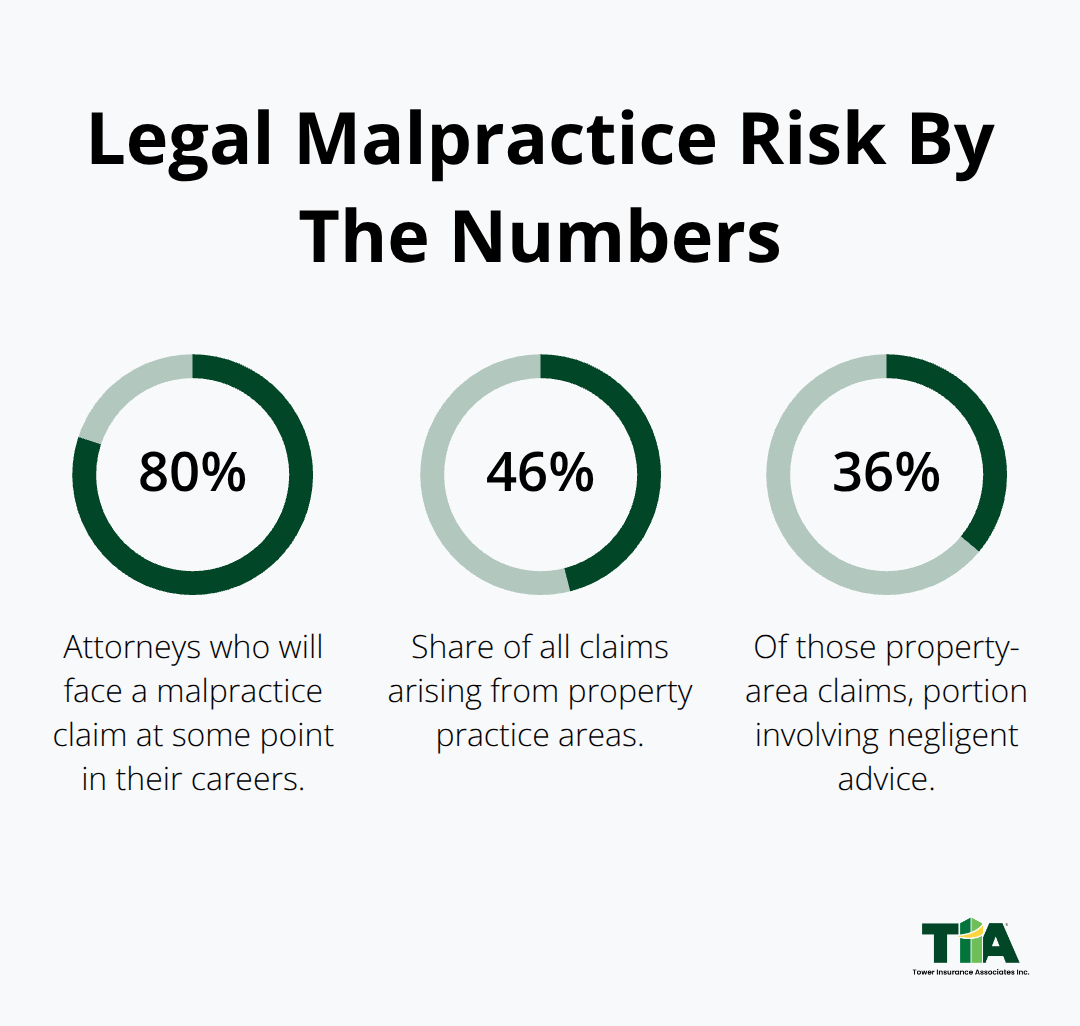
Legal professional liability occurs when an attorney’s negligence, breach of fiduciary duty, or breach of contract directly harms a client. The ABA reports that approximately 80% of attorneys will face a malpractice claim at some point in their careers, making this risk far from theoretical. Coverage protects against defense costs, settlements, and judgments when clients allege that your firm failed to meet the standard of care. The standard itself varies by practice area and jurisdiction, but it centers on what a reasonably competent attorney would do under similar circumstances. Property practice areas account for about 46% of all claims, with negligent advice comprising roughly 36% of those claims, according to claims data tracking 15-year trends in solicitor litigation. This concentration means firms handling real estate, wills, estates, or transactional work face elevated exposure compared to other practice areas.
Why Deadline Failures Create Massive Liability
Missed deadlines and court filing failures rank among the top malpractice triggers. High caseloads and staff turnover correlate directly with increased claims because no single person takes ownership of calendar management. When a statute of limitations passes or a court filing deadline is missed, your client loses legal rights that cannot be recovered through settlement or negotiation. The damage is irreversible and often substantial, making these claims both frequent and expensive to defend. Implementing case management software with automated calendar reminders and appointing a dedicated case lead for each matter reduces this risk dramatically. Without these systems, even competent lawyers lose claims to administrative failure.
Common Errors That Drive Claims
Lack of knowledge of the law ranks as the leading cause of malpractice claims, particularly when attorneys spread themselves across unrelated practice areas without adequate expertise. Inadequate investigation and discovery-failing to obtain all relevant information before advising settlements-creates claims when clients later discover stronger positions they could have negotiated. Planning errors, such as failing to prepare effective motions or anticipate likely case outcomes, undermine strategy and create liability when cases resolve unfavorably. Poor client intake processes allow misaligned expectations to fester from day one. The financial impact extends beyond defense costs; regulatory investigations by state bars often accompany claims, potentially triggering disciplinary actions that suspend or revoke licenses. A single claim can cost $50,000 to $200,000 in defense expenses alone, regardless of outcome.
How Firms Prevent These Costly Mistakes
Firms that maintain depth in relevant practice areas and avoid spreading resources too thin across unrelated fields significantly reduce exposure. Strengthening client intake and case evaluation processes from the start aligns applicable law, remedies, and expectations with client needs. Conducting thorough discovery planning and information requests before advising settlements prevents weak or premature settlements that later trigger claims. Establishing clear escalation, review, and risk assessment steps for critical motions and strategic decisions protects case outcomes. Using standardized checklists for deadlines, filings, and discovery milestones reduces human error and administrative failures.
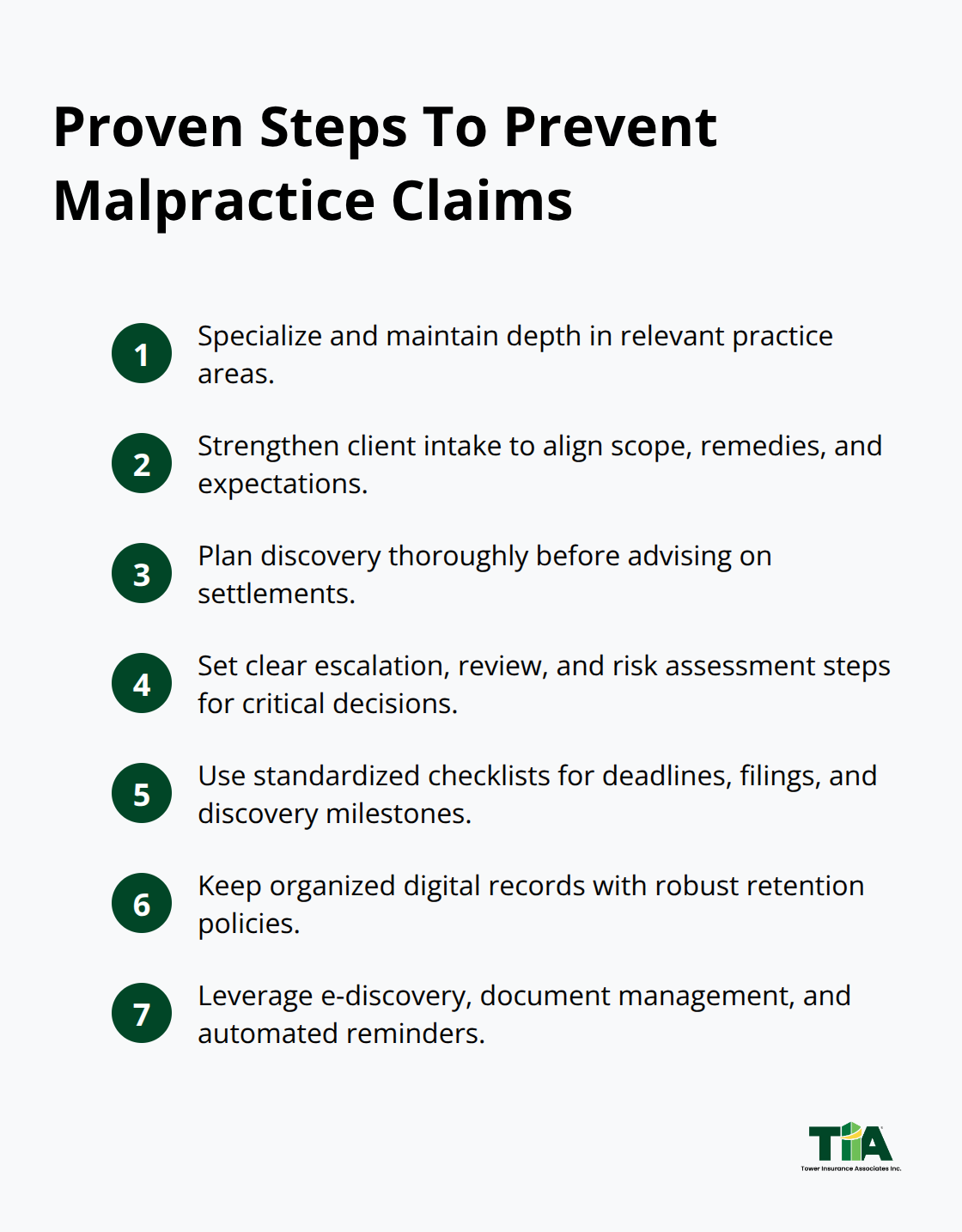
Keeping organized, accessible digital records and implementing robust document retention policies supports both discovery and defense when claims arise. Leveraging technology such as e-discovery tools, document management systems, and automated reminders minimizes risk across your entire practice.
The Role of Insurance and Professional Support
Professional liability insurance protects your firm when claims occur, covering defense costs and judgments that can reach six figures. Maintaining malpractice insurance and implementing a case-prevention program identifies and mitigates risk factors early before they escalate into disputes. Developing internal protocols for responding to potential malpractice claims-including client communications and remediation steps-demonstrates good faith and often reduces settlement amounts. Geographic and local rule awareness (such as jurisdiction-specific practices and court rules) influences malpractice risk and prevention strategies. Working with a lawyer who specializes in professional liability helps you navigate claims when they arise, protecting both your firm’s interests and your clients’ rights.
The specific coverage options available to your firm depend on your practice areas, firm size, and risk profile. Understanding what your policy covers and how claims professionals support your defense becomes essential when disputes emerge.
How to Stop Claims Before They Start
Clarify Your Scope From Day One
Strong client communication prevents misunderstandings that transform into disputes, and it starts the moment a prospect walks through your door. Your intake process must clarify exactly what work you will and will not perform, what outcomes are realistic, and what fees apply to each phase of the engagement. A written engagement letter accomplishes this, but many firms treat it as a formality rather than a risk-control tool. The letter should specify the scope of representation, explain what services fall outside your agreement, address communication frequency and methods, and outline fee structures with billing increments. When clients understand boundaries upfront, they rarely claim surprise later.
Maintain Regular Contact Throughout the Matter
Follow up this initial clarity with regular status updates throughout the matter, especially when delays occur or strategy shifts. High-caseload firms skip these updates to save time, then face claims when clients feel abandoned or blindsided. The cost of a ten-minute phone call is negligible compared to defending a claim alleging you failed to keep them informed. Document every significant conversation in writing, whether through email summary or case notes, because your defense later depends on proving you communicated clearly and kept the client engaged.
Implement Second-Review Processes for Critical Work
Quality assurance systems separate firms that catch errors before they harm clients from firms that discover problems only after damage occurs. Establish a second-review process for all critical documents-pleadings, discovery responses, settlement agreements, and closing documents-before they go to court or the other party. Smaller firms resist this because it feels inefficient, but one missed deadline or drafting error costs far more in claims defense than the hours spent on review. Create standardized checklists tied to specific practice areas so reviewers know exactly what to verify.
Audit Files Regularly and Track Near-Misses
Conduct monthly file audits on a rotating basis, pulling random matters to check for deadline compliance, discovery completeness, and documentation standards. Track your own near-misses: when someone almost missed a deadline or almost made an error but caught it, log that close call and adjust your systems accordingly. These near-misses reveal where your firm is vulnerable before claims materialize. Staff training on local court rules, procedural deadlines, and your firm’s internal standards must happen annually, not just during onboarding. Geographic and jurisdictional variations create traps-New Jersey courts apply different rules than federal courts, and missing that distinction costs claims.
Build Systems That Demonstrate Competence
When you invest in these systems now, your records demonstrate competence and good faith effort when claims do occur, and your defense costs drop dramatically. The documentation you create through engagement letters, status updates, file reviews, and audit trails becomes your strongest defense. These same systems also reveal patterns across your practice-if certain practice areas generate more near-misses, you can reallocate resources or add training before exposure becomes liability. Understanding what professional liability coverage includes and how claims professionals support your defense becomes essential when disputes emerge, which is why the next section walks you through coverage options and claims management.
What Your Professional Liability Policy Actually Covers
Claims-Made Policies and Coverage Gaps
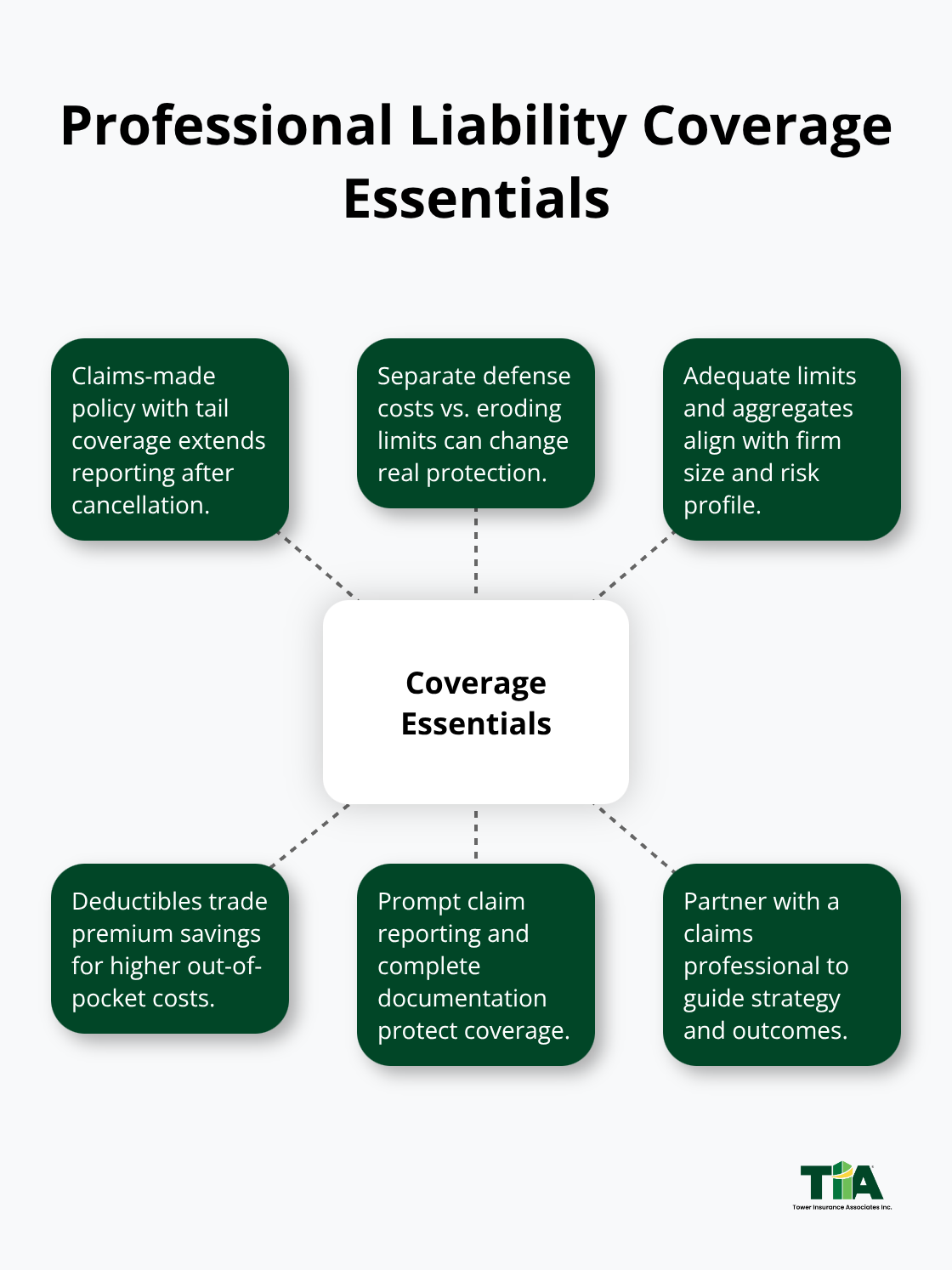
Your professional liability policy operates on a claims-made basis, which means it covers only incidents reported during the active policy period or within the extended reporting period (tail coverage) after the policy ends. A claim filed in 2027 for work performed in 2024 may fall outside coverage if you let your policy lapse, creating a dangerous exposure window. Firms switching carriers face a critical coverage gap unless they purchase tail coverage before cancellation. The extended reporting period protects you retroactively, but only if you arrange it before your current policy terminates. Without tail coverage, prior acts remain unprotected indefinitely, and clients can file claims years after you stop representing them.
How Defense Costs Affect Your Real Coverage
Most policies for law firms include defense costs separate from policy limits, meaning your carrier pays defense expenses on top of the liability limit itself, not from it. A $1 million limit with $300,000 in defense costs provides $1 million for settlement or judgment plus the defense spending, which dramatically changes the protection you actually receive compared to policies where defense costs reduce the limit. You must read your specific policy language because this distinction determines whether you can afford to defend a claim without depleting your coverage. Some carriers structure defense costs differently, so comparing policies requires attention to this detail. The difference between separate defense costs and costs that reduce your limit can mean hundreds of thousands of dollars in actual protection.
Policy Limits and Deductibles for Your Firm Size
Policy limits typically range from $250,000 per claim and $500,000 aggregate for solo practitioners and small firms, up to $5 million or higher for larger practices handling complex matters. The aggregate limit matters more than most firms realize because if you face two claims in one year, both pull from the same aggregate pool, and the first claim consumes part of your total coverage. Deductibles usually run between $2,500 and $25,000 per claim, with higher deductibles reducing your premium but forcing your firm to pay more out of pocket when claims occur. Your practice area and firm size determine what limits make sense; property practices with higher claim frequency need higher aggregates than specialized practices with fewer matters. Underinsurance leaves your firm exposed to personal liability when claims exceed your limits.
Reporting Claims and Working with Your Carrier
When a claim arrives, contact your carrier immediately and provide all documents related to the matter, including engagement letters, fee agreements, and case files, because delays in reporting can jeopardize coverage. Your claims professional becomes your advocate during disputes, reviewing the claim facts, identifying defense strategies, and managing the legal team assigned to your case. Many firms waste this resource by treating claims professionals as mere administrators rather than strategic partners who understand both your firm’s interests and the carrier’s claims patterns. Ask your claims professional what similar claims cost to defend, what settlement ranges typically look like for your practice area, and what factual weaknesses in the claim you should address early through documentation or client statements. The professional managing your claim has handled hundreds of similar disputes and knows which defenses work and which ones fail, so use that expertise to inform your firm’s response strategy from day one.
Final Thoughts
Legal professional liability claims threaten both your firm’s finances and reputation, but deliberate systems and proper insurance prevent most disputes from escalating into costly litigation. The firms that avoid malpractice claims share three core practices: they clarify scope and expectations in writing from day one, they implement quality assurance processes that catch errors before clients discover them, and they maintain professional liability coverage that protects against the claims that prevention cannot entirely eliminate. Your engagement letters, case management software, file audits, and second-review processes form the foundation of risk management, and these systems cost far less than defending a single claim or paying a judgment that exceeds your coverage.
Your professional liability policy fills the gap that prevention cannot eliminate entirely, and understanding your policy limits, deductibles, defense cost structure, and claims-made coverage prevents surprises when disputes emerge. Extended reporting periods protect you after policy cancellation, and separate defense costs preserve your actual coverage for settlements and judgments (rather than reducing your limit dollar-for-dollar). Working closely with your claims professional transforms them from an administrator into a strategic partner who guides your defense based on patterns across hundreds of similar claims.
Audit your current insurance coverage against your firm’s actual exposure, strengthen your internal systems if gaps exist, and contact an insurance professional who understands legal practice. Tower Insurance Associates, Inc. represents multiple top-rated carriers and can help you find tailored coverage at competitive pricing to protect your practice from legal professional liability exposure. Visit us today to discuss your firm’s specific needs and secure the protection your practice requires.
Disclaimer: This blog post is for general informational purposes only and does not represent actual coverage, policy terms, or legal requirements. Insurance details vary by individual and jurisdiction. Please consult a licensed insurance professional for advice specific to your situation.