

Healthcare professional liability claims are rising faster than ever. According to the National Practitioner Data Bank, medical malpractice payments exceeded $3.6 billion in 2023 alone.
At Tower Insurance Associates, Inc., we know that hospitals and practices face real exposure every single day. This guide walks you through the risks, the consequences, and the concrete steps you need to take right now to protect your organization.
What Healthcare Professional Liability Actually Covers
Healthcare professional liability insurance protects hospitals and practices from the financial devastation of malpractice claims. This coverage pays for legal defense costs, settlements, and judgments when a patient alleges that a healthcare provider failed to meet the standard of care. The scope extends beyond just physicians-it covers nurses, physician assistants, therapists, and other licensed practitioners. Most practices mistakenly assume their general liability policy handles malpractice exposure, but it doesn’t. General liability specifically excludes professional services, which makes separate professional liability coverage non-negotiable for any healthcare operation.
The Claims That Actually Happen
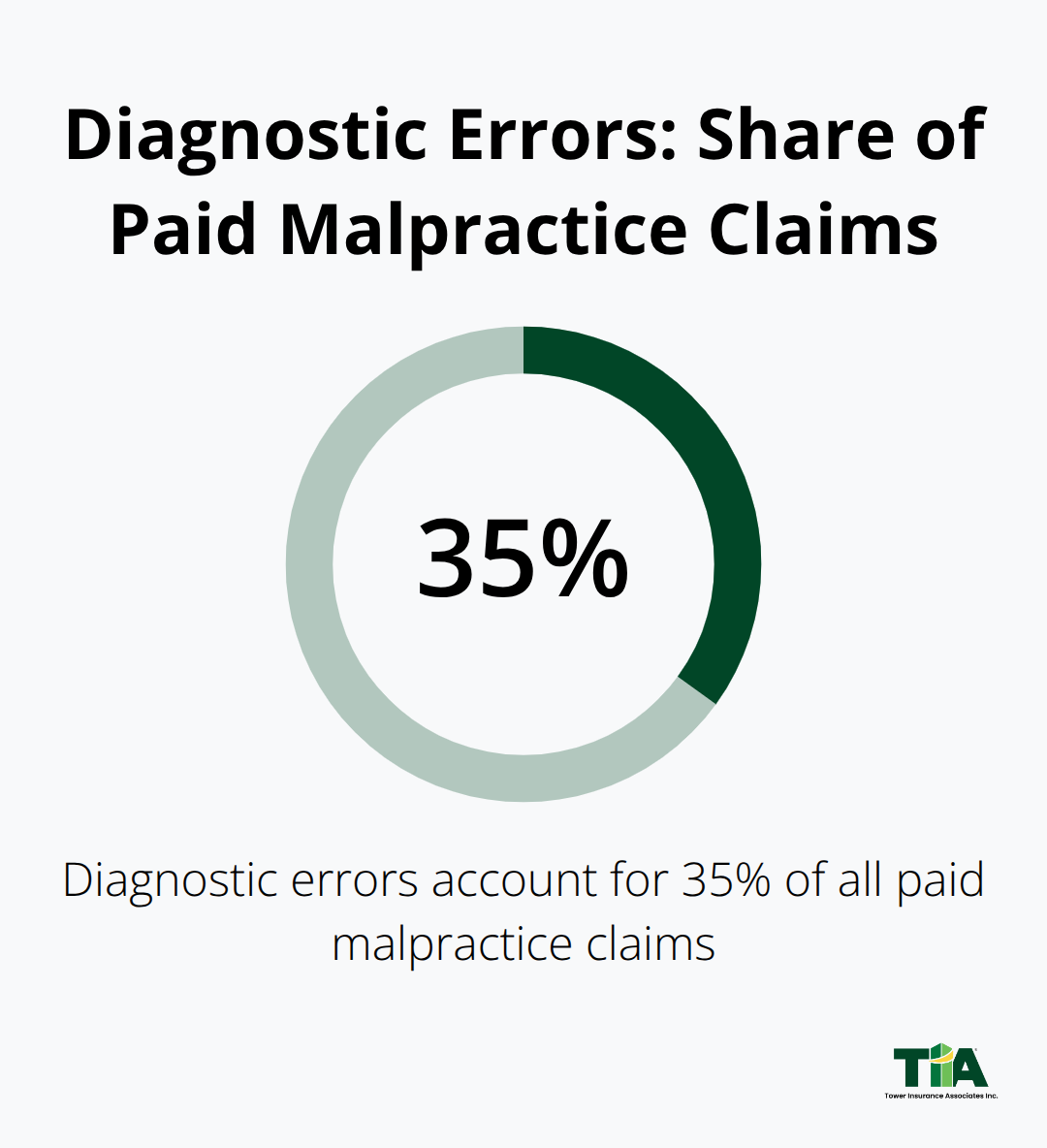
Diagnostic errors rank as the most frequent malpractice claim, accounting for roughly 35% of all paid claims according to the National Practitioner Data Bank. Misread imaging results, missed cancer diagnoses, or overlooked critical lab findings create enormous liability. Surgical complications represent another major exposure-wrong-site surgeries still occur despite safety protocols, and post-operative infections or unexpected bleeding lead to substantial claims.
Medication errors round out the top three, whether from prescribing errors, dispensing mistakes, or improper dosing. These aren’t theoretical risks. A single major claim can bankrupt a small practice or drain years of profit from a hospital.
The Real Financial and Legal Damage
Beyond the settlement or judgment amount, malpractice claims destroy operational capacity. Your staff spends time in depositions instead of seeing patients. Reputation damage extends beyond the immediate case-patients research provider histories online, and public records of settlements discourage future patient volume. Many practices face increased insurance premiums or coverage denials after a claim. Some states impose mandatory reporting to medical boards, which triggers investigations independent of the lawsuit itself. The legal process itself typically lasts 18 to 24 months, creating sustained uncertainty and stress for your entire organization.
These financial and reputational consequences reveal why proactive risk management matters far more than most practices realize. Understanding where errors happen most frequently-and what systems prevent them-separates organizations that weather claims from those that don’t.
Common Risk Areas in Healthcare Settings
Diagnostic Errors: The Largest Liability Exposure
Diagnostic errors dominate malpractice claims for a straightforward reason: they happen constantly and patients suffer real harm. The National Practitioner Data Bank shows diagnostic errors account for roughly 35% of all paid malpractice claims, making them the single largest liability exposure in healthcare. Misread CT scans, overlooked lab abnormalities, and delayed cancer diagnoses create massive financial exposure because the injury often compounds over time. A missed diagnosis doesn’t just cost the settlement amount-it damages provider reputation permanently and triggers board investigations.
The core problem isn’t that doctors lack competence; it’s that many practices rely on manual review processes instead of systematic double-checks. Radiology departments that implement mandatory peer review before finalizing reports see measurably fewer claims. Pathology services that require second reads on critical findings catch errors before they reach patients. These aren’t expensive interventions-they’re workflow changes that catch mistakes at the source.
Surgical Complications: The Second Major Liability Zone
Surgical complications represent substantial liability exposure, and the data here is equally stark. Wrong-site surgeries still occur despite universal protocol requirements, and post-operative infections drive significant claims. A 2022 analysis from the Journal of Patient Safety found that surgical site infections alone cost hospitals between $3,000 and $29,000 per infection, with liability exposure extending far beyond direct medical costs.
Infection rates correlate directly with documentation quality and adherence to sterile technique protocols. Hospitals that track infection rates by surgical team and publish results internally see dramatic improvements within six months. This transparency creates accountability and motivates teams to maintain higher standards consistently.
Medication Errors: Prevention Through System Design
Medication errors complete the liability trinity, occurring at prescription, dispensing, and administration stages. The Institute for Safe Medication Practices reports that medication errors affect roughly 1.5 million patients annually in the United States, with preventable adverse drug events costing the healthcare system approximately $16.6 billion per year.
Many errors stem from similar-sounding drug names or dosing miscalculations that electronic prescribing systems catch instantly. Practices still using paper charts or legacy systems face substantially higher error rates than those with modern EHR systems configured with drug interaction alerts and dosing calculators. The actionable insight here is simple: liability doesn’t come from isolated bad decisions-it comes from systems that allow preventable mistakes to reach patients.
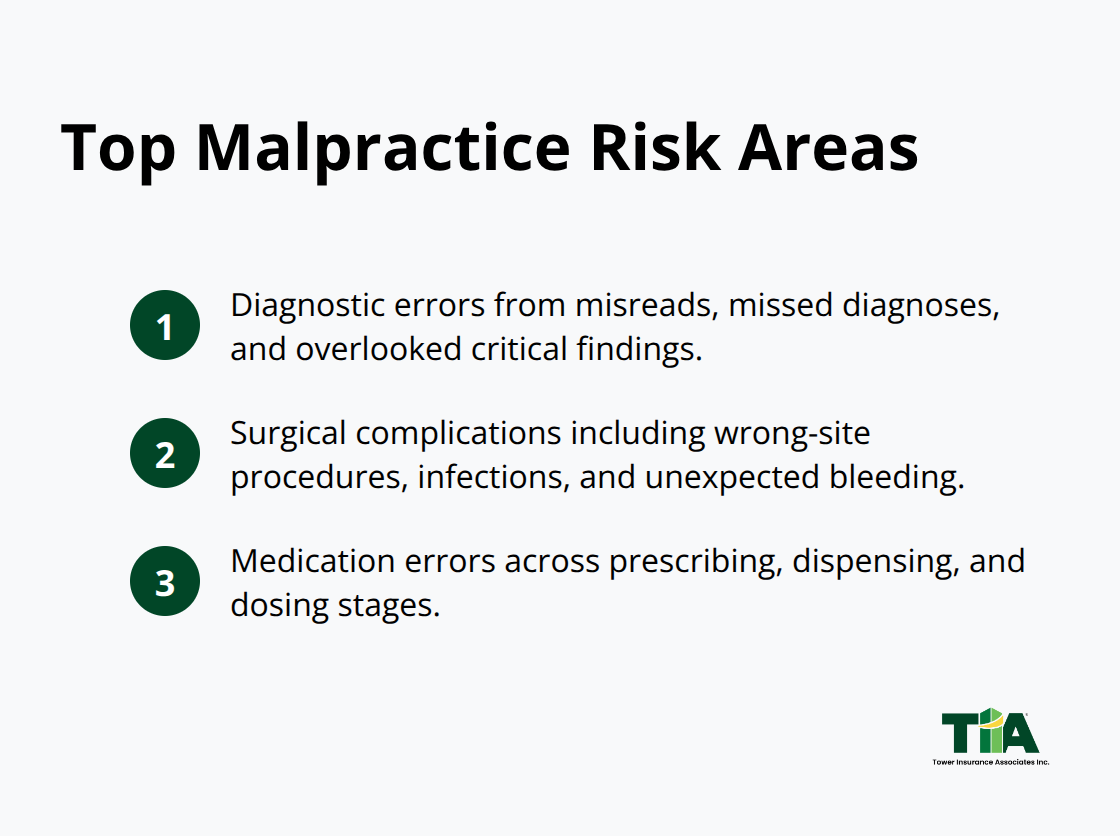
These three risk areas share one critical pattern: systematic safeguards prevent most errors before they harm anyone. The practices that reduce claims invest in quality assurance protocols that catch problems early, maintain documentation that proves compliance with standards of care, and carry professional liability insurance that protects them when prevention fails.
How to Reduce Malpractice Risk Before It Becomes a Claim
Implement Systematic Quality Assurance Protocols
Quality assurance protocols separate practices that avoid claims from those that face them repeatedly. Organizations that systematize error prevention dramatically reduce their exposure. The most effective approach isn’t hiring more staff or implementing expensive new technology-it’s designing workflows that catch mistakes before they reach patients.
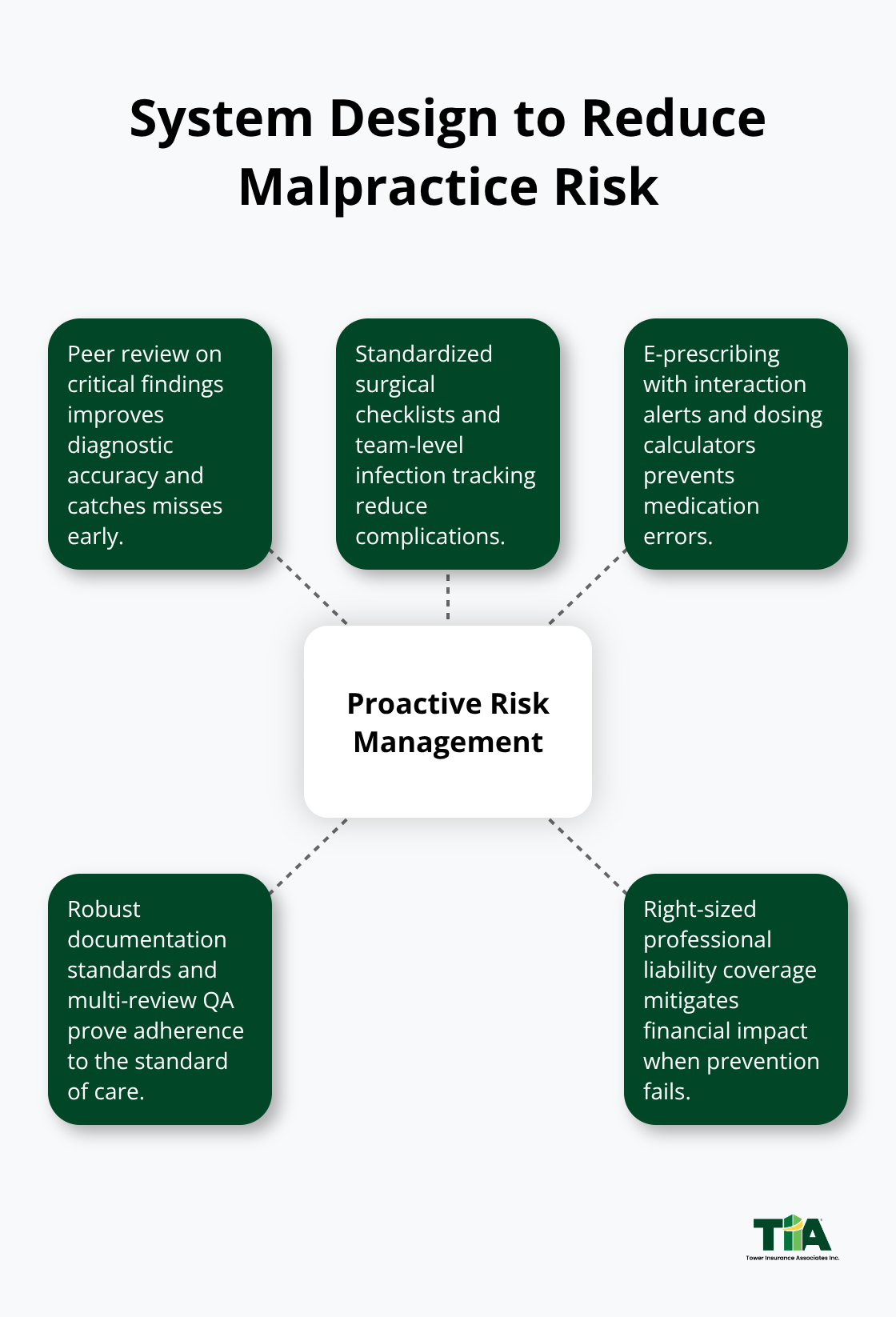
Radiology departments that mandate peer review on all critical findings report improvements in diagnostic accuracy according to research from the American Journal of Roentgenology. Surgical teams that use standardized checklists and track infection rates by provider see measurable improvements within months. Medication safety improves fastest when practices implement electronic prescribing with built-in drug interaction alerts and dosing calculators rather than relying on manual verification.
Maintain Documentation That Proves Compliance
Documentation quality matters equally because it proves you followed the standard of care when a claim emerges. Many practices lose cases they should win because their charts lack sufficient detail about clinical reasoning, patient communication, or why specific treatment decisions were made. Your documentation should answer the question: if this case went to trial, would the chart convince a jury you acted appropriately?
Staff training on documentation standards creates the foundation for this protection. Rotate quality assurance responsibilities so multiple eyes review cases and catch inconsistencies before they become problems. This approach transforms documentation from a compliance burden into your strongest defense.
Invest in Coverage That Matches Your Actual Risk
Insurance coverage acts as your final safety net when prevention fails, but too many practices carry inadequate limits or purchase policies with exclusions that leave gaps. A single surgical complication claim can exceed $500,000 in defense costs and damages, yet some practices carry only $250,000 in coverage. Match coverage limits to actual risk exposure based on your patient volume, service lines, and claims history rather than selecting arbitrary numbers that leave you exposed.
Review insurance coverage annually as service offerings change. This ensures your protection evolves with your practice. An independent insurance agency can help you evaluate whether your current policy adequately protects your organization against realistic claim scenarios (not just theoretical ones).
Final Thoughts
Healthcare professional liability claims destroy practices through financial damage, reputation harm, and operational disruption. Medical malpractice payments exceeded $3.6 billion in 2023, and diagnostic errors account for 35% of all paid claims-these numbers reflect real exposure your organization faces every single day. Waiting for a claim to happen before taking action guarantees you’ll pay the price.
Three concrete actions protect your practice right now. Implement systematic quality assurance protocols that catch errors before they reach patients through peer review processes, standardized checklists, and electronic prescribing systems with built-in safety checks. Maintain documentation that proves you followed the standard of care when claims emerge, and carry professional liability insurance with coverage limits that match your actual risk exposure based on patient volume and service lines. General liability policies specifically exclude professional services, leaving you completely exposed without separate healthcare professional liability coverage.
We at Tower Insurance Associates, Inc. evaluate your specific risk profile and find tailored coverage at competitive pricing as an independent insurance agency representing multiple top-rated carriers. Contact us to review whether your current coverage adequately protects your practice against realistic claim scenarios. The time to secure proper protection is now.
Disclaimer: This blog post is for general informational purposes only and does not represent actual coverage, policy terms, or legal requirements. Insurance details vary by individual and jurisdiction. Please consult a licensed insurance professional for advice specific to your situation.