

California tech companies face a cyber threat landscape that’s become impossible to ignore. Ransomware attacks, data breaches, and regulatory fines are hitting startups and established firms alike, making tech company cyber liability insurance a business necessity rather than an optional expense.
At Tower Insurance Associates, Inc., we’ve seen firsthand how the right coverage protects your bottom line when incidents happen. This guide walks you through what you need to know to keep your firm secure and compliant.
The Rising Threat of Cyber Attacks on California Tech Companies
Increasing Frequency and Sophistication of Breaches
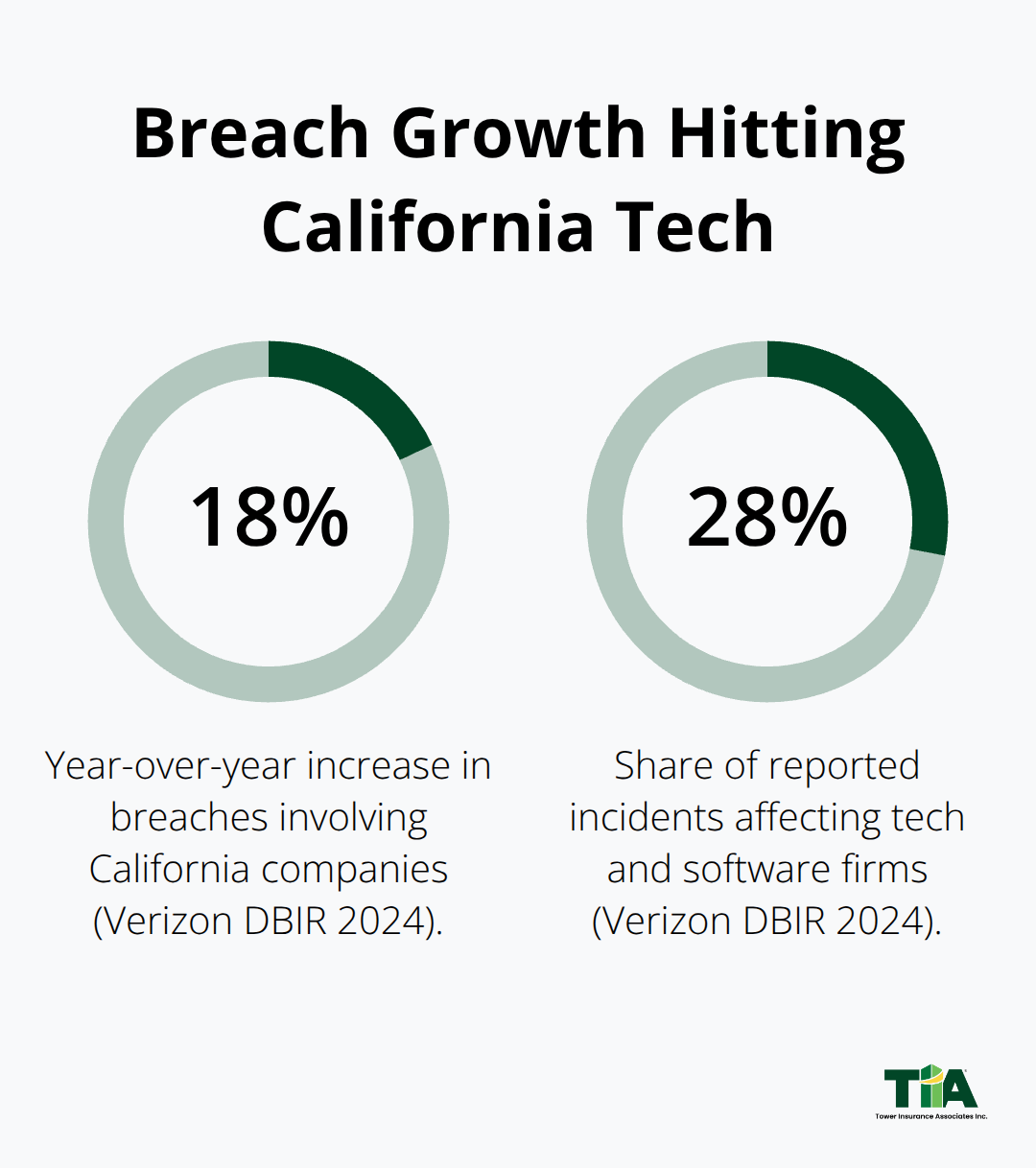
California’s tech sector confronts a cyber threat landscape that’s quantifiably worse than it was just three years ago. According to the 2024 Data Breach Investigations Report from Verizon, breaches involving California companies increased 18 percent year-over-year, with tech and software firms representing 28 percent of all reported incidents. The sophistication of attacks has accelerated dramatically-ransomware operators now deploy custom malware variants tailored to specific industries, and the average time to identify a breach stretched to 207 days in 2023 according to IBM’s Cost of a Data Breach Report.
For startups and mid-sized tech firms in California, this timeline is particularly devastating because attackers establish persistence in your systems months before you detect them, meaning the damage compounds before you even know there’s a problem.
Financial and Reputational Damage to Tech Firms
When a breach happens, the immediate costs are staggering but represent only part of the damage. Data breach costs continue to rise globally, with the average representing a 12% increase over last year and reaching record highs-driven by higher detection, escalation and lost business costs. The real financial drain comes from incident response-forensic investigations, legal counsel, notification costs, and credit monitoring services for affected customers. A mid-sized SaaS company with 50,000 customer records faces notification and response costs exceeding 200,000 dollars alone, separate from any regulatory penalties. Reputational damage compounds this further; Cisco’s 2024 Cybersecurity Outcomes Study found that 62 percent of consumers would stop using a service after learning about a data breach, meaning revenue loss extends months or years beyond the initial incident.
Regulatory Compliance Requirements in California
California’s privacy and data protection laws create legal obligations that most tech companies underestimate. The California Consumer Privacy Act requires notification to affected residents within 30 days of discovering a breach, and the California Online Privacy Protection Act imposes fines up to 2,500 dollars per violation for non-compliance. Assembly Bill 375 strengthened breach notification requirements and shifted liability directly onto companies that fail to implement reasonable security measures-meaning regulators can argue your firm was negligent if you didn’t have adequate defenses in place.
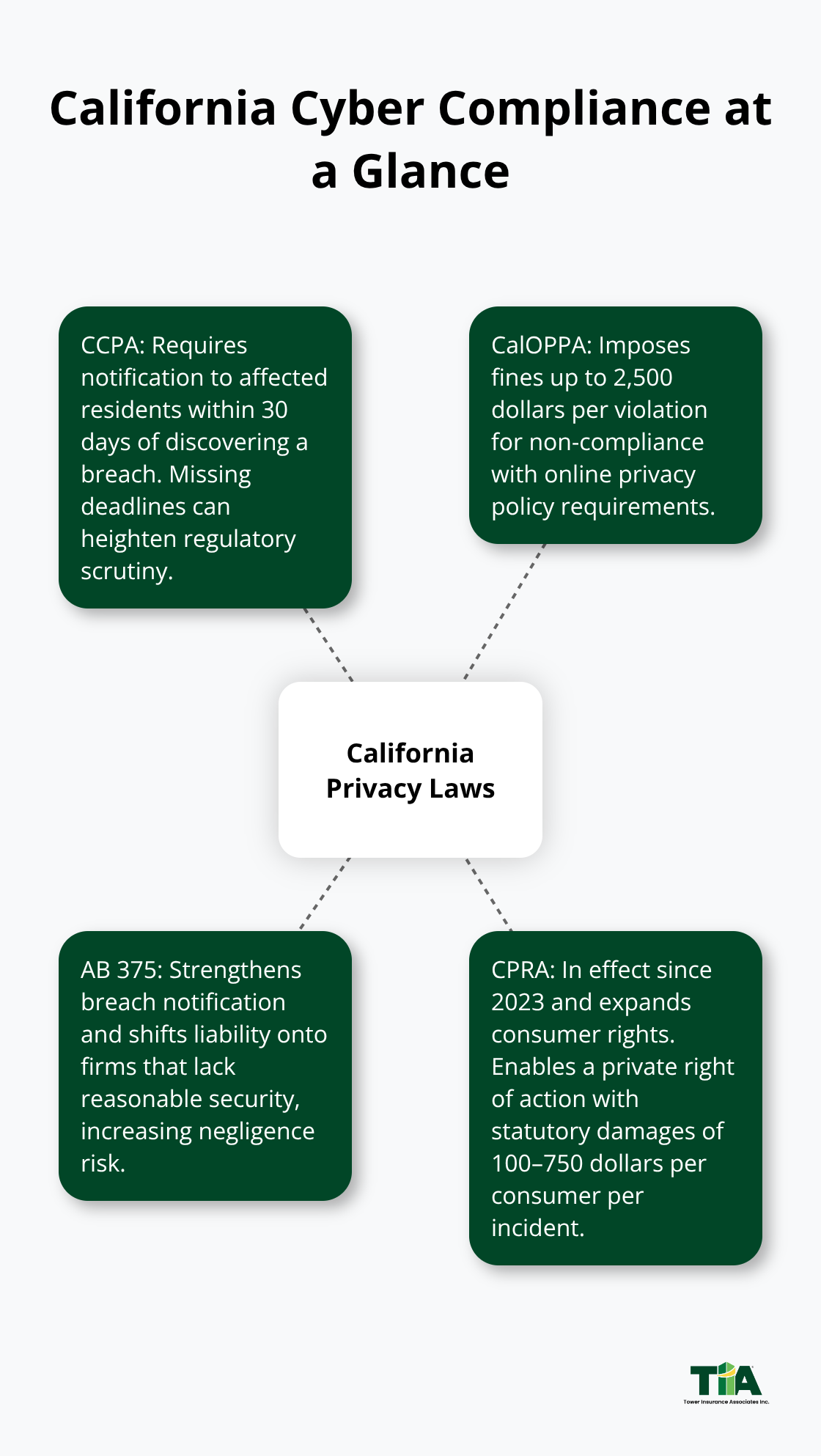
The California Privacy Rights Act, which went into effect in 2023, expanded these requirements further and created a private right of action, allowing consumers to sue directly for statutory damages of 100 to 750 dollars per consumer per incident (for a startup with 10,000 users, a single CPRA violation could generate liability exceeding 1 million dollars before your legal team finishes the first week of investigation). These regulatory pressures make understanding what cyber liability coverage actually protects against essential to your survival.
What Cyber Liability Coverage Actually Protects Against
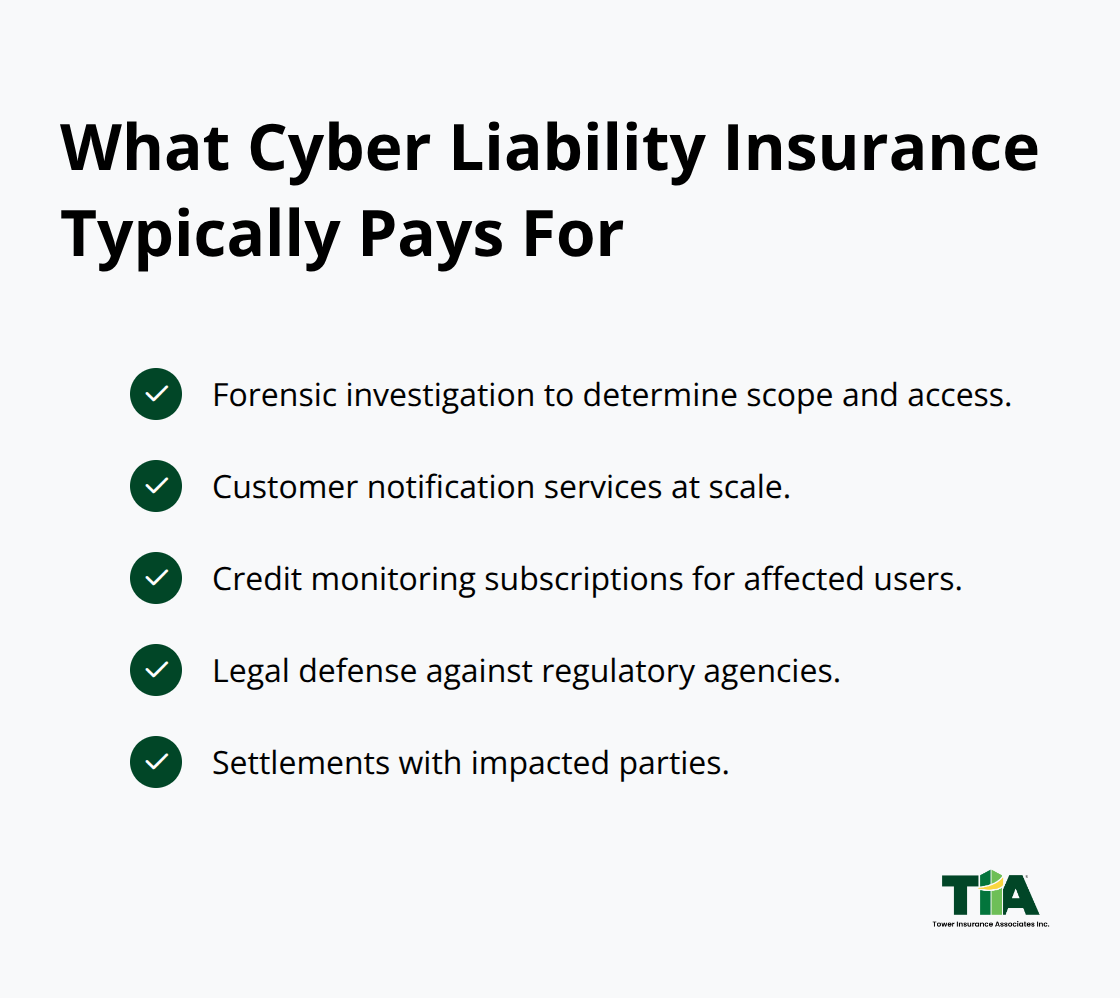
Cyber liability insurance fills gaps that standard commercial policies completely ignore, and this distinction matters more than most tech founders realize. When a breach happens, your general liability policy won’t touch the costs-those policies exclude data-related claims entirely. Cyber coverage steps in to handle the actual expenses that cripple companies: forensic investigators to determine what attackers accessed, notification services to contact affected customers, credit monitoring subscriptions, legal defense against regulatory agencies, and settlements with affected parties.
Data Breach Response and Notification Costs
The 2024 Verizon Data Breach Investigations Report shows that software vulnerabilities now account for 31% of breaches, yet most founders never budget for breach response because they assume their existing insurance handles it. A California SaaS startup with 100,000 users faces notification costs exceeding 300,000 dollars before any regulatory fines arrive. Your cyber policy covers forensic investigation fees, customer notification expenses, credit monitoring subscriptions, and regulatory filing costs-the immediate financial hemorrhage that follows a breach discovery.
Legal Defense and Regulatory Expenses
Cyber liability also covers legal defense expenses when state attorneys general investigate your breach, which California regulators pursue aggressively under CCPA and CPRA statutes. The policy covers your defense team’s hourly rates, regulatory filing fees, and settlement negotiations with state officials-costs that frequently exceed 500,000 dollars for mid-market tech firms. Without this coverage, your company absorbs these legal expenses directly from operating capital, which most startups cannot sustain.
Business Interruption and Revenue Recovery
Business interruption coverage within cyber policies reimburses lost revenue when your systems go offline after a ransomware attack or data breach forces you to halt operations for remediation. IBM’s research shows that downtime costs tech companies roughly 5,600 dollars per minute, meaning a 48-hour shutdown drains approximately 430 million dollars in lost productivity and revenue across your organization (though individual companies experience smaller figures depending on their size). This coverage activates when the incident directly causes your business to halt, not when you choose to shut down for investigation-an important distinction that separates quality cyber policies from weak ones.
Why Coverage Selection Matters
The difference between adequate protection and inadequate protection often determines whether your company survives a breach or closes its doors. Many tech founders purchase cyber policies without understanding what they actually cover, leaving critical gaps that emerge only after an incident occurs. Understanding these coverage details during the policy selection process protects your bottom line and your company’s future.
Essential Steps to Strengthen Your Cyber Security Posture
Multi-Factor Authentication and Access Controls
Multi-factor authentication stands as the single most effective defense against unauthorized access, yet roughly 60 percent of tech companies still rely on passwords alone according to research from the Cybersecurity and Infrastructure Security Agency. MFA across all user accounts-especially administrative access-forces attackers to compromise multiple authentication factors simultaneously, which dramatically increases the effort required to breach your systems. A California SaaS startup should prioritize MFA on cloud infrastructure accounts, email systems, and any platform storing customer data within the first 30 days of operations.
Access controls matter equally; the principle of least privilege means employees should only access systems and data necessary for their specific role, not blanket access to your entire infrastructure. Tech founders often resist this approach because it feels restrictive, but it’s the difference between an attacker who gains access to one employee’s account and an attacker who gains access to your entire customer database.
Regular Security Audits and Penetration Testing
Regular security audits and penetration testing identify vulnerabilities before attackers exploit them, yet most startups skip these assessments to save money. The frequency of penetration tests depends on risk, system changes, and regulatory obligations rather than a fixed timeline. A penetration test costs between 5,000 and 15,000 dollars for a startup-sized operation, but discovering a critical vulnerability through your own testing rather than through a breach prevents losses exceeding 1 million dollars.
Develop an Incident Response Plan
An incident response plan documents exactly which team members handle forensic investigation, customer notification, regulatory reporting, and legal coordination before you need it. This plan should identify your forensic investigator and legal counsel in advance-waiting until a breach occurs to find these resources wastes critical hours when California’s 30-day notification deadline is already ticking. Your plan must specify which cyber liability coverage activates for each type of incident, so your team knows exactly what steps to take when an attack occurs.
Final Thoughts
Your general liability policy won’t cover a data breach, your property insurance won’t reimburse forensic investigation costs, and your workers’ compensation policy won’t pay for regulatory fines. This reality hits most California tech founders hard when a breach occurs-they discover their existing coverage leaves them exposed to the exact losses that threaten their business. Tech company cyber liability insurance fills these gaps by covering forensic investigation, customer notification, credit monitoring, legal defense, and lost revenue during system downtime.
Real companies have survived breaches because they carried adequate coverage. A California SaaS firm with 75,000 customer records experienced a ransomware attack in 2023 that forced a three-day shutdown, and their cyber policy covered the 180,000 dollar forensic investigation, the 220,000 dollar customer notification and credit monitoring costs, and the 340,000 dollar revenue loss during downtime. Without that coverage, the company would have faced nearly 750,000 dollars in uninsured losses-an amount that would have forced closure for most startups.
The challenge is that cyber liability policies vary dramatically in what they actually cover, with some policies excluding business interruption entirely and others capping coverage at amounts far below what a real breach costs. Contact Tower Insurance Associates to discuss your tech company cyber liability coverage and find a policy that matches your actual risk.
Disclaimer: This blog post is for general informational purposes only and does not represent actual coverage, policy terms, or legal requirements. Insurance details vary by individual and jurisdiction. Please consult a licensed insurance professional for advice specific to your situation.