
Small businesses face cyber attacks at an alarming rate, yet many lack the resources to defend themselves effectively. The combination of outdated systems, limited IT staff, and valuable customer data makes you an attractive target for criminals.
At Tower Insurance Associates, Inc., we believe small business cyber guidance requires both strong security practices and smart insurance protection. This post shows you exactly how to build a defense strategy that actually works.
Why Small Businesses Attract Cybercriminals
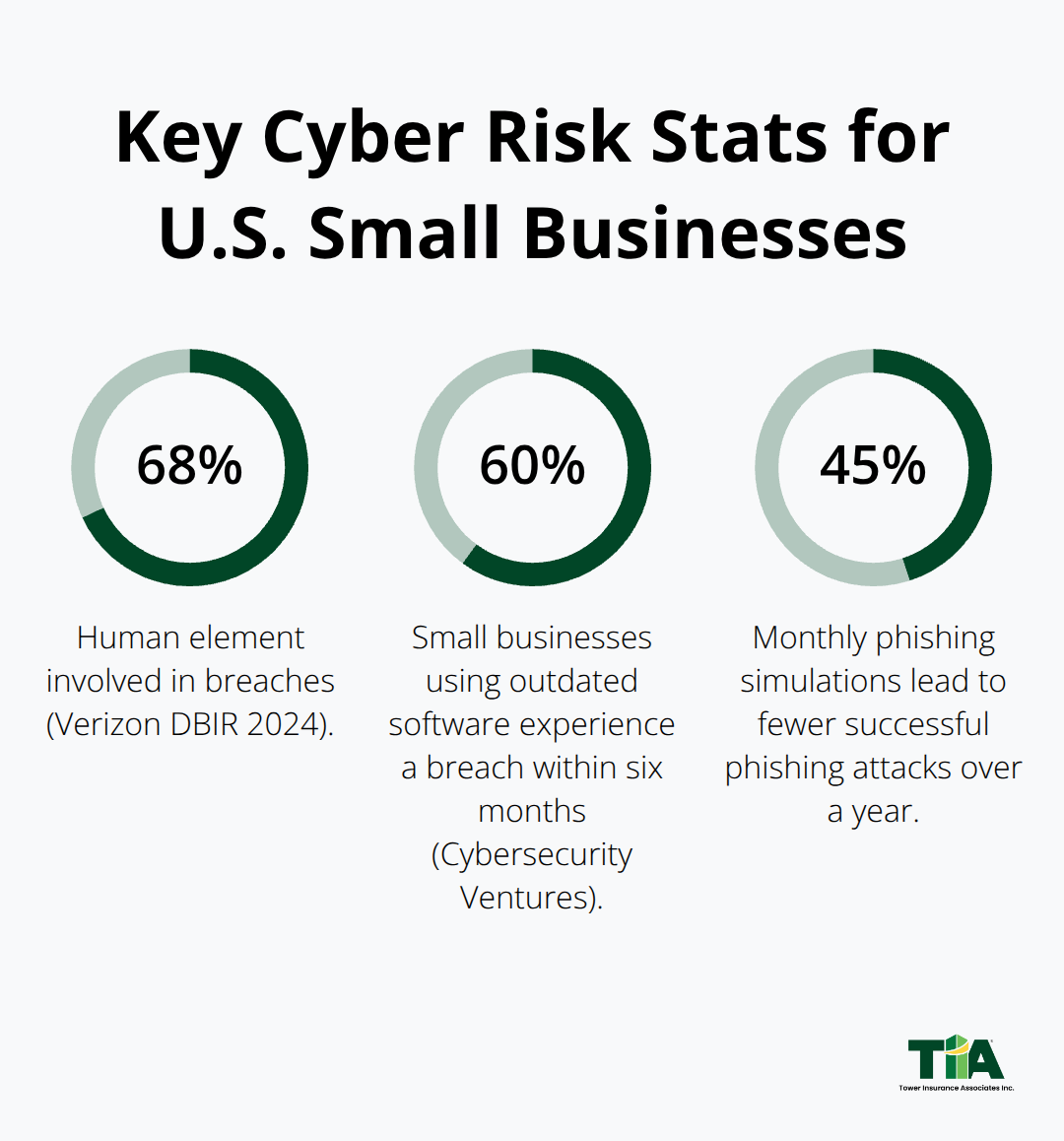
Small businesses have become the preferred target for cybercriminals, and the numbers prove it. According to the 2024 Verizon Data Breach Investigations Report, the human element was involved in 68% of breaches, yet most operate without dedicated cybersecurity staff or modern security infrastructure. Attackers know this. They’ve learned that small business owners often stretch budgets across payroll, rent, and inventory, leaving little room for expensive security upgrades. A single ransomware attack costs small businesses an average of $200,000 in recovery expenses, according to Emsisoft’s 2024 Ransomware Report.
That’s money most small businesses simply don’t have sitting in reserve. The gap between what criminals target and what small businesses can defend creates an obvious opportunity that hackers exploit ruthlessly.
Outdated Systems Create Open Doors
Most small business owners operate with technology purchased years ago. That Windows 7 machine in your accounting department, the old server still running software from 2019, the customer database that hasn’t received patches in months-these aren’t minor inconveniences. They’re invitations. Cybersecurity Ventures reports that 60% of small businesses using outdated software experience a breach within six months of vulnerability discovery. The problem intensifies because small business owners rarely have IT staff who monitor security updates or apply patches consistently. When Microsoft releases a critical security patch, large corporations deploy it within days. Small businesses often wait weeks or months, if they deploy it at all. Criminal networks specifically scan for these vulnerable, unpatched systems because they know the chances of successful exploitation are high.
Your Customer Data Commands Real Market Value
The information you collect from customers-names, addresses, payment methods, email addresses-sells on the dark web for concrete prices. A stolen credit card number brings $5 to $25 depending on card type and validity. A complete identity package with Social Security number, driver’s license, and financial information fetches $200 to $1,000. Criminals don’t care whether they’re stealing from a Fortune 500 company or a 15-person marketing firm. Your customer database has the same value. You hold valuable assets without realizing it, and that makes you an attractive target. The 2024 IBM Cost of a Data Breach Report found that businesses with fewer than 500 employees experience higher average breach costs per record-$248 per compromised record compared to $186 for larger organizations.
Limited Resources Multiply Your Vulnerability
Small business owners typically lack dedicated IT staff (or any IT staff at all) to monitor threats and respond to incidents. This staffing gap means vulnerabilities sit unaddressed for weeks or months. Attackers exploit this delay. They know that a small business won’t detect an intrusion as quickly as a large corporation with a security operations center. The National Small Business Association reports that small businesses face significant cyber threats, yet only a fraction have a cybersecurity incident response plan in place. This combination-high-value targets with minimal defenses-makes small businesses far more profitable for criminals than larger, better-protected organizations.
Understanding why criminals target your business is the first step toward building an effective defense. The next section shows you the practical security measures that actually reduce your risk.
Essential Cybersecurity Practices for Small Business Protection
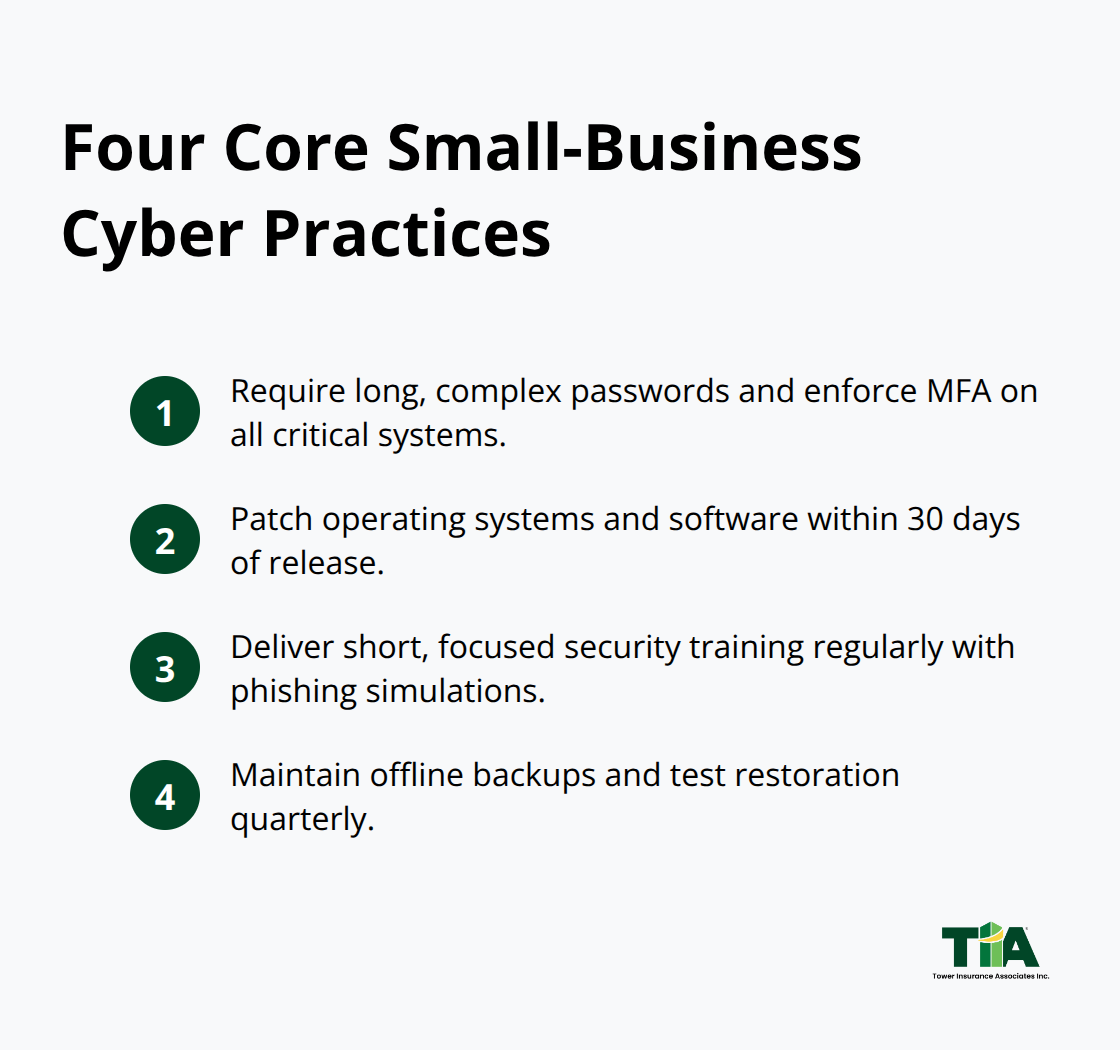
Knowing why criminals target you means nothing without a concrete defense plan. We recommend focusing on four practical measures that meaningfully reduce your breach risk. These steps work because they address the specific vulnerabilities attackers exploit most frequently.
Strong Passwords and Multi-Factor Authentication Stop Most Attacks
Most small businesses still allow employees to use weak passwords like Company2024! or their kid’s name plus a number. This fails immediately against password-cracking tools. Implement a policy requiring passwords with at least 14 characters, mixing uppercase, lowercase, numbers, and symbols. More importantly, mandate multi-factor authentication on every critical system-email, accounting software, customer databases, payment processing.
Multi-factor authentication blocks over 99.9 percent of account compromise attacks. That’s not a marginal improvement; that’s nearly eliminating an entire attack vector. Your accounting software and customer database should require a second verification method (authenticator app, hardware key, or SMS) beyond the password. This single step stops most ransomware attacks that rely on stolen credentials.
Deploy Security Patches Within 30 Days
Software updates and security patches rank second because they directly address known vulnerabilities criminals actively exploit. Cybersecurity Ventures data shows that 60% of small businesses using outdated software experience a breach within six months of a vulnerability becoming public. Your team must patch systems within 30 days of release, not 90 or 180 days.
Set a calendar reminder for the second Tuesday of each month when Microsoft releases patches, and deploy them before the following Friday. Configure automatic updates on all devices where possible-Windows, macOS, iOS, Android, and business applications. One small business in retail lost $150,000 when attackers exploited an unpatched point-of-sale system vulnerability that had been public for two months.
Train Employees Monthly on Real Threats
Employee training delivers the third layer of defense because humans remain the weakest point. The 2024 Verizon report showed human error appears in 68% of breaches, whether through clicking malicious links, opening infected attachments, or falling for phishing emails. Conduct mandatory security training quarterly, not annually. Each session should run 20 minutes maximum and cover one specific threat-phishing recognition, password hygiene, or ransomware warning signs.
Test your team with fake phishing emails monthly; companies that do this see 45% fewer successful phishing attacks over a year. This approach works because it creates muscle memory. Employees who practice identifying threats regularly catch real attacks before they cause damage.
Maintain Offline Backups and Test Recovery
Backup your data and test recovery procedures because no defense stops every attack. Ransomware will eventually reach some small business. Maintain offline backups of critical data-customer databases, financial records, project files-stored separately from your network. Test restoring from backup quarterly to confirm it actually works.
A financial services firm discovered their backups were corrupted only when a ransomware attack struck; they lost three weeks recovering data manually. This mistake cost them far more than the ransom demand would have. Your backups protect you only if they actually restore your systems when you need them most.
These four practices form a solid foundation, but they work best alongside proper insurance protection that covers what your defenses might miss.
The Role of Cyber Liability Insurance in Your Defense Strategy
What Cyber Liability Insurance Actually Covers
No amount of password policies or security patches stops every attack. Criminals will eventually breach some small business, and when they do, the financial damage extends far beyond the initial hack. Businesses that experience a data breach in 2024 face an average financial impact of nearly $5 million, according to IBM’s 2024 Cost of a Data Breach Report, but that figure only scratches the surface.
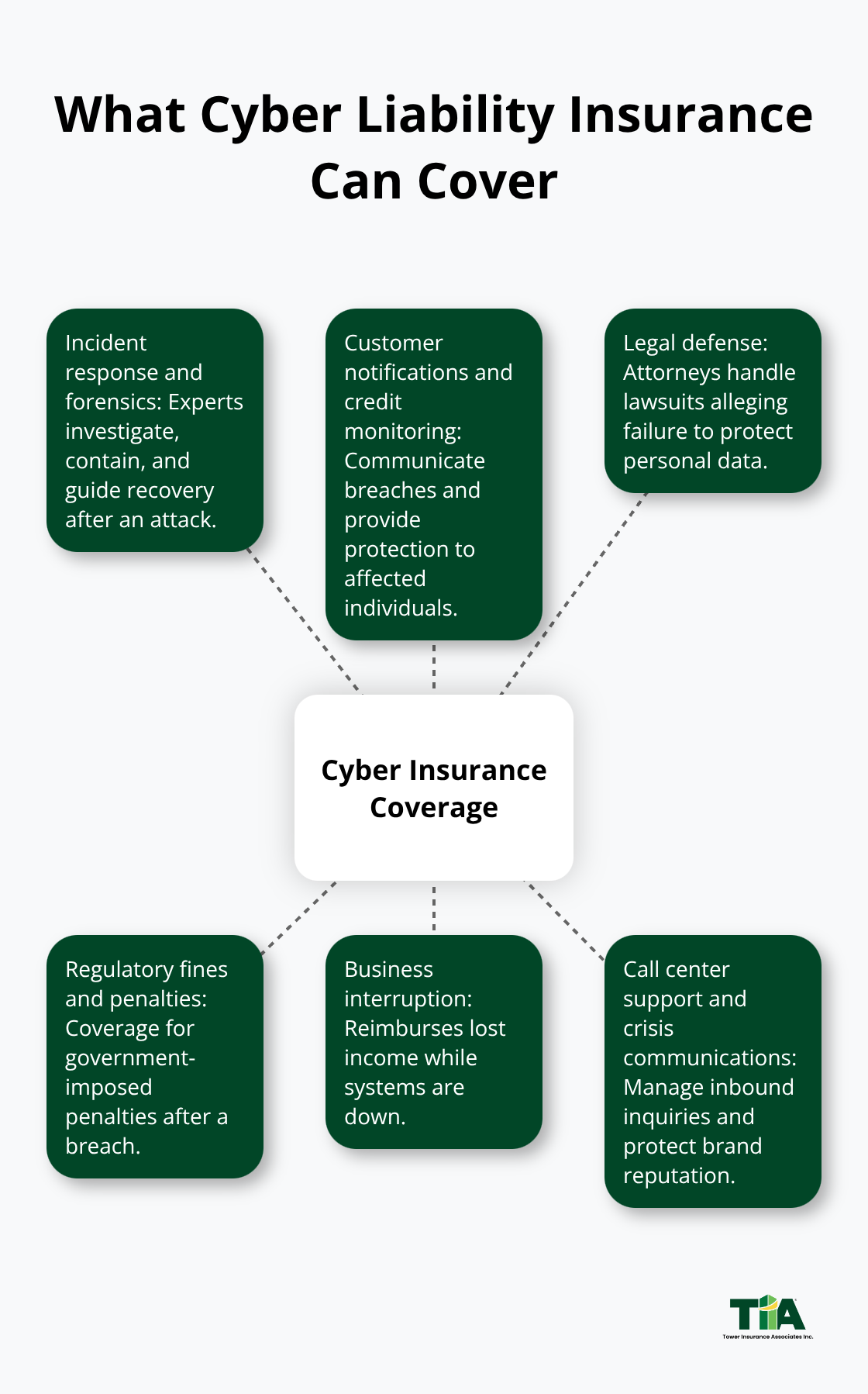
You face notification costs to inform customers their data was compromised, credit monitoring services you must provide for affected individuals, legal fees to defend against lawsuits, regulatory fines from agencies like state attorneys general, and lost income while your systems are down. Cyber liability insurance covers these expenses that your security practices alone cannot prevent.
Without proper coverage, a single breach can bankrupt a small business outright. The practical value of cyber liability insurance shows up immediately after an attack strikes. When ransomware locks your customer database, your insurance covers the cost of forensic investigators who determine what happened and how to recover your systems. When you discover that customer credit card numbers were stolen, your policy pays for notification letters, call center staff to answer panicked customer calls, and credit monitoring subscriptions for affected individuals.
Legal Defense and Regulatory Penalties
If a customer sues you for failing to protect their personal information, your insurance covers legal defense costs that run $50,000 to $150,000 for a typical small business case. Regulatory agencies like the California Attorney General impose fines for data breaches involving California residents; cyber liability insurance covers these penalties. These costs accumulate quickly once litigation begins, and most small business owners lack the cash reserves to handle them without insurance protection.
Business Interruption Coverage Protects Your Revenue
Business interruption coverage reimburses lost income while your systems are offline and you cannot serve customers. A small marketing firm experienced a ransomware attack that shut down operations for six days; their cyber liability policy covered $18,000 in lost revenue during that period. This coverage matters because the income loss often exceeds the direct attack costs (forensics, notifications, legal fees). Your business cannot wait weeks for systems to recover while revenue stops flowing.
Finding the Right Coverage for Your Business
The combination of strong security practices and proper insurance means you survive a breach as a business instead of closing your doors. Small business owners in California should work with an independent insurance agency that represents multiple carriers and understands cyber liability policies. An agency like Tower Insurance Associates, Inc.-an independent insurance agency in Culver City serving businesses since 1961-can help you find coverage that matches your specific risks and budget, providing the protection you need when your defenses fail.
Final Thoughts
Small business cyber attacks will continue increasing, and waiting for the perfect moment to act guarantees you’ll face an unprepared business when criminals strike. The four security practices outlined above-strong passwords with multi-factor authentication, timely security patches, employee training, and offline backups-form a practical defense that meaningfully reduces your breach risk. These steps address the specific vulnerabilities attackers exploit most frequently against small businesses, yet security measures alone cannot stop every attack.
Ransomware will eventually reach some small business, data breaches will happen despite your best efforts, and when they do, the financial consequences extend far beyond the initial hack. Cyber liability insurance becomes your second line of defense, covering notification costs, credit monitoring, legal defense, regulatory fines, and business interruption that protect your company from financial devastation. Small business cyber guidance requires both layers working together-your security measures reduce breach likelihood while your insurance coverage protects your business financially when your defenses fail.
Conduct a cybersecurity assessment of your current systems and practices, identifying which core measures you’ve already implemented and which gaps remain. Simultaneously, review your current insurance coverage to determine whether you have adequate cyber liability protection. Tower Insurance Associates, Inc. can help with both, representing multiple carriers and specializing in cyber liability coverage that matches your specific risks and budget.
Disclaimer: This blog post is for general informational purposes only and does not represent actual coverage, policy terms, or legal requirements. Insurance details vary by individual and jurisdiction. Please consult a licensed insurance professional for advice specific to your situation.