
Board members face mounting personal liability risks that most don’t fully understand. Directors and officers liability insurance protects your leadership team from costly claims that could otherwise devastate personal finances.
At Tower Insurance Associates, Inc., we’ve seen firsthand how the right coverage makes the difference between a manageable situation and a financial crisis. This guide walks you through what D&O protection covers, why your board needs it, and how to select the right policy for your organization.
What D&O Insurance Actually Protects
Personal Liability Claims Target Board Members Directly
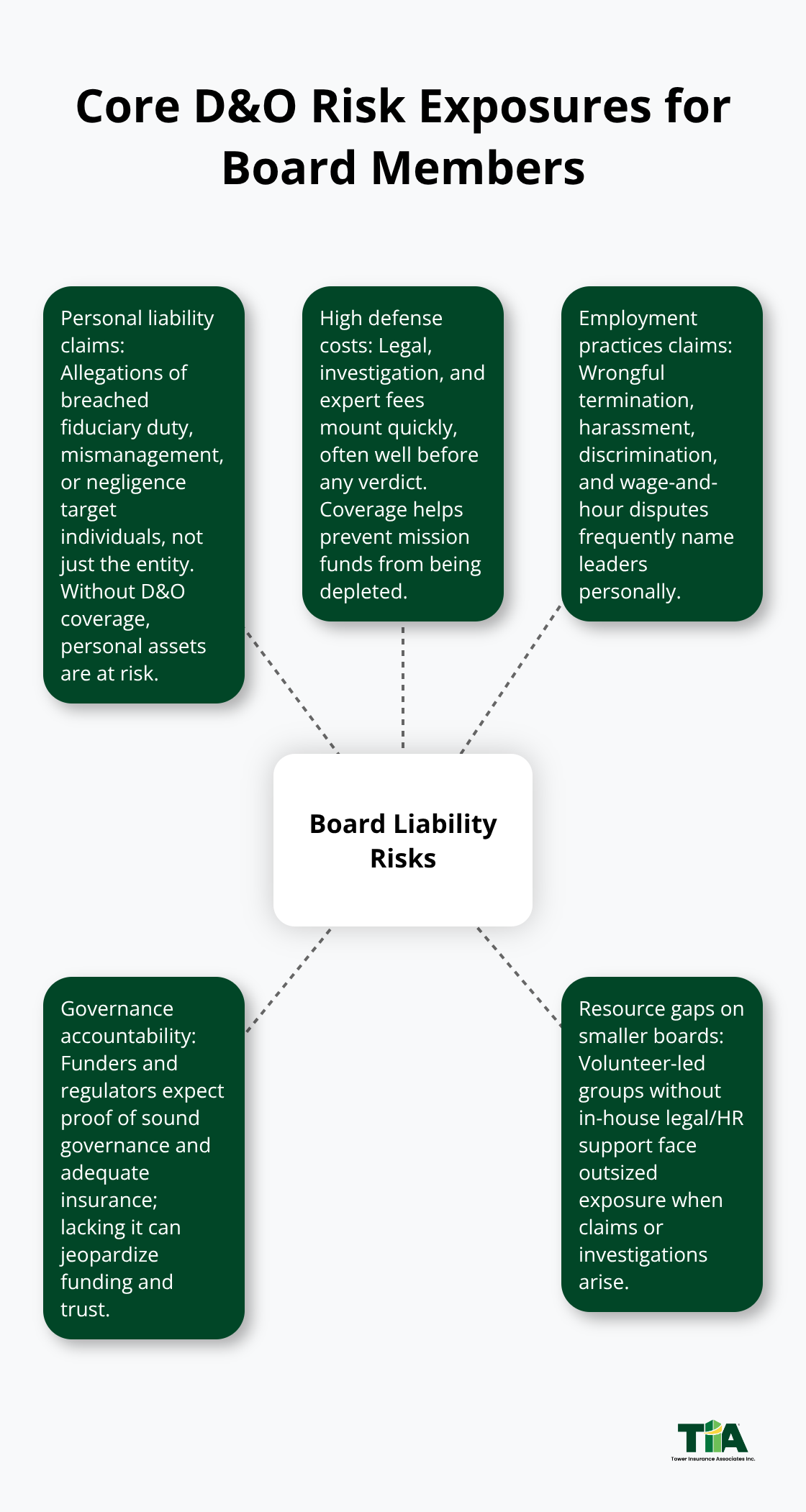
Directors and officers face three distinct liability exposures that standard business insurance does not cover. Personal liability claims arise when shareholders, employees, or regulators allege that board members breached fiduciary duties, mismanaged funds, or made negligent decisions. These claims target individuals directly, not the company, which means your personal assets stand exposed unless D&O coverage steps in. The average D&O lawsuit costs more than $120,000, and many settlements reach six or seven figures. Without protection, a single claim can wipe out years of personal savings and retirement security.
Defense Costs Drain Resources Before Any Verdict
Defense costs consume significant resources before any verdict or settlement occurs. Legal fees, investigator expenses, expert witness costs, and court proceedings easily exceed $125,000 even if the board ultimately prevails. Without D&O coverage, your organization pays these costs from operating funds, draining resources meant for your mission. Regulatory investigations demand legal representation immediately, before any wrongdoing is proven or disproven. The financial burden falls on leadership at the exact moment when the organization needs every dollar to maintain operations.
Employment Practices Claims Hit Leadership Hard
Employment practices claims represent one of the most frequent D&O exposures for nonprofits and smaller organizations. Allegations of wrongful termination, harassment, discrimination, or wage-and-hour violations land squarely on leadership. 63% of nonprofit organizations reported a D&O claim within the past ten years, with employment-related claims dominating that landscape. D&O policies with integrated Employment Practices Liability Insurance coverage address these claims directly, protecting both the organization and individual board members from personal financial exposure.
Governance Accountability Matters to Funders and Regulators
The practical value of D&O coverage extends beyond claim defense. When donors, grantors, and government contractors evaluate your organization, they increasingly require proof of responsible governance and adequate insurance protection. D&O coverage signals to funders that your board takes accountability seriously and maintains safeguards against leadership failure. Regulatory scrutiny continues rising, with agencies like the IRS and state attorneys general conducting investigations triggered by missed filings, whistleblower complaints, or alleged misconduct. These investigations demand legal representation immediately, before any wrongdoing is proven or disproven.
Smaller Boards Need Access to Expert Legal Resources
Smaller organizations and all-volunteer boards face particular vulnerability because they lack in-house legal and HR resources to handle complex claims. D&O coverage levels the playing field, giving smaller boards access to experienced legal teams and claims professionals who understand governance liability. Your board members can then focus on running your organization rather than scrambling to hire outside counsel or manage litigation independently. This protection proves especially valuable when investigations or claims emerge unexpectedly (and they often do). With the right coverage in place, your leadership team can respond strategically rather than reactively, protecting both the organization’s mission and personal finances. Understanding what D&O covers is only the first step-knowing why your specific board needs this protection requires examining the regulatory and litigation landscape your organization actually faces.
Why Your Board Faces Real Liability Today
Regulatory Investigations Demand Immediate Legal Response
Regulatory investigations have become routine rather than exceptional. The IRS, state attorneys general, and federal agencies now conduct investigations triggered by missed Form 990 filings, whistleblower complaints, or allegations of misconduct-often without any proven wrongdoing. These investigations demand immediate legal representation, and defense costs accumulate rapidly before any determination occurs. Smaller nonprofits and volunteer-led organizations face particular vulnerability because they lack dedicated compliance staff, making governance gaps easier to spot. According to Towers Watson research, 63% of nonprofit organizations reported a D&O claim within the past ten years, yet most board members assume their organization is too small or too careful to face legal exposure.
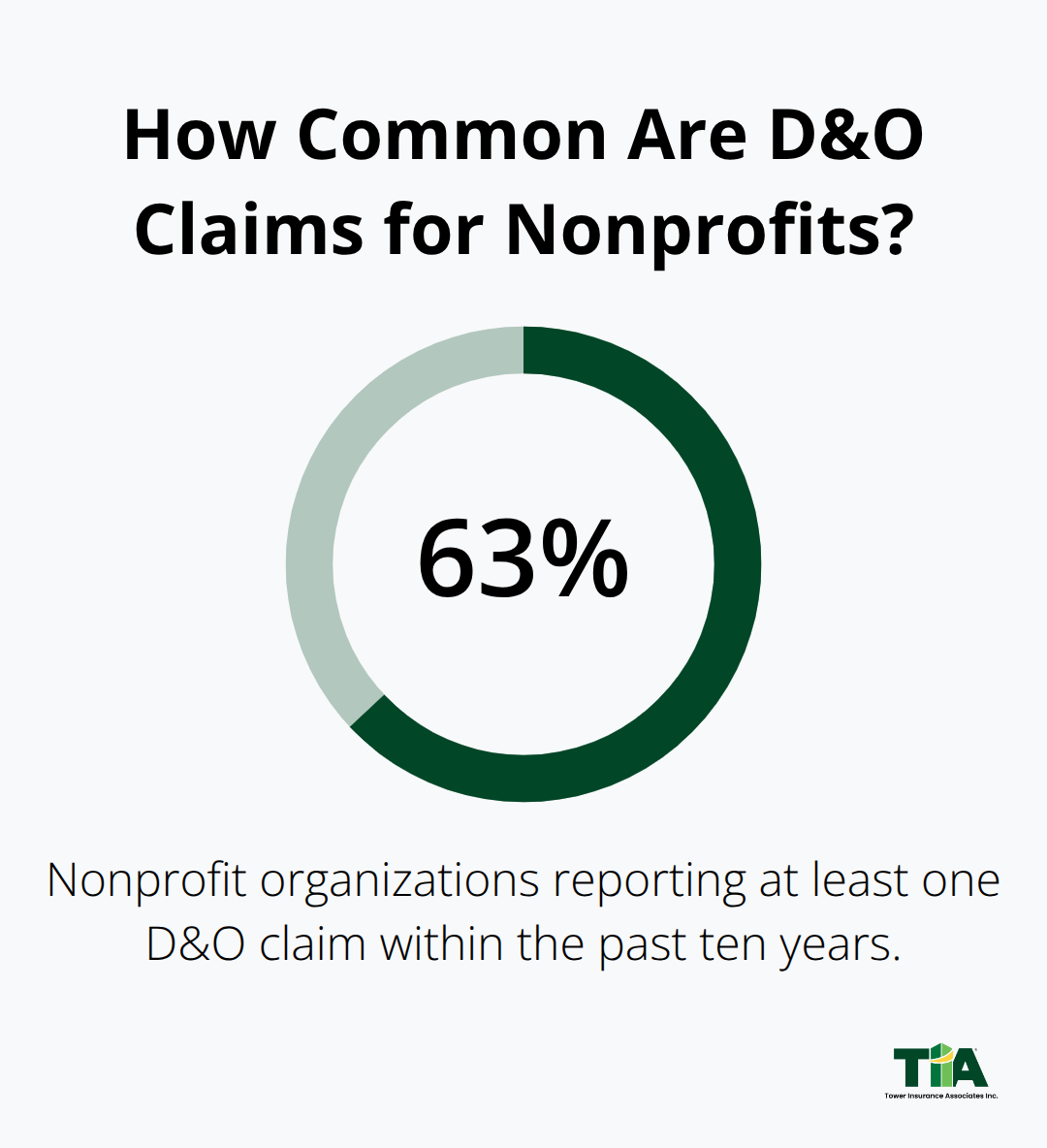
That assumption costs organizations thousands in unexpected legal fees and exposes personal assets of board members who believed they were protected.
The regulatory environment will not slow down in 2026. Agencies continue expanding their investigative reach, and the compliance burden grows heavier each year. Your board cannot prevent an investigation by exercising caution; it can only prepare for the financial and operational impact when one arrives. Without D&O coverage, your organization absorbs all legal defense costs from operating funds while individual board members simultaneously face personal liability exposure.
Employment Claims Create Widespread Personal Exposure
Employment-related claims represent the most frequent D&O exposures for smaller organizations and nonprofits. Allegations of wrongful termination, harassment, discrimination, or wage-and-hour violations land directly on leadership. Volunteers can trigger claims involving harassment or mistreatment, expanding liability beyond paid staff and creating unexpected personal risk for board members who oversee volunteer programs. Defense costs for employment claims often reach $125,000 or more before any settlement occurs, draining organizational resources at the moment when mission-critical work demands full funding.
D&O policies with integrated Employment Practices Liability Insurance coverage address these claims directly, protecting both the organization’s financial position and the personal assets of individual board members. A single employment claim can force the sale of personal property or retirement accounts to cover legal exposure if coverage does not exist.
Funders Now Require Proof of Governance Protection
Donors, grantors, and government contractors increasingly require proof of adequate D&O coverage and responsible governance before committing funds or contracts. This requirement is not a preference; it has become a baseline expectation for funding in many sectors. Organizations without D&O coverage lose access to grant opportunities and contract work that funders reserve for organizations demonstrating adequate risk management. When a claim emerges, settlement costs and defense fees combine to create financial damage that personal savings rarely withstand. The average D&O lawsuit exceeds $120,000 in total cost, and six or seven-figure settlements are common for organizations with meaningful assets or multiple claimants.
D&O coverage protects both the organization’s financial position and the personal assets of board members, ensuring that a single claim does not devastate leadership finances. Your board’s governance posture directly affects your organization’s ability to access funding and maintain stakeholder trust. Understanding the specific risks your organization faces requires examining your actual operational environment, industry sector, and the claims history of similar organizations. This assessment forms the foundation for selecting appropriate coverage limits and policy features that match your board’s real exposure.
Selecting D&O Coverage That Matches Your Organization’s Actual Exposure
Size, Sector, and Complexity Shape Your Coverage Needs
Your organization’s size, industry sector, and operational complexity determine which D&O policy features matter most. A nonprofit with five board members and a $2 million annual budget faces different exposures than a midsize trade association with fifteen board members and $15 million in revenue. Start by documenting your organization’s specific vulnerabilities: Does your board oversee significant financial assets or endowments? Do you employ staff, manage volunteers, or both? Have you faced employment disputes or regulatory inquiries in the past five years? Does your mission involve regulated activities like healthcare, education, or financial services? Organizations in highly regulated sectors face heightened D&O risk because regulatory investigations arrive more frequently and defense costs accumulate faster. A nonprofit healthcare provider managing multiple locations and dozens of employees needs substantially higher coverage limits than an all-volunteer advocacy group with minimal staff.
Premium Trends Create Opportunity for Coverage Review
The D&O market environment in 2026 shows flat-to-modest premium increases driven by inflation and economic uncertainty. This market environment creates an ideal opportunity to evaluate whether your current coverage matches your actual risk profile rather than simply renewing existing policies without review. Organizations that reassess their D&O programs now can often negotiate better terms or identify coverage gaps before claims arrive.
Coverage Limits and Exclusions Determine Real Protection
Coverage limits and policy exclusions determine what your board actually receives when a claim arrives. Many organizations purchase inadequate limits based on premium cost rather than exposure analysis, discovering too late that their $500,000 policy cannot cover a $750,000 settlement plus defense costs. Standard D&O policies exclude fraud, intentional criminal acts, and certain regulatory violations, meaning your board receives no protection for deliberately wrongful conduct-which is appropriate, but many organizations misunderstand these boundaries. Employment practices coverage exclusions prove particularly important; verify that your policy covers wage-and-hour claims, harassment allegations involving volunteers, and discrimination complaints, since these represent your most frequent exposures.
Conduct a Gap Analysis Against Your Operations
Conduct a gap analysis every two years, comparing your current policy language against your organization’s evolving operations and the claims patterns within your industry. Request that your insurance broker provide specific examples of claims your policy would and would not cover, using scenarios relevant to your organization rather than generic hypotheticals. Ask your broker whether your policy includes coverage for investigation costs when regulatory agencies conduct inquiries, since these defense expenses often exceed $50,000 before any determination occurs.
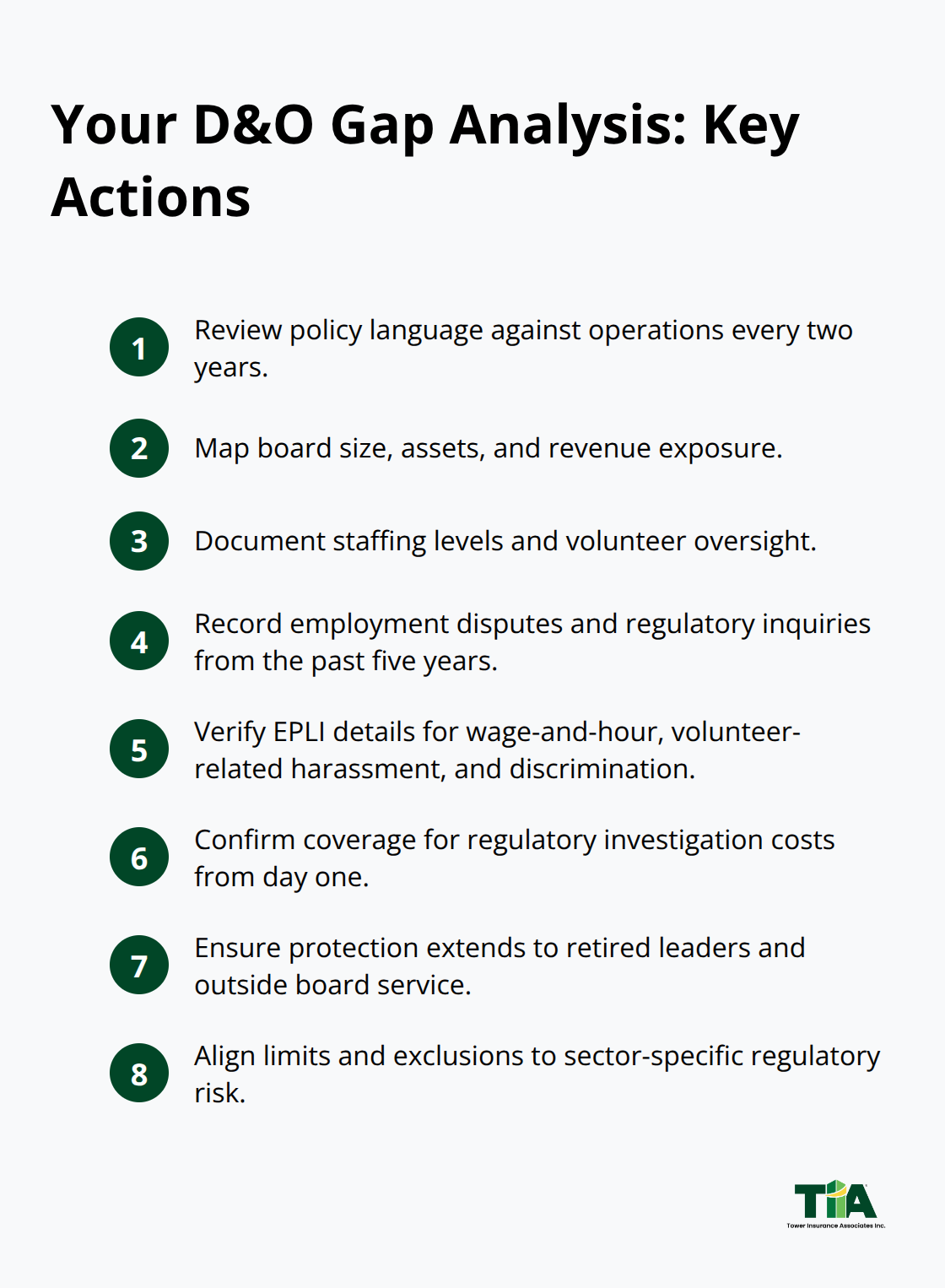
The broker should also clarify whether your coverage extends to retired board members and executives serving on outside boards, protecting against claims arising years after someone leaves your organization.
Final Thoughts
Directors and officers liability insurance protects your board from financial devastation when claims arrive, but only if your coverage matches your organization’s actual exposure. A single claim exceeds $120,000 in total cost, and settlements often reach six or seven figures that personal savings cannot absorb. Without this protection, your board members face personal financial exposure that standard business insurance does not address, leaving them vulnerable to regulatory investigations, employment disputes, and funder requirements that now demand proof of adequate coverage.
Your next step requires conducting a gap analysis of your current policy against your organization’s specific operations and claims patterns. Document your board size, financial assets, staffing levels, and any employment disputes or regulatory inquiries from the past five years, then identify which exposures your existing policy would actually cover. The 2026 market environment offers flat-to-modest premium increases, creating an ideal opportunity to negotiate better terms or upgrade coverage without absorbing dramatic cost increases.
Professional guidance matters because insurance brokers understand the claims patterns within your industry and can identify coverage gaps that generic policies miss. We at Tower Insurance Associates, Inc. have guided organizations through directors and officers liability coverage selection since 1961, representing multiple top-rated carriers to find tailored protection and competitive pricing. Contact Tower Insurance Associates, Inc. to review your current D&O program and build a protection strategy that lets your board govern with confidence.
Disclaimer: This blog post is for general informational purposes only and does not represent actual coverage, policy terms, or legal requirements. Insurance details vary by individual and jurisdiction. Please consult a licensed insurance professional for advice specific to your situation.