
A cyberattack can cripple your business in hours. Data breaches cost companies an average of $4.45 million in 2023, according to IBM’s Cost of a Data Breach Report.
At Tower Insurance Associates, Inc., we help businesses understand the cyber liability policy essentials they need to protect themselves. This guide covers the core coverage options that shield your company from financial devastation when threats strike.
What Your Cyber Liability Policy Actually Covers
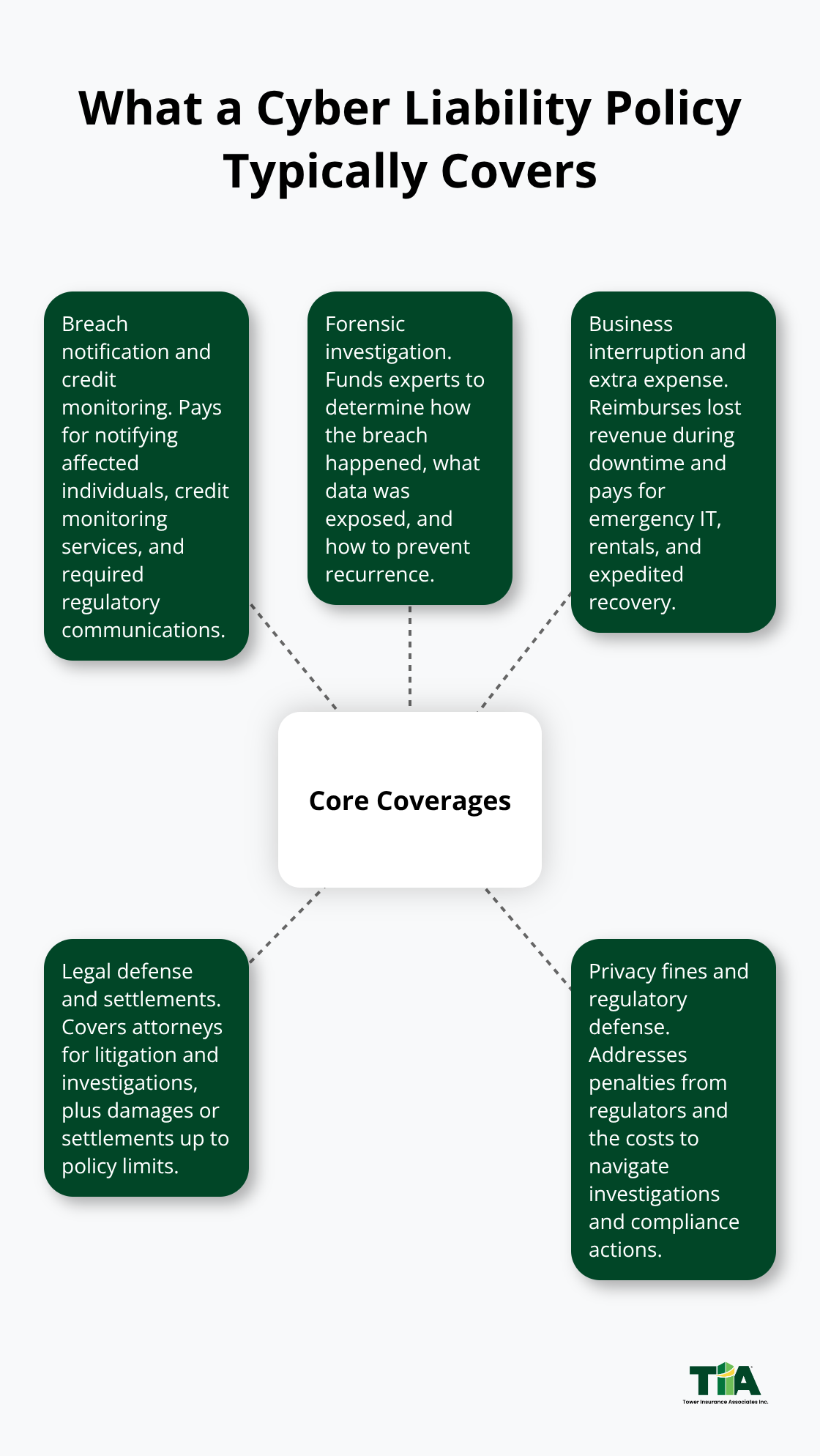
A data breach hits your business, and your cyber liability policy pays for the immediate fallout that general business insurance won’t touch. Customer notification costs alone can reach hundreds of thousands of dollars-IBM’s 2023 data showed the average breach cost $4.45 million, and notification represents a significant portion of that bill. Your policy covers the expense of notifying affected individuals, providing credit monitoring services for a set period, and managing the regulatory communications required by state and federal privacy laws.
This isn’t optional; it’s a legal mandate in most states, and your policy funds it directly.
Forensic Investigation and Breach Analysis
Forensic investigation costs get covered when you need specialists to determine how the breach happened, what data attackers exposed, and how to prevent it from recurring. These investigations typically cost $50,000 to $200,000 depending on complexity, and they’re essential for both legal defense and regulatory compliance. Your policy pays these experts to map the attack, identify vulnerabilities, and document your response for regulators and courts.
Business Interruption and Revenue Protection
Ransomware locks your systems and you can’t process orders, serve customers, or access critical files-your policy reimburses the revenue you lose during downtime. The coverage typically includes extra expenses you incur to restore operations faster: emergency IT contractors, temporary equipment rental, or expedited data recovery services. Small businesses averaging $25 million in revenue see cyber claims around $100,000, and a significant share of that comes from interruption losses.
You need to verify your policy specifies the waiting period before coverage kicks in and confirm the daily limit matches your actual revenue impact. A manufacturing company losing $50,000 daily needs higher limits than a consulting firm losing $5,000 daily. Ransomware incidents resolved in under 48 hours with incident response support dramatically reduce total losses, making the interruption component critical for survival.
Legal Defense and Third-Party Claims
Third-party claims arrive when customers, regulators, or business partners sue over data they believe you mishandled. Legal defense coverage pays for attorneys to represent you in breach litigation, regulatory investigations, and settlement negotiations. If you’re found liable, your policy covers damages and settlements up to your policy limit.
Privacy liability specifically addresses fines from regulators like state attorneys general or the FTC when you violate data protection laws. A nonprofit hit with a $1.3 million business email compromise attack benefited significantly when law enforcement and cyber insurance worked together to stop fraudulent payments and recover funds. Your policy should also cover regulatory defense costs-the lawyers, consultants, and compliance experts needed to navigate investigations and demonstrate you met your data protection obligations. Without this coverage, your company pays defense costs from operational funds even before any settlement or judgment is decided.
What Comes Next in Your Coverage Strategy
The core protections above form the foundation, but your specific business needs additional layers. Understanding which features matter most for your operation determines whether your policy truly protects you or leaves gaps when threats strike.
Why Your Business Faces Real Cyber Risk Today
The Rising Cost of Cyberattacks
Cyberattacks aren’t theoretical threats anymore-they’re happening to businesses like yours right now. The market data tells the story: US cyber insurance premiums jumped from $4.5 billion in 2021 to $9.7 billion in 2022, a signal that companies finally understand the financial stakes. Small businesses with under $25 million in revenue are targets that attackers actively pursue. On average, small businesses can expect to pay $120,000 to recover from a cyberattack. Ransomware demands averaged $1.8 million in the first half of 2022, and that’s just the extortion payment-you still need to pay for forensics, system restoration, and lost revenue on top of it.
Your general liability or errors and omissions policy won’t cover any of this. Those policies were designed for slip-and-fall accidents and professional mistakes, not data breaches or network attacks. Phishing remains the entry point for more than half of all cyber claims, and hybrid work models have expanded your attack surface. An employee working from home on an unsecured network becomes a vulnerability that traditional business insurance ignores completely. Cyber liability insurance exists specifically because the financial impact of a breach falls outside what your existing coverage addresses.
Regulatory Fines and Compliance Penalties
Regulatory fines add another layer of financial exposure that catches many business owners off guard. State privacy laws like California’s CCPA and similar regulations across other states impose penalties for mishandling personal data, and those fines can reach millions depending on the breach size and your response speed. The FTC enforces data protection standards, and violating them triggers investigation costs, legal defense expenses, and settlement obligations that your business must fund somehow.
A nonprofit that suffered a $1.3 million business email compromise attack discovered that cyber insurance coordinated with law enforcement to recover most of the fraudulent funds-something no other policy would have done. Your cyber policy covers these investigation costs and the legal defense expenses tied to regulatory action, protecting your operational budget from unexpected compliance drains.
Third-Party Liability and Customer Claims
Third-party liability from customer data exposure creates direct financial claims against your business when clients or partners suffer losses because of your security incident. If your vendor gets breached and your customer data was stored there, your customers might sue you for negligence in selecting or managing that vendor, even though the breach happened on someone else’s systems. Your cyber policy covers these third-party claims, the legal defense costs, and settlements up to your policy limit.
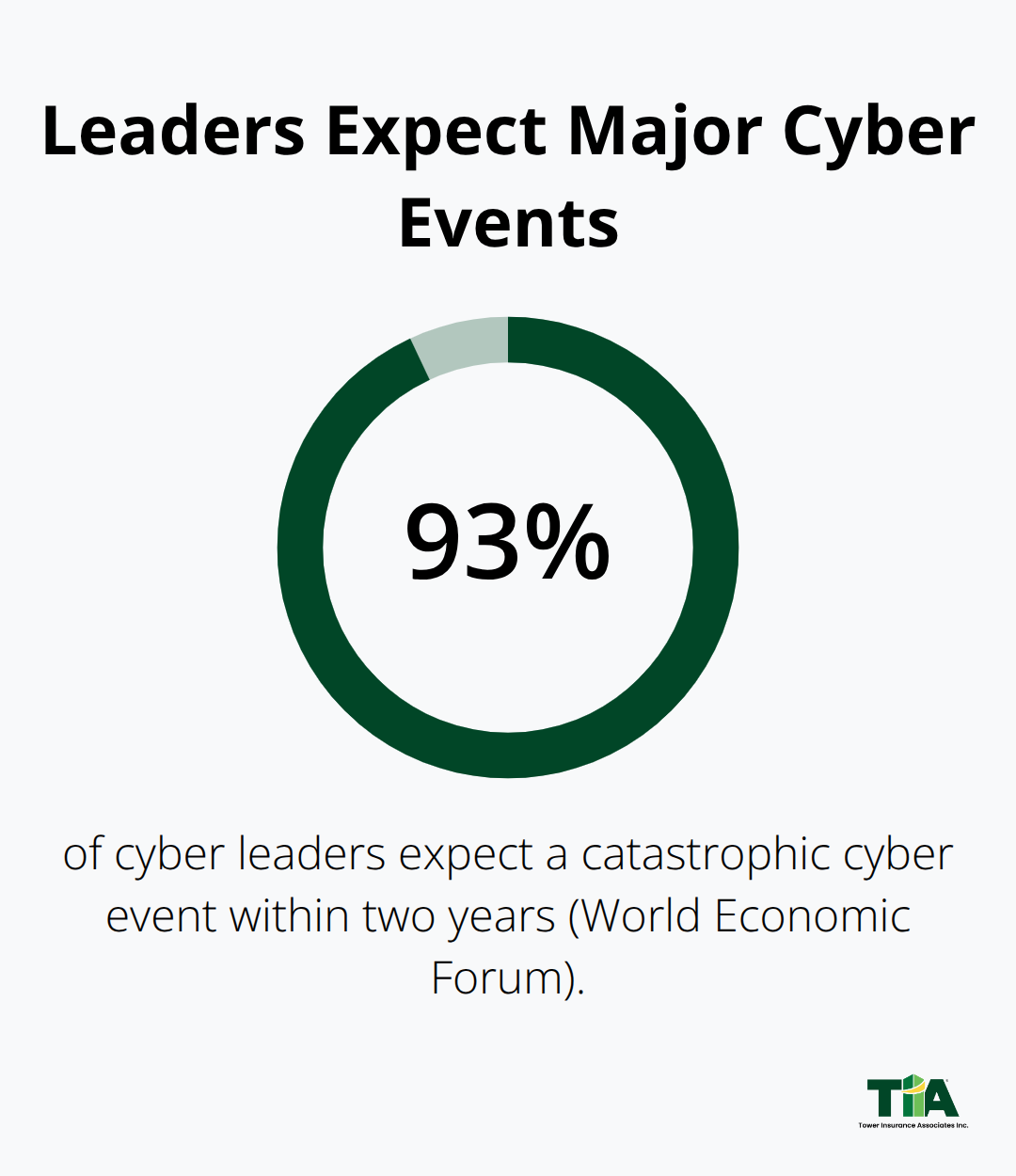
Without this coverage, you’re personally liable for damages and must hire attorneys from your operating budget while fighting the claim. The World Economic Forum reported that 93% of cyber leaders expect a catastrophic cyber event within the next two years, making this protection urgent rather than optional for any business handling customer, employee, or financial information. The specific features you select in your cyber policy determine whether you have adequate protection when these third-party claims arrive.
Key Features That Actually Protect Your Business
Network Security Liability Coverage
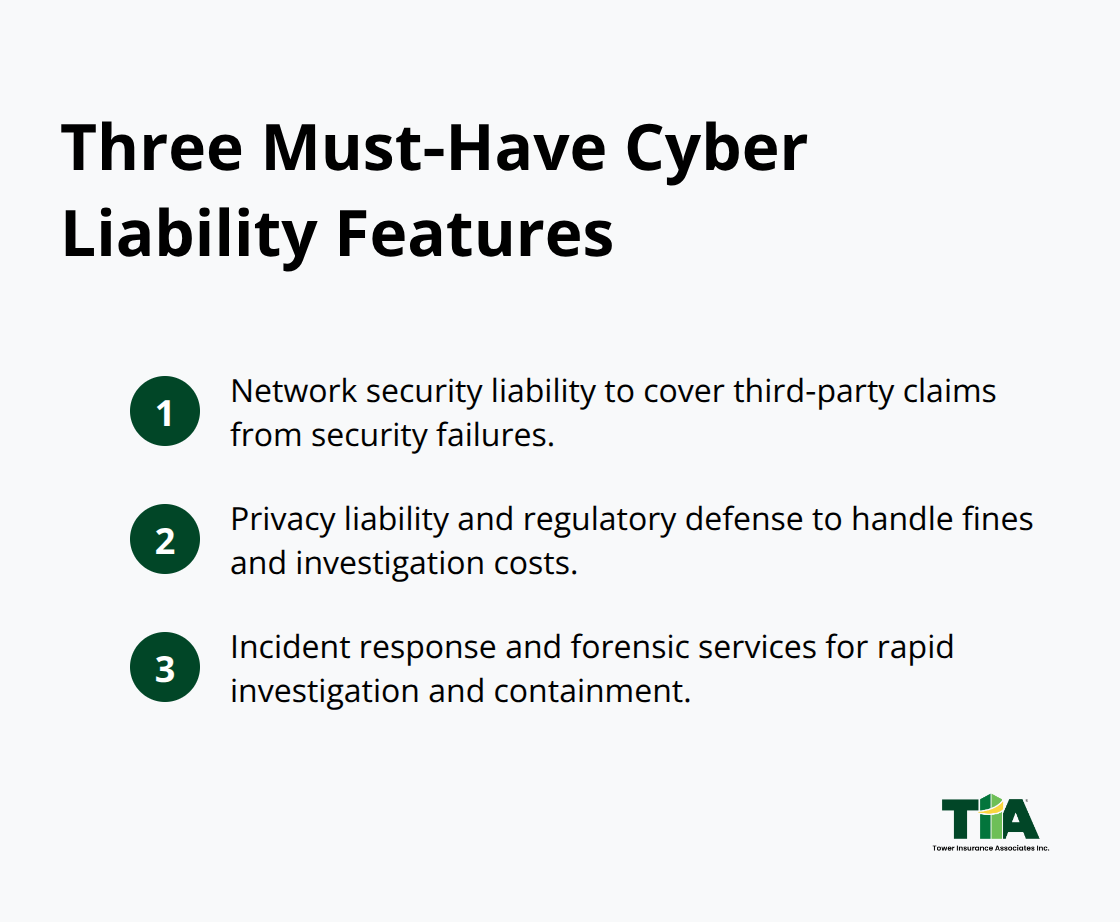
Network security liability coverage addresses the financial fallout when your systems fail to block attackers or when your network infrastructure becomes the entry point for a breach. This coverage pays for damages when third parties sue because your network security was inadequate, your systems were compromised, or your security controls didn’t meet industry standards. If a vendor gets breached through your network connection and claims you failed to implement proper segmentation or monitoring, this coverage funds your defense and any resulting settlement. The coverage should specify whether it includes both the cost of defending the claim and the damages you’re ordered to pay, not just one or the other.
Privacy Liability and Regulatory Defense
Privacy liability and regulatory defense coverage is non-negotiable for any business that handles personal data. This component covers fines from regulators like state attorneys general when you violate data protection laws such as California’s CCPA, and it pays for the lawyers and compliance specialists needed to navigate investigations before fines are even assessed. Regulatory defense costs often exceed $100,000 alone when state attorneys general launch formal investigations into your data handling practices. Your policy should clearly state whether it covers both the investigation defense phase and any resulting penalties, since some policies only cover one.
Incident Response and Forensic Investigation Services
Incident response and forensic investigation services form the third pillar, and this is where most businesses see the fastest return on their insurance investment. When a breach occurs, your policy connects you with forensic specialists who determine what happened, how much data was exposed, and what systems were compromised-work that typically costs $50,000 to $200,000 without insurance. These specialists also document your response for regulators, which directly reduces the severity of regulatory penalties and strengthens your legal defense in third-party litigation. The best policies include a zero or minimal deductible specifically for incident response services, meaning you access expert investigators immediately without worrying about out-of-pocket costs that delay the response.
Final Thoughts
Your cyber liability policy essentials address three financial realities that general business insurance ignores: the immediate costs of forensic investigation and breach response, the revenue losses from system downtime, and the legal defense expenses when third parties or regulators pursue claims. Data breach notification costs, business interruption losses, and regulatory defense can drain your operational budget in weeks without proper coverage, making network security liability and privacy protection non-negotiable components of your risk management strategy.
We at Tower Insurance Associates help businesses across California identify cyber liability coverage that matches their actual risk profile and protects what matters most to their operations. Our independent agency approach means we represent your interests, not a single insurer’s bottom line, and we work with top-rated carriers to secure competitive pricing that reflects your business’s real exposure to modern threats. Contact Tower Insurance Associates today to assess your current coverage and discuss the cyber liability protection your business actually needs.
Disclaimer: This blog post is for general informational purposes only and does not represent actual coverage, policy terms, or legal requirements. Insurance details vary by individual and jurisdiction. Please consult a licensed insurance professional for advice specific to your situation.