
Cyber attacks on small businesses in Culver City are accelerating, with ransomware and data breaches costing California companies an average of $200,000 per incident. Most business owners assume their standard insurance covers these losses-they’re wrong.
At Tower Insurance Associates, Inc., we’ve seen firsthand how a single breach can devastate a local operation. This guide walks you through cyber threats specific to your area, what a Culver City cyber policy actually covers, and the security steps that matter most.
Culver City Cyber Threats: What Attacks Hit Local Businesses
Ransomware and Phishing Lead the Attack Wave
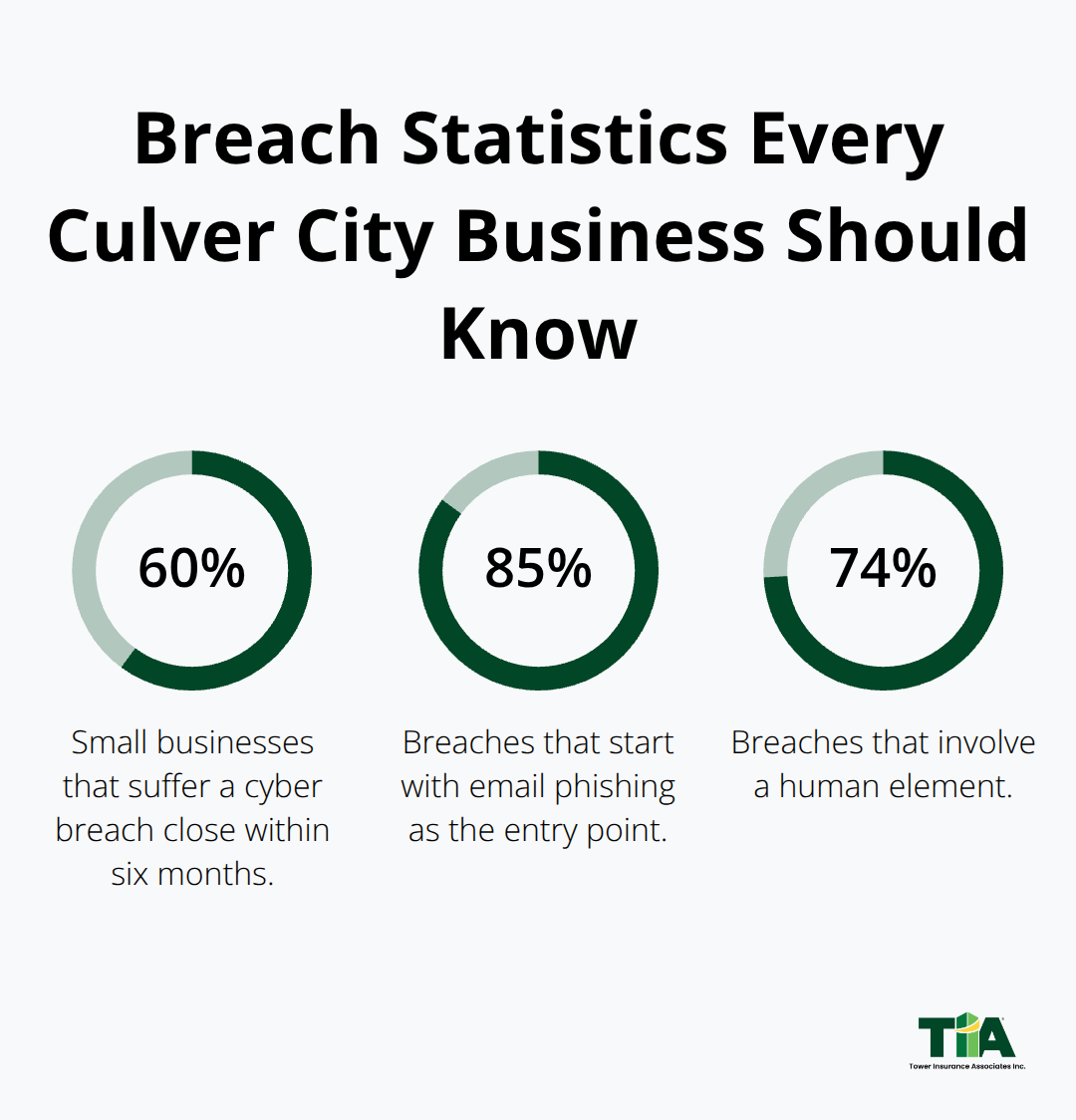
Ransomware dominates the threat landscape for small businesses across California, and Culver City is no exception. Attackers lock your files and demand payment to restore access, with average payouts reaching $50,000 to $300,000 depending on your industry and data sensitivity. Email phishing remains the entry point in roughly 85% of breaches, according to Verizon’s Data Breach Investigations Report. Your employees receive convincing messages that look legitimate, click a link, and suddenly attackers gain network access. Beyond ransomware, data theft targeting customer information or financial records happens constantly. Culver City businesses handling payment data or client lists face particularly aggressive targeting because that information sells on dark web marketplaces.
Why Local Operations Face Outsized Risk
Your Culver City location does not protect you from global attacks. Small businesses typically operate with limited IT staff or outsourced support, creating gaps where attackers exploit outdated software, unpatched systems, or weak access controls. 60% of small businesses that experience a cyber breach close within six months. You lack the redundancy and recovery resources larger enterprises maintain.
Many Culver City business owners assume their general liability or property insurance covers cyber losses-it does not. That gap leaves you exposed to costs including forensic investigation, notification requirements, business interruption, and legal liability if customer data leaks. Local service businesses like contractors, dental offices, and accounting firms store sensitive client data without realizing the liability exposure. Attackers specifically target these industries because the data holds value and security tends to remain minimal.
Real Incidents Shaping California’s Threat Reality
CalPERS, California’s pension system, disclosed a breach affecting 1.3 million people in 2019 when attackers obtained credentials through phishing. The incident cost millions in notification, credit monitoring, and remediation. MGM Resorts experienced a major breach in 2023 affecting customer information across multiple properties, highlighting how even large operations struggle with cyber defense.
Smaller California healthcare providers and dental practices have faced ransomware attacks that forced them to divert patients and operate on paper systems for weeks. One Los Angeles-based marketing firm paid $75,000 in ransomware demands after attackers encrypted client campaign files and threatened to publish proprietary strategies. These are not theoretical scenarios-they represent operational disruptions that happened to real companies in your region. The pattern is clear: attackers view California businesses as high-value targets, and they do not discriminate by company size.
Understanding these threats is the first step, but knowing what actually happens when an attack strikes your operation matters more. The financial and operational damage extends far beyond the ransom demand itself.
Cyber Insurance Coverage for Small Businesses
What Cyber Policies Actually Cover
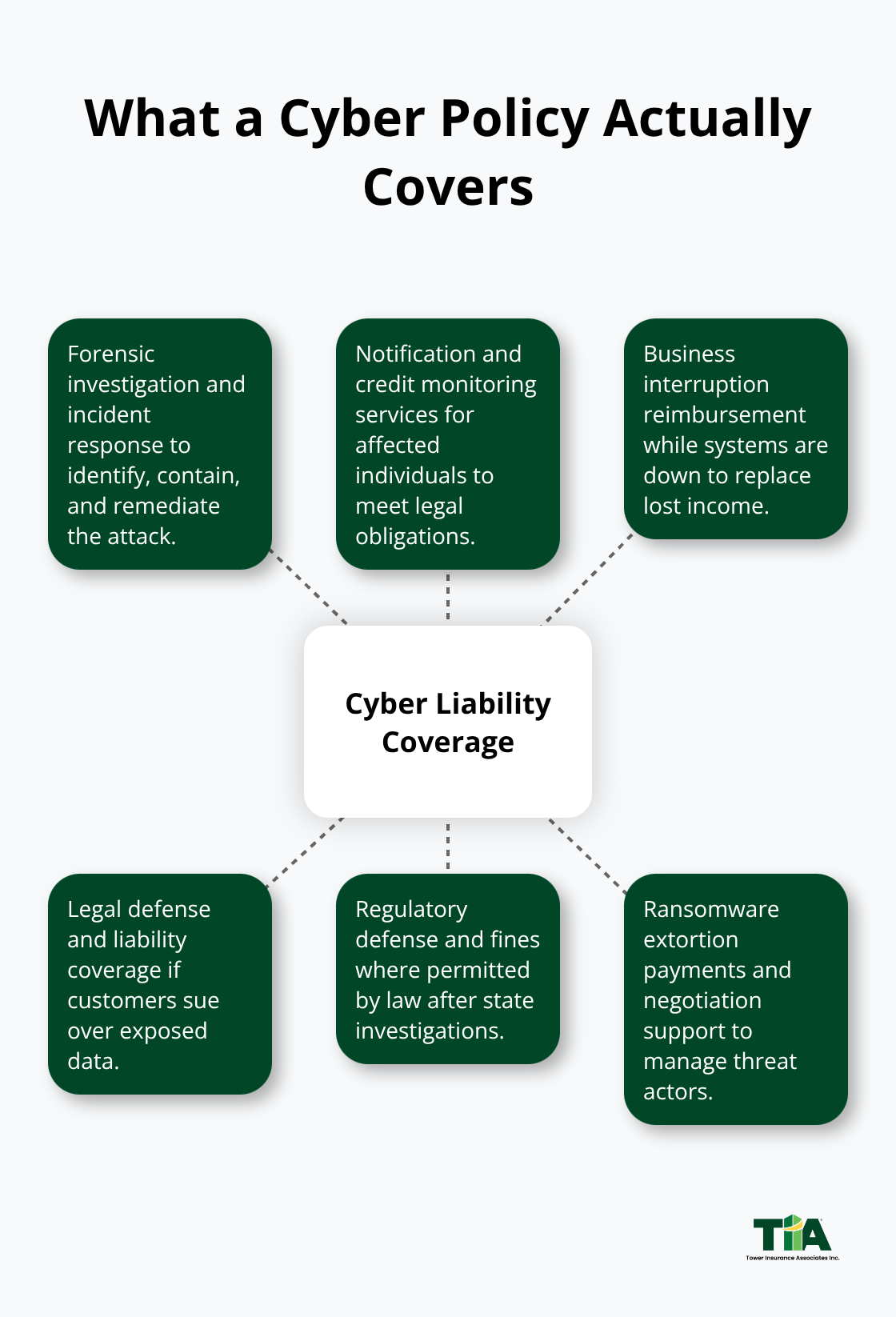
A cyber liability policy protects your Culver City business from costs that standard business insurance completely ignores. When ransomware strikes or customer data leaks, your general liability policy sits on the sidelines while you face forensic investigation fees, mandatory breach notification costs, business interruption losses during system downtime, legal defense costs if customers sue over stolen information, and regulatory fines from state authorities. According to the Ponemon Institute’s 2024 Cost of a Data Breach Report, the average total cost of a breach for small to midsize companies reached $2.46 million, yet most business owners carry zero cyber coverage. A proper cyber liability policy covers these specific expenses that can sink your operation.
Coverage typically includes forensic investigation and response services, notification and credit monitoring for affected individuals, business interruption reimbursement while systems are down, legal liability if you’re sued for failing to protect customer data, regulatory defense and fines, extortion payments in ransomware cases, and network security liability for third-party systems you manage or access. The policy limits matter enormously-a $500,000 limit may sound adequate until a breach affects thousands of customers and notification costs alone devour that entire amount before you address system recovery or legal defense.
Determining the Right Coverage Limits
Try policies with minimum limits of $1 million for Culver City businesses handling any customer financial information or personal data. Dental practices, accounting firms, contractors, and service businesses storing client records need this level of protection because attackers specifically target these industries and the data sells for higher prices on dark web markets.
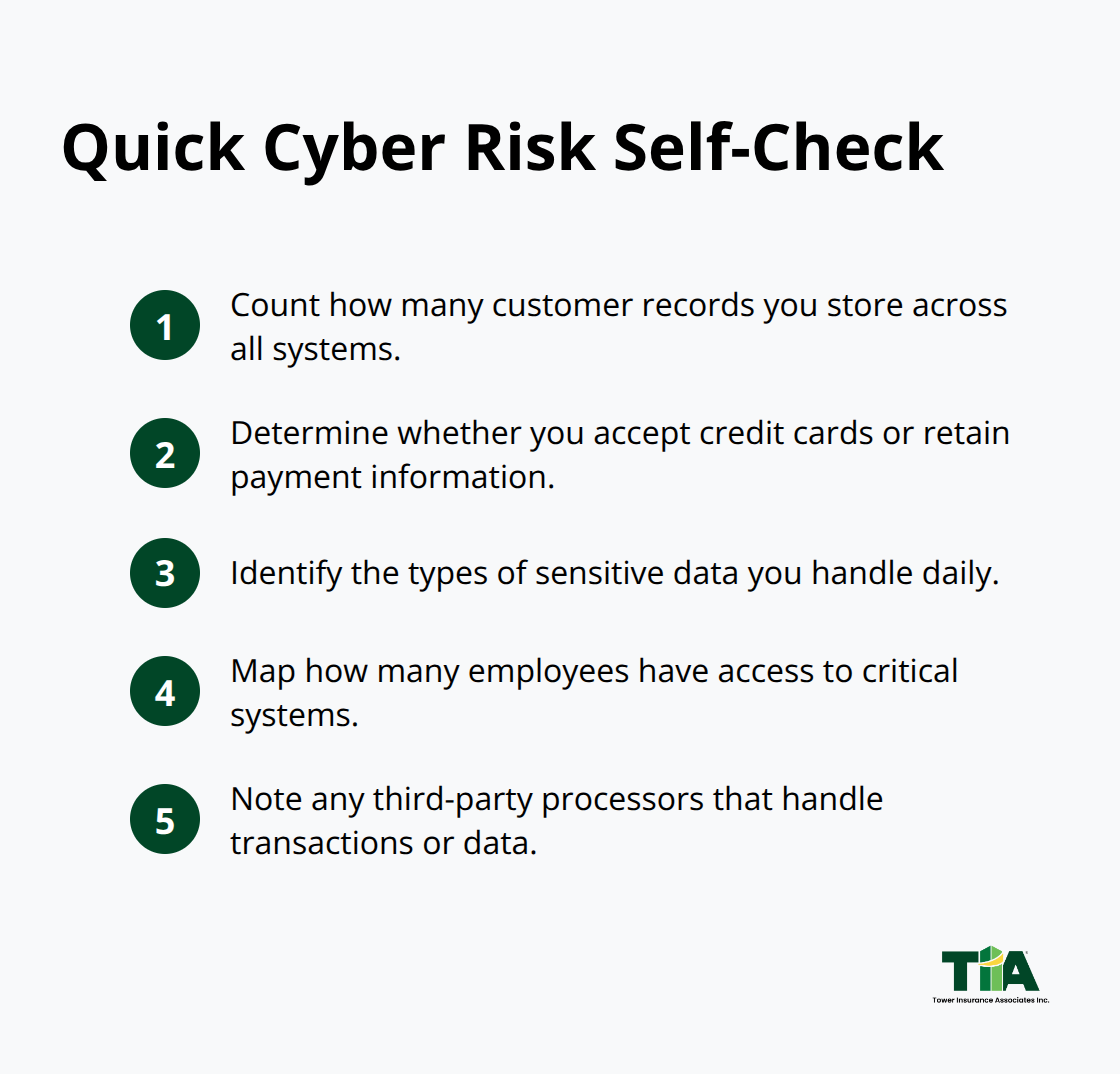
Assess your cyber risk level by counting how many customer records you maintain, whether you accept credit cards or store payment information, what type of sensitive data you handle, and how many employees have network access to critical systems. A contractor managing client contact information and payment details faces different exposure than a retail shop that processes transactions through a third-party payment processor.
Third-Party Liability and Incident Response
Third-party liability coverage deserves special attention because your clients’ data may pass through your systems, creating legal exposure if that data leaks. Many Culver City business owners overlook this entirely and discover too late that they’re liable for breaches affecting their clients’ information, not just their own.
Your cyber policy should also include incident response planning services. Many carriers provide access to breach response teams, legal counsel, and forensic experts before you ever need to file a claim, which helps you avoid costly mistakes in the critical hours after an attack. Tower Insurance Associates, as an independent agency representing multiple top-rated carriers, can help you identify which policies include these valuable pre-incident resources and match your business needs with appropriate coverage limits.
The right cyber policy transforms your response from reactive damage control to structured recovery. Understanding what protection you actually have in place sets the foundation for the additional security measures that prevent attacks from happening in the first place.
Building a Cyber Defense Strategy Beyond Insurance
Your Team: The First Line of Defense
Insurance protects you after an attack happens, but the real defense occurs every single day inside your Culver City operation. Attackers succeed because they exploit human behavior and outdated systems, not because your insurance is insufficient. The Verizon Data Breach Investigations Report found that 74% of breaches involved a human element, meaning your employees are simultaneously your greatest vulnerability and your strongest defense line. We at Tower Insurance Associates recommend treating security as an operational priority equal to payroll or customer service, not an IT checkbox you complete once yearly. Your team needs specific, practical security habits that stick because they integrate into normal workflow rather than creating friction that gets bypassed.
Password Discipline and Multi-Factor Authentication
Start with password discipline because weak credentials remain the fastest entry point attackers exploit. Require minimum 16-character passwords combining uppercase, lowercase, numbers, and symbols across all business systems, then enforce password managers like Bitwarden or 1Password so employees store credentials securely instead of writing them on sticky notes or reusing the same password across platforms. Implement multi-factor authentication on every system handling sensitive data, particularly email accounts where attackers reset passwords and gain full network access after compromising a single login. Multi-factor authentication makes brute-force attacks much less effective when in place, making it the single most effective security investment available. Culver City contractors, accountants, and healthcare providers storing client information must treat this as non-negotiable rather than optional.
Patching and Software Updates
Software updates matter intensely because attackers actively exploit known vulnerabilities in outdated systems. Patch operating systems and applications within 30 days of release, and configure automatic updates where possible so you stop relying on human memory. The 2024 Verizon report showed that 16% of breaches exploited vulnerabilities that had patches available for over a year, meaning many small businesses simply never prioritized the update process.
Phishing Simulations and Real-World Training
Employee training transforms your team from liability into asset, but only when training reflects real attack patterns your business faces. Generic annual security training that employees forget immediately after completing it wastes everyone’s time. Instead, conduct quarterly phishing simulations where you send fake phishing emails to your team and track who clicks malicious links. Companies that run monthly simulations reduce successful phishing attacks by 40% according to research from security firm KnowBe4. When an employee clicks a simulated phishing email, immediately provide a two-minute training video explaining why the email was suspicious and what they should have done instead. This immediate feedback creates lasting behavior change far more effectively than yearly lectures. Teach your team to verify unexpected requests through a separate communication channel, so if an email claims to be from your bank or vendor requesting urgent payment, they call the organization directly using a number from their official website rather than trusting the email sender. Culver City service businesses need to train staff on what constitutes sensitive information they should never email or text, since client lists and financial details moving through unsecured channels create breach liability you may not even realize exists.
Incident Response Planning and Tabletop Exercises
Incident response planning means you have documented procedures before an attack happens, not scrambling to figure out who to call while your systems are down. Create a one-page incident response checklist listing the exact sequence of actions your team takes when suspicious activity occurs: immediately isolate affected systems from the network, preserve evidence without shutting down systems unnecessarily, contact your cyber insurance carrier to begin the claims process, notify your IT support or managed service provider, and activate communication with legal counsel if customer data may be involved. The SANS Institute found that organizations with documented incident response plans reduce breach containment time from 236 days to 65 days on average, cutting recovery costs dramatically. Store this checklist both physically and digitally in multiple locations so you can access it even if your primary systems are compromised. Identify your incident response team in advance, assigning specific roles like the decision-maker authorizing the response, the technical lead coordinating system isolation, and the communications lead handling notifications. Test your plan annually through a tabletop exercise where your team walks through a hypothetical breach scenario and practices following your procedures. Your cyber insurance carrier may provide incident response planning services included in your policy, giving you access to experienced breach response teams and legal counsel before you ever need to file a claim.
Final Thoughts
Cyber attacks on Culver City small businesses accelerate every quarter, and standard business insurance leaves you completely exposed when a breach strikes. The financial damage from forensic investigation, breach notification, business interruption, and legal liability can exceed $2 million for a single incident, yet most business owners carry zero cyber coverage. A Culver City cyber policy fills this gap and protects your operation from costs that general liability and property insurance completely ignore.
Your defense strategy requires three simultaneous actions that work together to minimize risk. First, implement concrete security practices your team executes daily: enforce strong passwords with multi-factor authentication, patch systems within 30 days of updates, and run monthly phishing simulations that train employees through real-world scenarios. Second, document your incident response procedures before an attack happens so your team knows exactly what to do when suspicious activity occurs, reducing containment time from months to weeks. Third, secure appropriate cyber liability coverage with limits matching your actual data exposure and business model.
We at Tower Insurance Associates have served Culver City since 1961 and understand the specific risks facing local contractors, healthcare providers, accountants, and service businesses. As an independent agency representing multiple top-rated carriers, we match your business with cyber policies that provide the coverage limits and incident response resources you actually need. Contact Tower Insurance Associates to review your current coverage and discuss a cyber liability policy tailored to your Culver City operation, because the cost of a policy is a fraction of what a single breach will cost you.
Disclaimer: This blog post is for general informational purposes only and does not represent actual coverage, policy terms, or legal requirements. Insurance details vary by individual and jurisdiction. Please consult a licensed insurance professional for advice specific to your situation.