Restoring a classic car is a labor of love, but it’s also a significant financial investment. Standard auto insurance policies simply don’t account for the specialized work, custom parts, and increased value that come with a restoration project.
At Tower Insurance Associates, Inc., we understand that classic car restoration insurance requires a different approach than typical coverage. This guide walks you through what protection you actually need and how to secure it.
What Restoration Insurance Actually Protects
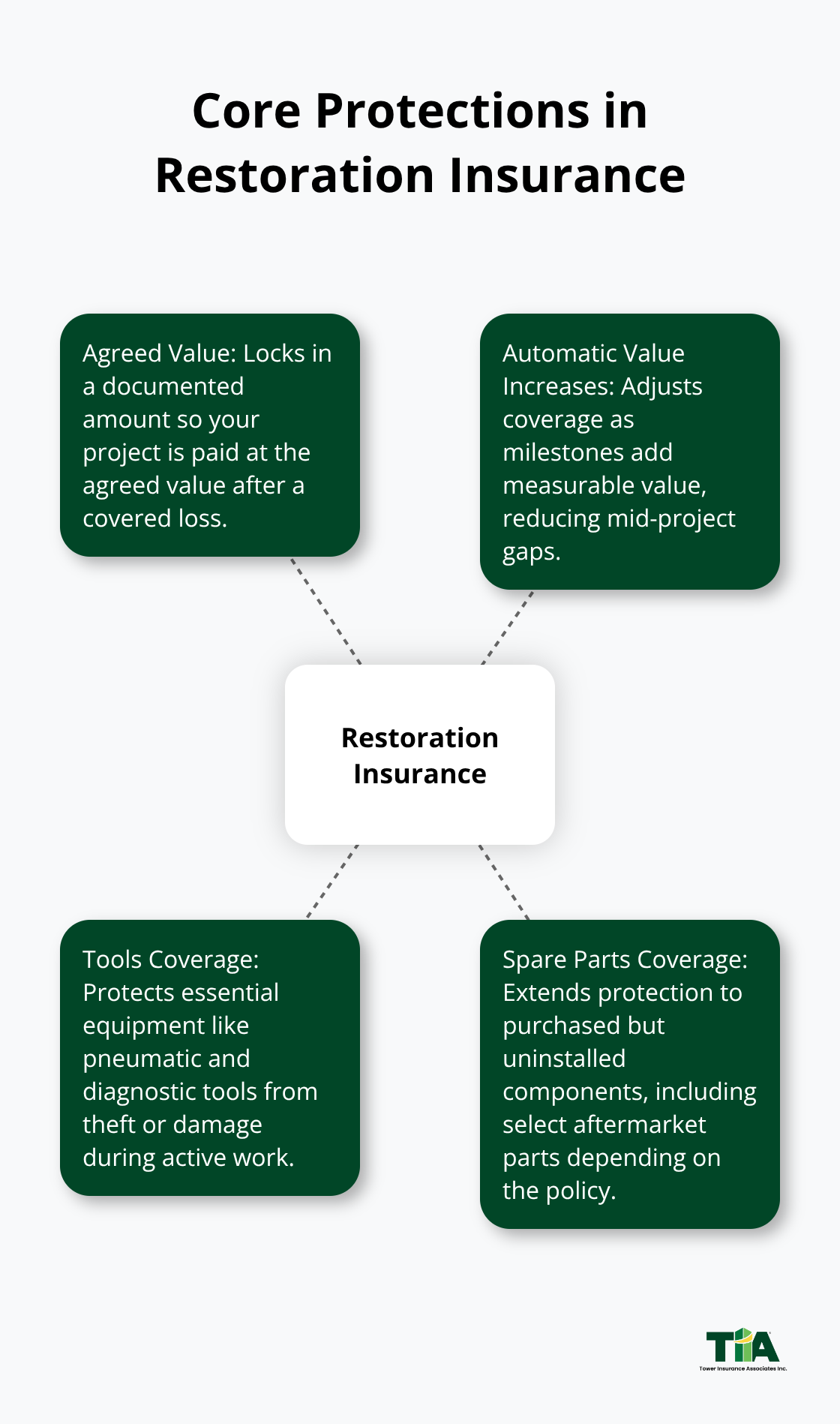
Agreed Value Coverage Locks in Your Investment
Agreed value coverage forms the foundation of proper restoration insurance, and it’s the only approach that makes sense for a project car. Unlike standard policies that pay out based on actual cash value at the time of loss, agreed value locks in the vehicle’s worth at the start of your policy period. This matters enormously because a half-restored 1965 Ford Mustang isn’t worth the same as a stock version-it’s worth more due to the work you’ve invested. You and the insurer establish this value upfront using detailed documentation like appraisals, restoration receipts, and condition photos. If a covered loss occurs, you receive the agreed amount regardless of what the car might fetch on the market, protecting your labor and investment from depreciation disputes.
Automatic Value Increases During Active Restoration
Protection during the restoration process requires automatic value increases that reflect your ongoing work. Restoration insurance policies can include automatic value increases that grow as you complete work on your vehicle. This growth matters because restoration projects genuinely increase in value as you complete milestones-engine rebuilds, frame repairs, interior work, and paint jobs all add measurable value. The automatic increase removes the burden of constantly renegotiating coverage as your project advances. However, understand that these increases typically reset at renewal, so you’ll need to request updated coverage for the coming year if your work continues. Document your progress with photos and work receipts throughout the year to support that request when it’s time to renew.
Tools and Parts Coverage That Protects Your Materials
Coverage for parts and materials extends beyond the vehicle itself to protect your restoration investment comprehensively. Most restoration policies include dedicated automotive tools coverage specifically designed for the equipment essential to your project. This protects your socket sets, pneumatic tools, diagnostic equipment, and specialized restoration gear from theft or damage while you work actively. Beyond tools, some policies offer spare parts coverage for components you’ve purchased but haven’t yet installed-whether original parts or quality replacements. This distinction matters because standard auto policies exclude coverage for uninstalled parts, leaving your stockpile of restoration materials vulnerable. Ask your insurer explicitly whether spare parts coverage applies to non-original components, since some carriers restrict it to factory-original pieces while others cover quality aftermarket replacements.
The coverage options available to you depend heavily on which insurer you select and what they actually understand about restoration work.
Why Standard Auto Insurance Doesn’t Work for Restoration Projects
Actual Cash Value Fails to Recognize Your Investment
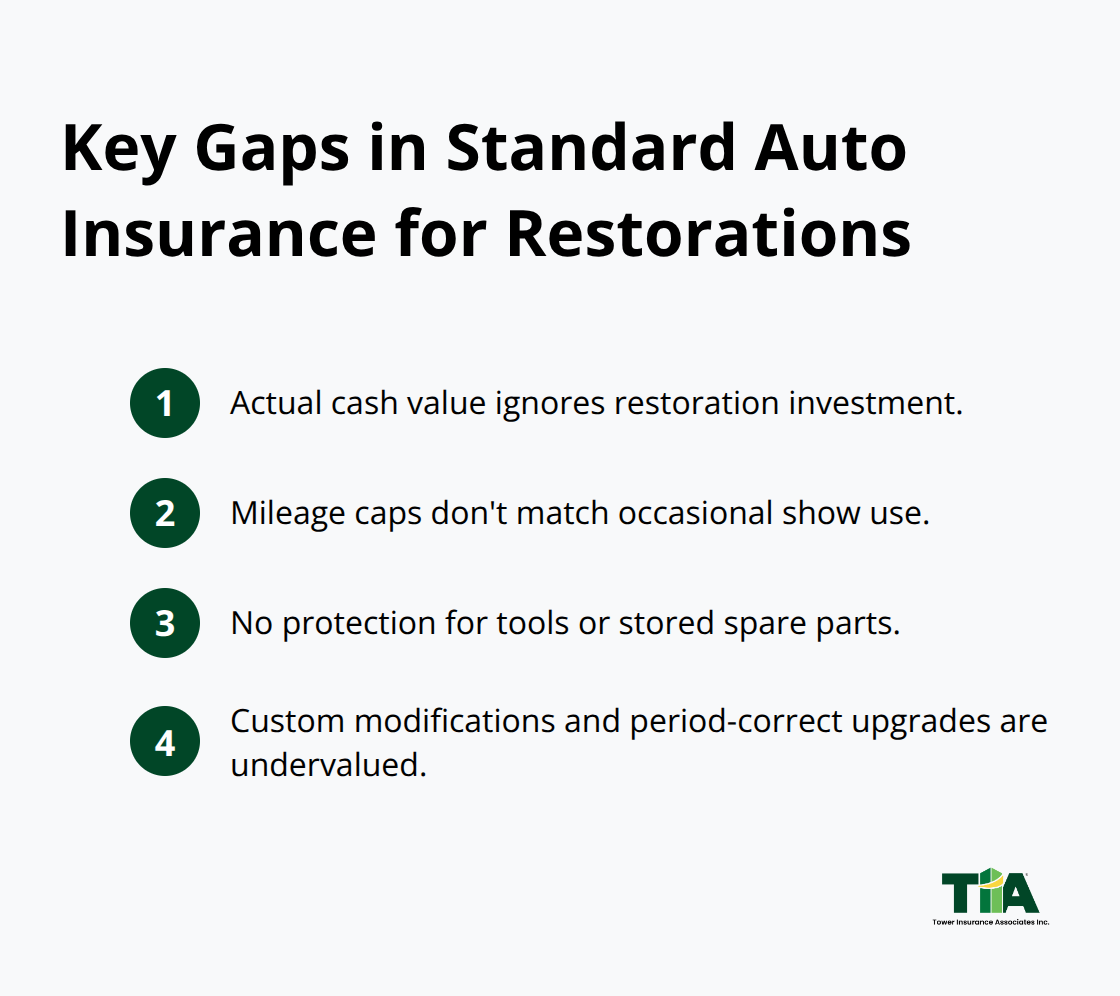
Standard auto insurance policies operate on the assumption that your vehicle depreciates over time. They use actual cash value calculations, meaning they pay out based on what your car is worth on the open market at the moment of loss, minus depreciation. This approach fails catastrophically for restoration projects because it completely ignores the thousands of dollars and countless hours you invest in specialized work. A policy that covers a stock 1965 Ford Mustang won’t adequately cover yours once you rebuild the engine, restore the frame, and refinish the interior. The insurer sees depreciation; you see appreciation from legitimate restoration work. This fundamental mismatch leaves restoration owners dramatically underprotected.
Mileage Restrictions Penalize Occasional Drivers
Mileage restrictions compound this problem significantly. Most standard policies allow 12,000 to 15,000 miles annually without penalty, but many restoration insurance policies cap usage at 2,500 to 7,500 miles per year. This matters because standard carriers price premiums around regular commuting patterns and frequent use. When you take your restored Sunbeam Tiger to a car show, you use your vehicle differently than a daily driver, and standard policies don’t account for this specialized usage pattern.
The restriction itself isn’t unreasonable for a project car you drive occasionally, but standard policies won’t even acknowledge these mileage differences in their coverage structure. You pay for coverage designed for vehicles driven thousands of miles monthly when your restoration sits in a climate-controlled garage most of the time.
Tools and Parts Receive No Protection
Standard policies provide no coverage for automotive tools or spare parts stored in your workspace. If a theft occurs in your restoration shop, your socket sets, diagnostic equipment, and stockpile of original parts receive zero protection under a standard auto policy. Restoration policies can include up to $750 or more in dedicated tools coverage specifically designed for this scenario. This protection extends to the equipment essential to your project work and the components you’ve purchased but haven’t yet installed.
Custom Modifications Create Coverage Gaps
Custom modifications and aftermarket components receive inadequate or excluded coverage under standard policies. A standard insurer sees a 1969 Chevrolet Camaro SS; they don’t see the $15,000 you spent on a period-correct restoration or the custom upholstery matching original specifications. When a total loss occurs, they pay based on what a typical Camaro SS is worth, not what yours is worth after restoration. This gap between what the insurance company thinks your car is worth and what you actually invested becomes a financial disaster during a claim.
Agreed value coverage eliminates this problem because you establish the vehicle’s worth upfront with documented proof of restoration work and current condition. Understanding these gaps in standard coverage is the first step toward selecting an insurance approach that actually protects your restoration investment. The next section walks you through how to identify and choose the right specialized coverage for your specific project.
Selecting Insurance That Matches Your Restoration Reality
Compile Documentation That Proves Your Investment
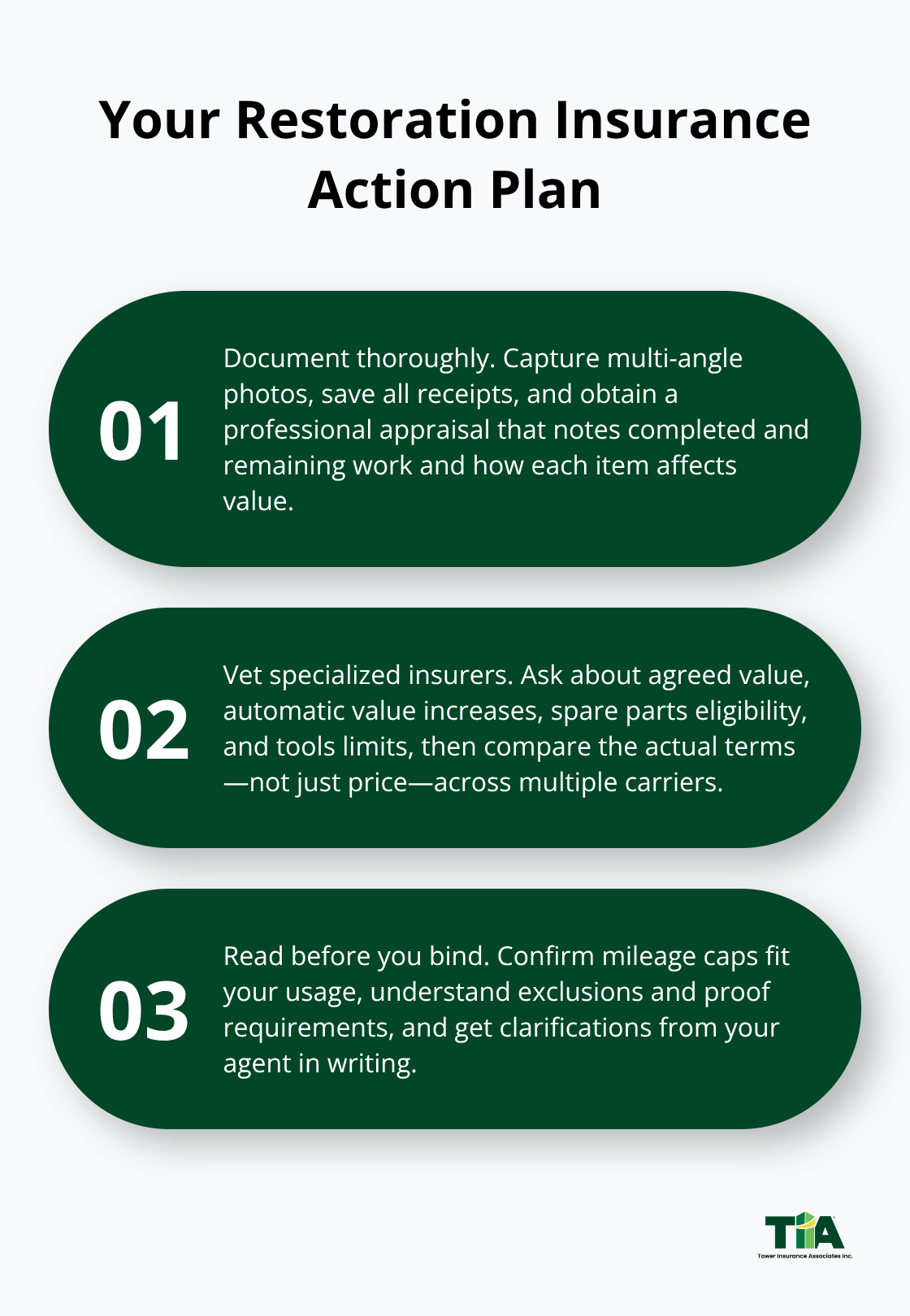
Choosing restoration insurance starts with documentation that establishes what you’ve invested and what your vehicle is worth right now. Photograph the current condition from multiple angles, gather receipts for all restoration work completed and materials purchased, and obtain a professional appraisal specific to your vehicle’s restoration status. The appraiser should detail work completed, work remaining, and how each component affects current value. This documentation becomes your foundation for establishing agreed value coverage that won’t underestimate your investment when a loss occurs. Most restoration owners assume their insurer will simply accept a verbal description of their project’s value; insurers require concrete proof instead. Hagerty, which specializes in classic car coverage, requires photographs and detailed restoration information to verify active projects before issuing policies. Your documentation should include a timeline showing completion milestones and planned work, which helps insurers understand your project’s scope and current stage.
Work with Insurers Who Understand Restoration Projects
Not all insurance agents grasp the difference between a half-completed restoration and a finished classic car, and this knowledge gap costs you money and coverage gaps. Contact insurers directly and ask whether they’ve written policies for active restorations in your vehicle’s category. Ask specifically about their automatic value increase provisions during restoration and whether those increases reset at renewal. Ask whether they cover spare parts, whether they restrict that coverage to factory-original components only, and what dollar limits they apply to tools coverage. Most importantly, ask whether they use agreed value or actual cash value as their valuation method, because actual cash value policies will fail you during a claim. Get quotes from multiple carriers and compare their specific terms rather than focusing only on premium price. The cheapest quote often reflects cheapest coverage, not best value.
Read Your Policy Documents Before Purchase
Read your actual policy documents before purchase rather than after a loss occurs. Verify that agreed value coverage applies to your specific vehicle and restoration stage. Confirm the exact dollar amount of tools coverage and whether spare parts coverage includes non-original components. Check whether mileage restrictions match your actual driving patterns, since caps ranging from 2,500 to 7,500 miles annually suit occasional drivers but may restrict legitimate car show attendance. Understand what documentation you must maintain to support claims and what proof of active restoration looks like in your policy’s eyes. Ask your agent to explain any exclusions or limitations in writing. This diligence prevents the common scenario where an owner believes they have comprehensive restoration coverage only to discover during a claim that their policy excludes the exact damage that occurred. Tower Insurance Associates, Inc., an independent insurance agency in Culver City, California, represents multiple top-rated carriers and can help you navigate these policy details while finding tailored coverage at competitive pricing.
Final Thoughts
Protecting your restoration investment requires moving beyond standard auto insurance and selecting coverage specifically designed for active projects. The three core elements-agreed value coverage that locks in your investment, automatic value increases that reflect your ongoing work, and dedicated tools and parts protection-form the foundation of proper classic car restoration insurance. Without these components, you face the real risk of discovering during a claim that your policy doesn’t cover the exact damage or loss that occurred.
Start by gathering your documentation: photographs of current condition, receipts for completed work, and a professional appraisal specific to your restoration stage. Contact insurers who specialize in classic cars and ask directly about their approach to active restorations, their automatic value increase provisions, and whether they use agreed value rather than actual cash value. Compare quotes from multiple carriers, focusing on coverage quality and policy terms rather than premium price alone, since the cheapest option rarely provides the protection your investment deserves.
We at Tower Insurance Associates, Inc. represent multiple top-rated carriers and understand the nuances of classic car restoration insurance. Our team in Culver City, California works with you to establish proper agreed value coverage, confirm your tools and parts protection, and verify that your policy matches your actual restoration timeline and driving patterns. Visit Tower Insurance Associates, Inc. to discuss your specific restoration and get a quote that reflects what you’ve actually invested in your classic car.
Disclaimer: This blog post is for general informational purposes only and does not represent actual coverage, policy terms, or legal requirements. Insurance details vary by individual and jurisdiction. Please consult a licensed insurance professional for advice specific to your situation.