

Medical professional liability in California is a serious concern for healthcare providers. One mistake or patient claim can threaten your practice’s financial stability and reputation.
At Tower Insurance Associates, Inc., we help medical professionals understand their coverage options and protect what they’ve built. This guide walks you through what medical professional liability coverage actually covers, current claim trends in California, and how to select the right policy for your practice.
What Medical Professional Liability Coverage Actually Covers
The Three Core Protections
Medical professional liability insurance protects you against three financial threats that can devastate a practice. First, it covers claims that arise from patient injuries or allegations of negligence in your care or treatment decisions. Second, it pays for defense costs and legal fees, which on average cost more than $27,000 to defend a medical malpractice claim. Third, it covers settlements and judgments if a patient wins their case or you reach an out-of-court agreement. Without this coverage, you would pay these expenses directly from practice revenue, potentially forcing difficult choices between covering legal bills and meeting payroll.
Claims-Made vs. Occurrence Coverage
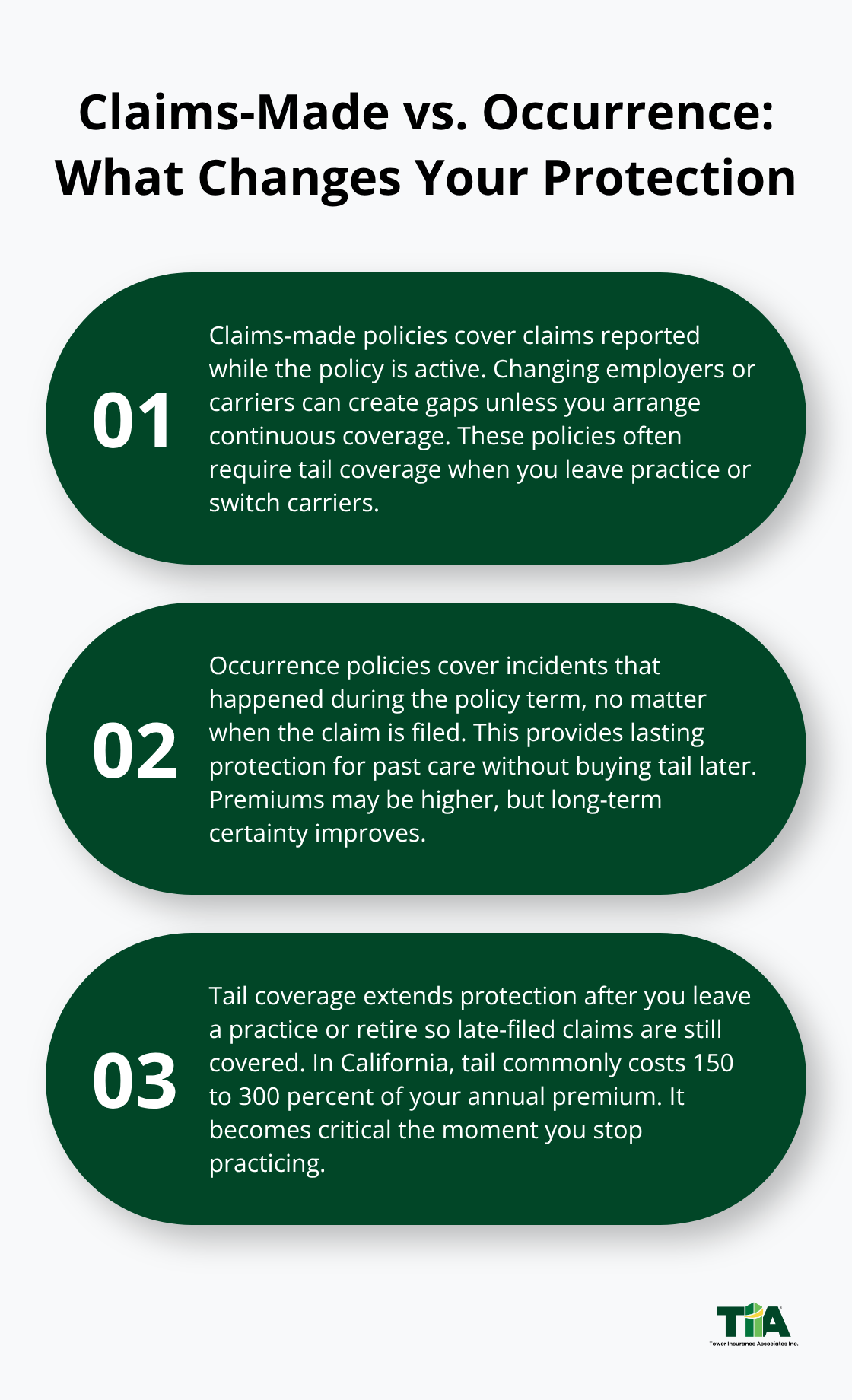
The scope of what your policy covers depends heavily on your specific policy structure, which is why comparing policies matters more than most providers realize. Some policies cover only claims made during the policy period, while others cover incidents that occurred during coverage regardless of when the claim arrives-known as occurrence-based coverage. California healthcare providers should understand that tail coverage, which extends protection after you leave a practice or retire, typically costs 150 to 300 percent of your annual premium and becomes critical the moment you stop practicing.
Hidden Costs and Policy Exclusions
Defense costs in particular can drain resources quickly-a single expert witness costs $3,000 to $5,000 per day, and depositions routinely run thousands of dollars. Many providers overlook policy exclusions for procedures outside their specialty, cosmetic treatments, or work performed in non-traditional settings like urgent care clinics or telemedicine platforms. These gaps in coverage determine whether you remain protected or face exposure when a patient files suit.
As you evaluate your current protection level, the next step involves understanding how often California providers actually face claims and what those claims cost.
Current State of Medical Malpractice Claims in California
Rising Frequency of Claims Against Healthcare Providers
Medical malpractice claims in California occur far more frequently than most providers expect, and the financial impact has grown substantially over the past decade. According to data from the National Practitioner Data Bank, California consistently ranks among the top states for malpractice claims. Each year, 7.4% of all physicians had a malpractice claim, with 1.6% having a claim leading to a payment. Surgeons and anesthesiologists report claim frequencies between 15 and 20 percent over a career, while obstetricians face even higher exposure.
Average Settlement Amounts and Trends
The California Medical Association reports that the average settlement or judgment in medical malpractice cases has climbed to between $250,000 and $750,000 depending on injury severity and specialty, with catastrophic cases regularly exceeding $1 million. These figures matter because they directly affect your insurance premiums and the coverage limits you actually need. A $1 million policy limit sounds substantial until you face a single case that exhausts it entirely, leaving you personally liable for any excess judgment.
The cost of claims extends beyond settlements too. The average cost to defend a single claim now reaches $75,000 to $150,000 when accounting for expert witnesses, depositions, and trial preparation. Many California practices learn this reality only after a claim arrives, at which point policy selection decisions made years earlier cannot be changed.
Impact on Medical Practices and Insurance Costs
The financial pressure from rising claims directly impacts practice operations and insurance affordability across California. Providers in high-risk specialties like orthopedic surgery and emergency medicine face annual premiums ranging from $40,000 to $200,000 or higher, forcing difficult decisions about which procedures to offer and which patient populations to serve. Defensive medicine, where providers order unnecessary tests or procedures to reduce liability exposure, adds an estimated 5 to 10 percent to overall healthcare costs in California according to research from the Journal of the American Medical Association.
Some practices respond by limiting complex cases, reducing emergency department coverage, or relocating to states with lower claim frequency. The key involves understanding your specialty’s actual claims history and securing appropriate coverage limits before a claim materializes. This foundation of knowledge then guides your next critical decision: selecting a policy structure that actually protects your practice.
Selecting Coverage Limits That Match Your Actual Risk
Coverage limits determine how much your insurance pays before you absorb losses personally, making this decision far more consequential than most providers treat it. The California Medical Association data showing settlements between $250,000 and $750,000 for standard cases creates a false sense of security if you carry only $1 million in coverage-one catastrophic birth injury or surgical complication can easily exceed that threshold, leaving you exposed to six-figure judgments paid from personal assets. Orthopedic surgeons and neurosurgeons should seriously consider $2 million per claim and $4 million aggregate coverage based on the severity of potential injuries in their specialties. Emergency medicine physicians and anesthesiologists face similar exposure. General practitioners and specialists with lower-risk procedures might operate safely at $1 million per claim with $3 million aggregate, but this requires honest assessment of your actual case complexity, not wishful thinking about claim probability.
Deductibles work inversely to premiums-a $5,000 deductible versus a $25,000 deductible can save 15 to 25 percent annually on premiums according to insurance industry data, but only if you can actually absorb that out-of-pocket expense when a claim arrives. Many practices choose lower deductibles because they underestimate how quickly defense costs accumulate. That $27,000 average defense cost can hit your deductible in weeks, meaning you pay the first $5,000 to $25,000 regardless of policy limits. Some California practices wrongly assume they should maximize deductibles to minimize premiums, then face cash flow crises when claims arrive. A $10,000 deductible typically represents the practical sweet spot-low enough to manage without decimating monthly operations but high enough to generate meaningful premium savings.
Exclusions and Endorsements Shape Your Real Protection
Policy language creates gaps that coverage limits cannot fill. Telemedicine exclusions remain common despite the widespread adoption of virtual care, leaving providers exposed if they offer remote consultations without explicit policy language permitting it. Cosmetic procedure exclusions affect many surgical practices that perform elective procedures alongside medical work. Procedures outside your stated specialty often trigger exclusions-a family medicine doctor performing minor surgery without documented training and specialty endorsement might face claim denial.
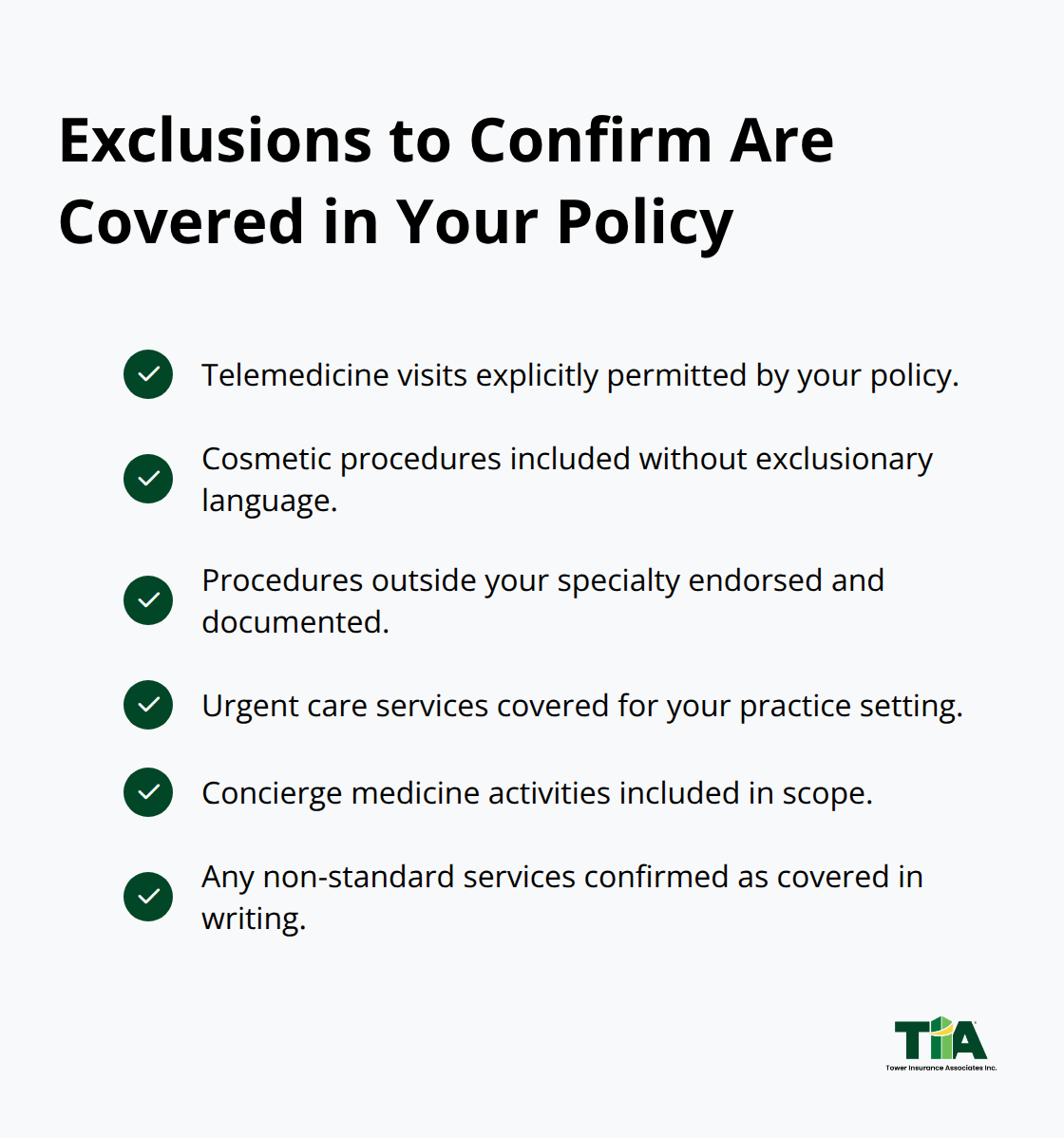
You need to obtain your actual policy document, read the exclusions section completely, and ask your agent specifically whether your typical daily work falls within coverage or outside it. If your practice includes urgent care work, concierge medicine, cosmetic procedures, or any non-standard service, request written confirmation that these activities are covered before purchasing.
Endorsements add specific protections back into policies after exclusions remove them. Tail coverage endorsements extend your protection after retirement or practice departure, but California providers often wait until their last day of practice to purchase it, paying the highest possible rates. Purchasing tail coverage while actively practicing typically costs 150 to 300 percent of your annual premium according to industry standards, but locking in this rate years before you need it saves substantially compared to purchasing it at retirement. Prior acts endorsements protect you for incidents occurring before your current policy period, which matters significantly if you switch carriers. Without prior acts coverage, a claim filed three years after treatment occurred might fall outside your new policy’s coverage period entirely.
Comparing Actual Quotes and Carrier Financial Stability
Obtaining competitive quotes requires providing identical information to multiple carriers-your specialty, claims history, years in practice, procedures performed, and patient volume. Requesting quotes from three to five carriers typically reveals 20 to 40 percent variation in premiums for identical coverage, making comparison shopping essential rather than optional. However, premium alone should never drive your decision. The insurance company’s financial stability matters critically because a low-cost carrier facing solvency issues cannot pay your claims when they arrive.
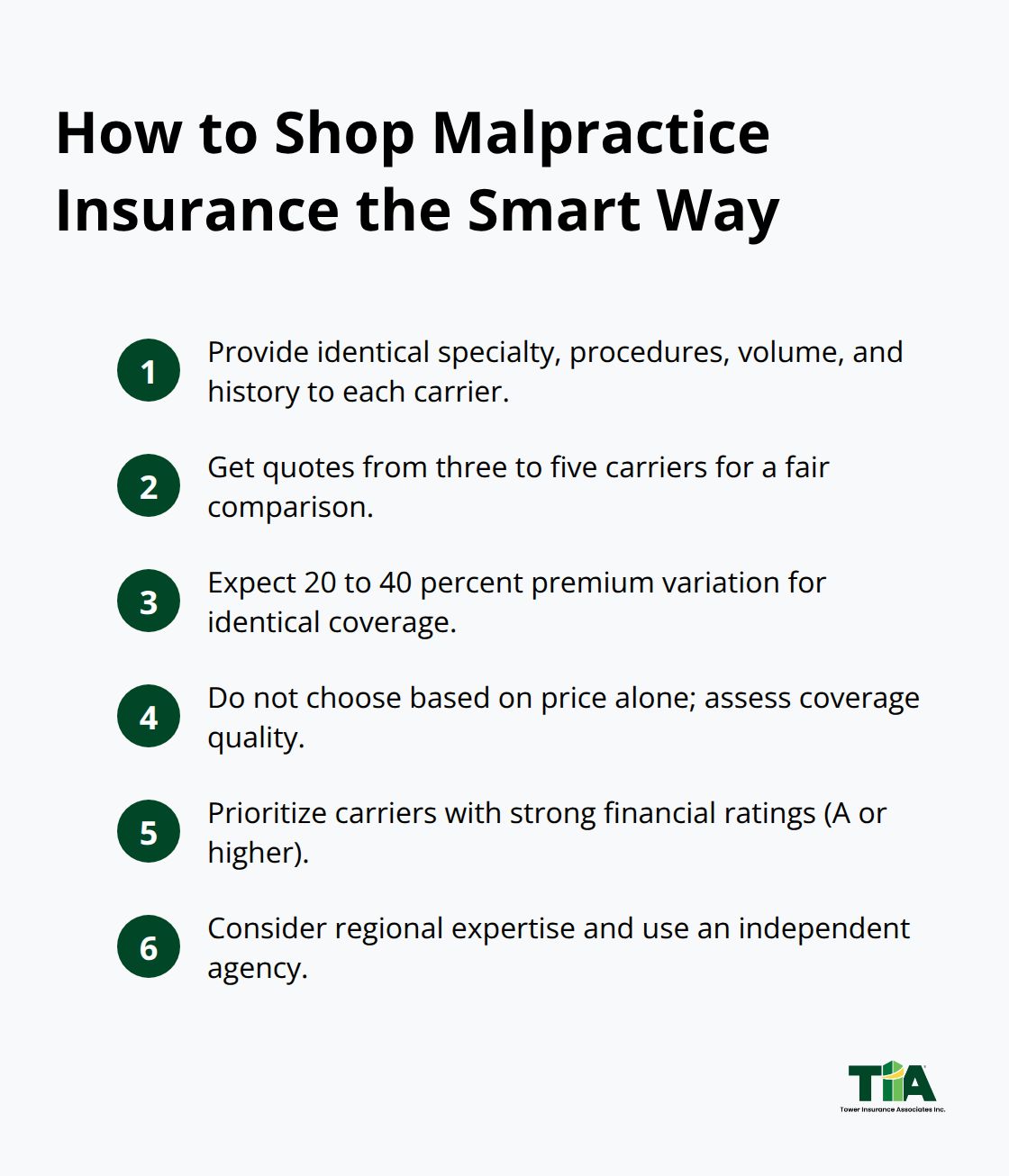
Check A.M. Best ratings or Standard and Poor’s ratings for any carrier you consider-only carriers rated A or higher deserve consideration. Some California practices gravitate toward national carriers without recognizing that regional specialists often understand California’s specific claims environment and litigation costs better than national competitors. An independent insurance agency representing multiple top-rated carriers can match your specific risk profile with appropriate coverage and competitive pricing rather than forcing you into one-size-fits-all national programs that may not address your practice’s unique needs.
Final Thoughts
Medical professional liability in California requires action today, not after a claim arrives at your practice door. The data shows that 7.4% of physicians face malpractice claims annually, with settlements regularly exceeding $250,000, and your coverage limits, deductibles, exclusions, and carrier choice determine whether a single claim strengthens your practice or forces you into personal financial liability. Start by obtaining your current policy documents and reading the exclusions section completely to identify gaps between what you actually do daily and what your policy covers.
Calculate appropriate coverage limits based on your specialty’s claims history and the severity of potential injuries your work involves, then request competitive quotes from multiple top-rated carriers using identical information about your practice. Premium variations of 20 to 40% for identical coverage are common, making comparison shopping financially essential, and you should verify that any carrier you consider carries an A or higher financial stability rating. If your practice includes telemedicine, cosmetic procedures, or work outside your primary specialty, request written confirmation that these activities are covered before purchasing any policy.
We at Tower Insurance Associates, Inc. represent multiple top-rated carriers and understand California’s specific claims environment, litigation costs, and regulatory requirements. Rather than forcing you into national programs designed for generic practices, we match your actual risk profile with appropriate coverage and competitive pricing. Your practice’s financial stability depends on the decisions you make today.
Disclaimer: This blog post is for general informational purposes only and does not represent actual coverage, policy terms, or legal requirements. Insurance details vary by individual and jurisdiction. Please consult a licensed insurance professional for advice specific to your situation.