

California board members face real legal and financial exposure every day. At Tower Insurance Associates, Inc., we’ve seen firsthand how a single lawsuit or regulatory action can threaten personal assets and organizational stability.
CA directors liability coverage exists specifically to protect you from these risks. This guide walks you through what the coverage actually covers, the threats California boards face most often, and how to pick the right policy for your organization.
What D&O Coverage Actually Covers
Personal Asset Protection From Board Decisions
Directors and officers liability coverage protects your personal assets when board decisions lead to lawsuits or regulatory action. The policy shields your personal finances from liability claims arising from your board duties-meaning creditors cannot come after your home, savings, or retirement accounts if the organization faces a judgment. This protection matters because board members could be held personally liable for certain decisions, even when those decisions seemed reasonable at the time. Without this coverage, a single lawsuit can wipe out decades of personal savings.
Legal Defense Costs Pay as Cases Progress
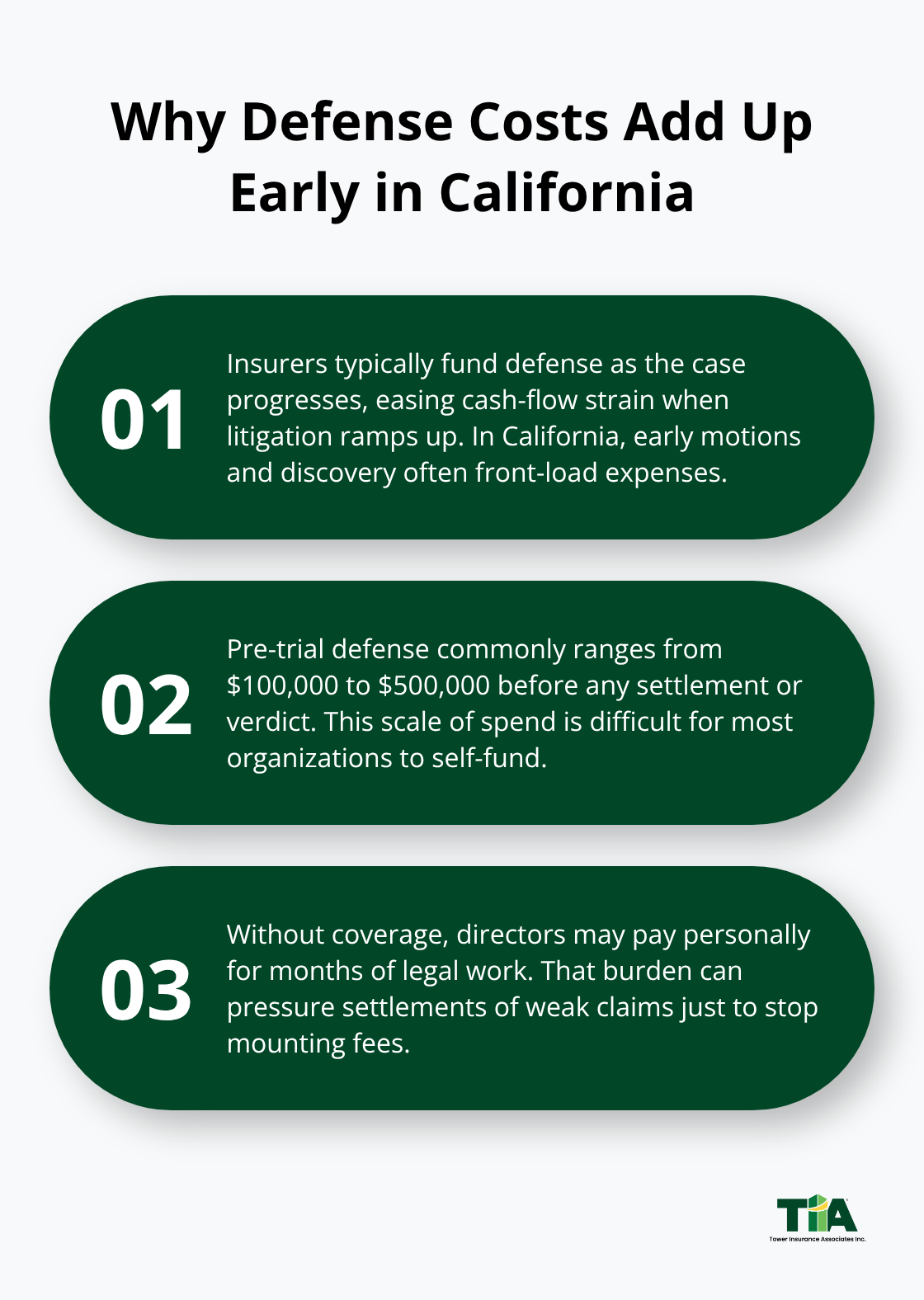
The biggest practical advantage of D&O coverage is that insurers typically pay defense attorneys as the case progresses, not after you win or lose. California board members often face depositions, discovery disputes, and pre-trial motions that drain resources months before trial begins. These early-stage costs run substantial-defending a lawsuit typically costs $100,000 to $500,000 before any settlement or verdict. Without this coverage, you personally fund these costs while hoping to recover them later-a burden that pressures many board members to settle weak claims just to stop paying legal bills.
Employment Practices Liability Protection
D&O coverage also covers employment practices liability, protecting against claims from staff members alleging discrimination, wrongful termination, or harassment. This component matters increasingly in California, where employment law favors workers and awards tend to run high compared to other states. The policy pays both defense costs and settlements related to these employment claims, which represent a growing share of board liability exposure.
Regulatory Investigation Coverage
The policy also covers regulatory investigation costs if state agencies investigate board decisions, which happens frequently in California with nonprofits, credit unions, and licensed service organizations. These investigations generate substantial legal expenses even when no wrongdoing occurred. An insurance agency can help you understand which regulatory risks apply to your specific organization and what coverage limits make sense for your situation.
Common Risks California Directors Face
Shareholder Lawsuits and Derivative Actions
Shareholder lawsuits represent the first major threat California board members face, and they happen more frequently than many directors realize. Derivative actions-where shareholders sue on behalf of the corporation rather than individually-create significant exposure as activist investors and proxy advisory firms scrutinize board decisions more aggressively. These lawsuits typically allege that board members breached their fiduciary duty by making poor strategic decisions, approving excessive executive compensation, or failing to prevent fraud.
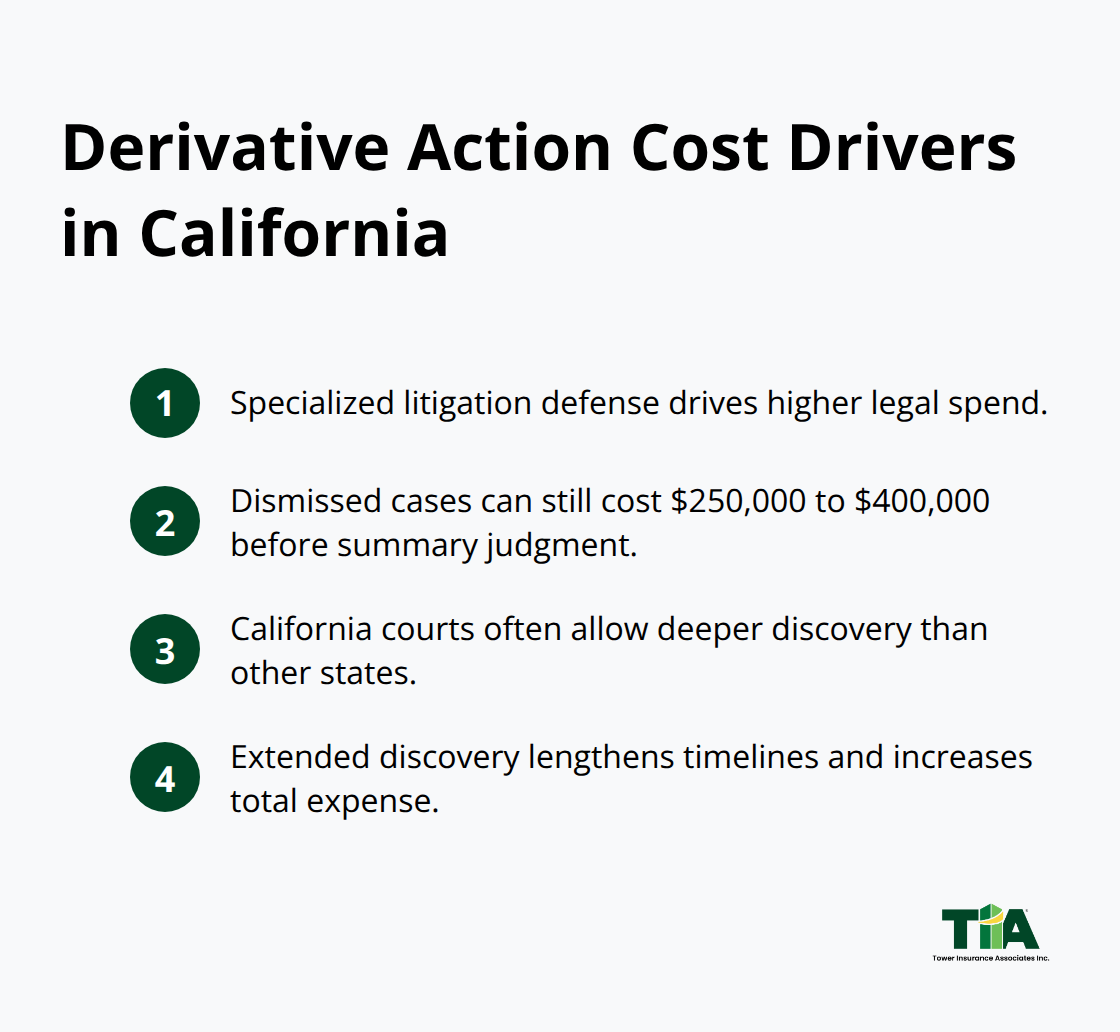
The costs mount quickly because derivative actions require specialized litigation defense. Even dismissed cases cost $250,000 to $400,000 in legal fees before reaching summary judgment. California courts also tend to allow these cases to proceed further into discovery than courts in other states, extending both timeline and expense.
Employment Claims and California’s Worker-Friendly Laws
Employment-related claims from staff represent the second major exposure, and California’s employment laws make this risk substantially higher than in most other states. California prohibits employment agreements that restrict workers’ ability to earn a living, has some of the strongest wage-and-hour protections in the nation, and allows employees to pursue claims for emotional distress damages that courts in other jurisdictions would reject.
Board members who participate in hiring, termination, or compensation decisions face personal liability if an employee alleges discrimination, retaliation, or wage violations. A single employment lawsuit involving multiple employees can easily exceed $500,000 in defense and settlement costs.
Regulatory Investigations Compound Legal Exposure
Regulatory investigations by the California Department of Fair Employment and Housing add another layer of expense because the agency often investigates claims simultaneously with private litigation. This forces board members to defend the same allegations in two separate proceedings. Regulatory action costs typically run $50,000 to $150,000 even when the board ultimately prevails, because investigation defense requires specialized employment counsel familiar with California’s administrative procedures.
These three liability threats operate independently but often overlap, creating compounding financial and personal pressure on board members. Understanding which risks apply most directly to your organization shapes the coverage limits and policy terms that actually protect you.
Matching Coverage Limits to Your Organization’s Real Exposure
The biggest mistake California board members make when buying D&O coverage is selecting limits based on what competitors carry instead of what their organization actually needs. Your coverage limit should reflect the maximum financial exposure your board realistically faces, not an arbitrary industry standard. Start by calculating three numbers: your organization’s annual revenue, your total assets, and the largest single contract or transaction your board approves. Most California nonprofits and private companies need minimum coverage of $1 million to $3 million, but organizations with revenue exceeding $50 million typically require $5 million to $10 million in limits. Insurance carriers use these figures as baseline reference points, so providing them upfront accelerates the underwriting process and produces more accurate quotes. The California Department of Insurance does not mandate specific coverage minimums for board liability, which means your organization controls this decision-but that control creates responsibility to think strategically about what amount actually protects your personal assets and organizational finances.
Regulatory Risk Varies Dramatically by Industry
A nonprofit health clinic faces entirely different regulatory exposure than a manufacturing company or professional association, which means your policy should reflect your specific industry constraints. California’s regulatory environment hits nonprofits, credit unions, and licensed service providers hardest because state agencies scrutinize their governance more aggressively than for-profit corporations. If your organization holds professional licenses, operates in healthcare, manages client funds, or serves vulnerable populations, you need employment practices liability limits at least equal to your general liability limits-many carriers recommend doubling them for these industries. An independent insurance agency can help you identify which regulatory bodies actually oversee your operations and what investigation costs typically look like in your specific sector, because generic coverage levels often leave dangerous gaps for regulated industries.
Policy Terms Matter More Than Carrier Reputation Alone
Coverage limits mean nothing if the policy excludes the claims you actually face. Read the specific exclusions section before purchasing any policy, particularly provisions around prior acts coverage, which determines whether claims arising from decisions made before your policy started date are covered. California boards frequently need prior acts coverage extending back three to five years because employment claims and shareholder lawsuits often emerge years after the triggering decision. Ask carriers whether they cover defense costs for regulatory investigations separately from lawsuit defense, because some policies cap investigation costs at $50,000 while others provide unlimited coverage. Side A versus Side B coverage structures also differ significantly between carriers-Side A protects individual board members when the organization cannot indemnify them, while Side B protects the organization itself. Most California organizations need both, but some carriers bundle them differently and charge substantially different premiums for equivalent protection.
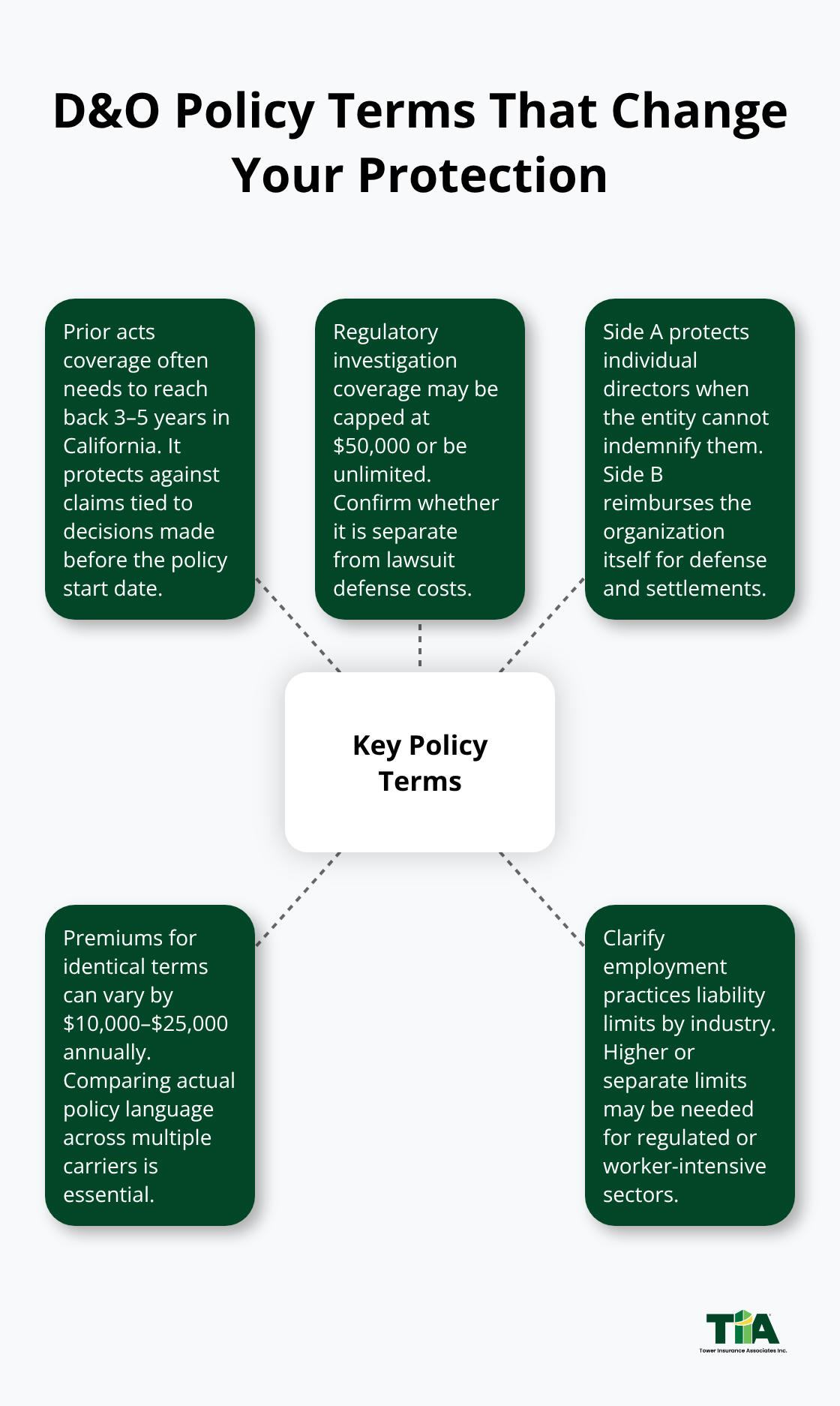
An umbrella policy may increase the limits of coverage on a commercial general liability policy, a business auto policy, and a directors and officers policy. Comparing actual policy language across three carriers typically reveals $10,000 to $25,000 annual premium differences for identical coverage, making detailed comparison essential rather than optional.
Final Thoughts
California board members operate in a high-risk environment where personal liability exposure is real and substantial. Shareholder lawsuits, employment claims, and regulatory investigations happen regularly, and they cost serious money to defend. Without CA directors liability coverage, you personally fund legal fees that can exceed $500,000 before any settlement or judgment, threatening decades of personal savings and retirement security.
The right policy protects both your personal assets and your organization’s finances simultaneously. Coverage limits should match your organization’s actual revenue and transaction size rather than industry averages, and policy terms matter more than carrier reputation alone. Prior acts coverage, regulatory investigation limits, and Side A versus Side B structures create meaningful differences in real protection, which is why comparing actual policy language across multiple carriers typically saves $10,000 to $25,000 annually.
Finding this tailored protection requires working with someone who understands California’s specific regulatory environment and board liability landscape. We at Tower Insurance Associates, Inc. represent multiple top-rated carriers to find coverage that actually matches your exposure. Contact us to discuss your organization’s specific risks and get quotes that reflect what your board actually needs rather than generic industry standards.
Disclaimer: This blog post is for general informational purposes only and does not represent actual coverage, policy terms, or legal requirements. Insurance details vary by individual and jurisdiction. Please consult a licensed insurance professional for advice specific to your situation.