

A cyber attack can cripple your business in minutes. The aftermath-managing claims, coordinating with experts, and protecting your data-demands speed and expertise.
At Tower Insurance Associates, Inc., we understand that cyber liability claims assistance isn’t just about paperwork. It’s about getting you the right support when you need it most.
What Qualifies as a Cyber Liability Claim
A cyber attack can cripple your business in minutes. Not every security incident triggers a valid claim, though. We see businesses file claims when they face data breaches involving personal information, ransomware attacks demanding payment, business email compromise leading to financial loss, or system failures caused by malicious actors. The distinction matters because your policy covers specific loss categories, and understanding what qualifies accelerates your crisis response.
Coverage Categories That Matter
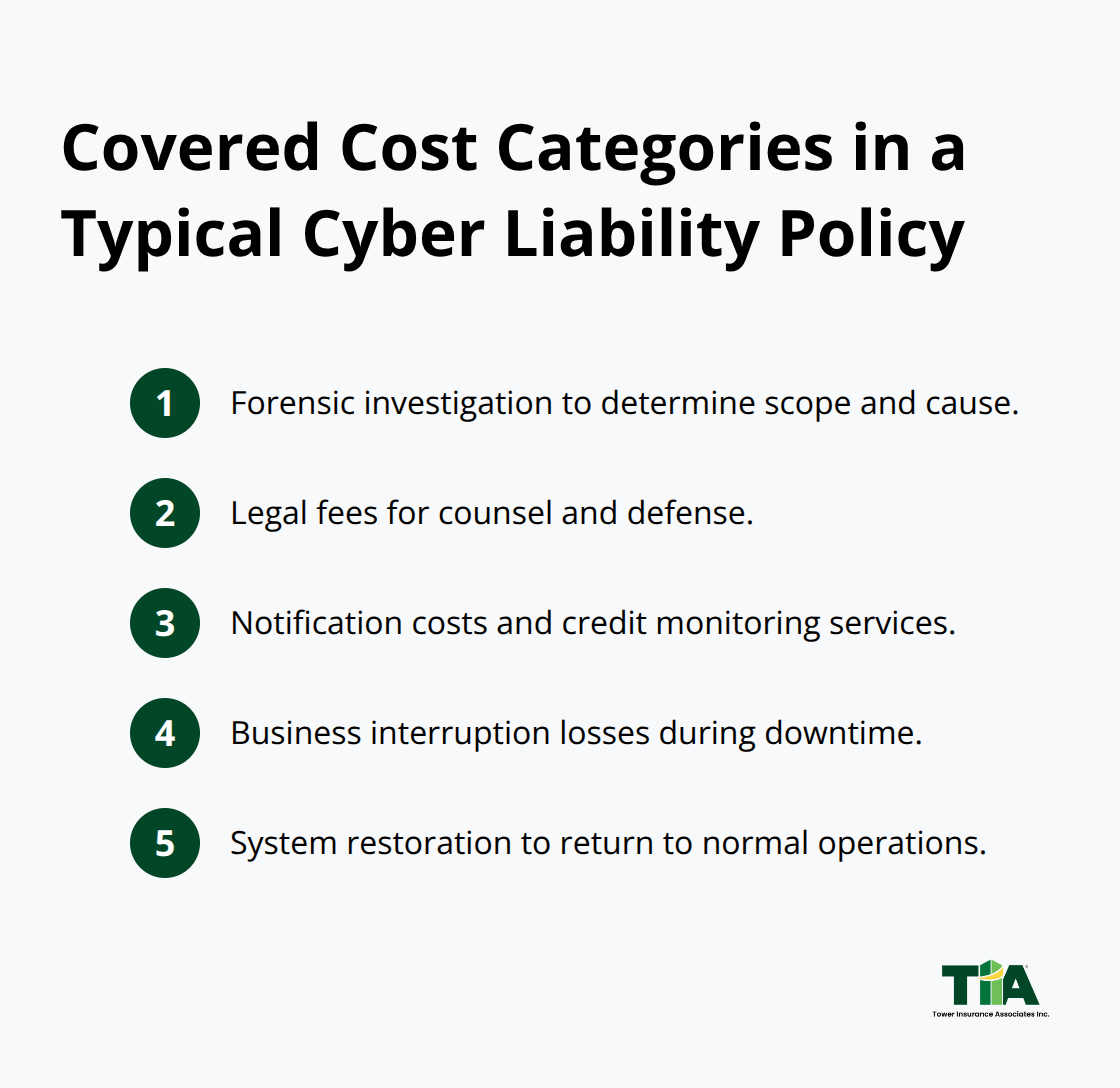
According to IBM’s 2024 Cost of a Data Breach Report, the average breach costs organizations USD 4.88 million, but most of that expense falls into categories your cyber liability policy actually covers: forensic investigation, legal fees, notification costs, credit monitoring, and business interruption losses. Your policy covers first-party losses like your own forensic investigation and system restoration, plus third-party liability when customers or partners sue you for exposing their data. Ransomware payments themselves typically don’t get covered, but the costs to restore your systems and notify affected parties do.
What doesn’t get covered matters just as much. Pre-existing security vulnerabilities you knew about before the incident won’t qualify, nor will losses from poor password management or failure to apply security patches. Incidents involving intentional misconduct by your employees also fall outside coverage. Review your policy language before a crisis hits-the difference between covered and uncovered losses can mean thousands of dollars.
Common Claim Triggers
Ransomware encryption affecting your operations ranks as the most frequent trigger we see. Phishing attacks that compromise customer payment information, denial-of-service attacks that shut down your website, and insider threats where employees access data they shouldn’t also generate claims regularly. The moment you detect any of these incidents, contact your insurance provider immediately.
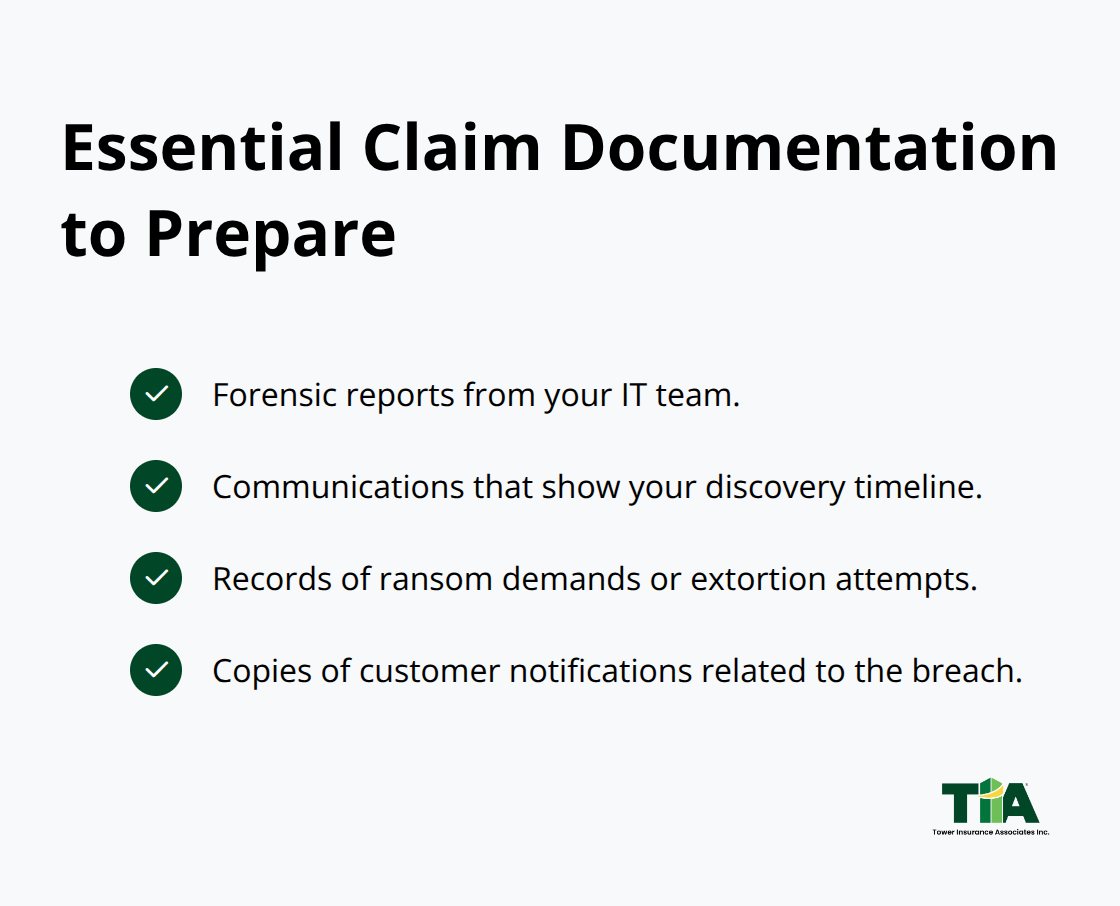
The National Institute of Standards and Technology found that organizations detecting breaches within days rather than weeks reduce their average response costs by approximately $1.5 million. Speed matters because documentation requirements demand proof that the incident occurred, identification of what data or systems were affected, and demonstration of the financial impact. You’ll need incident logs, forensic reports from your IT team, communications showing when you discovered the breach, and records of any ransom demands or extortion attempts.
Documentation That Insurers Need
Without proper documentation, insurers struggle to assess your claim quickly, which delays the support you need most. Forensic reports from your IT team provide the technical foundation for your claim. Communications showing your discovery timeline (including when you first noticed suspicious activity) establish the incident’s scope. Records of ransom demands, extortion attempts, or customer notifications demonstrate the real-world consequences of the breach.
When you file a claim, this documentation accelerates the assessment process significantly. The faster insurers understand what happened and what it cost you, the faster they can authorize support. Your next step involves knowing exactly what to do the moment a cyber incident strikes your business.
How We Respond When Seconds Count
Immediate Triage and Expert Assignment
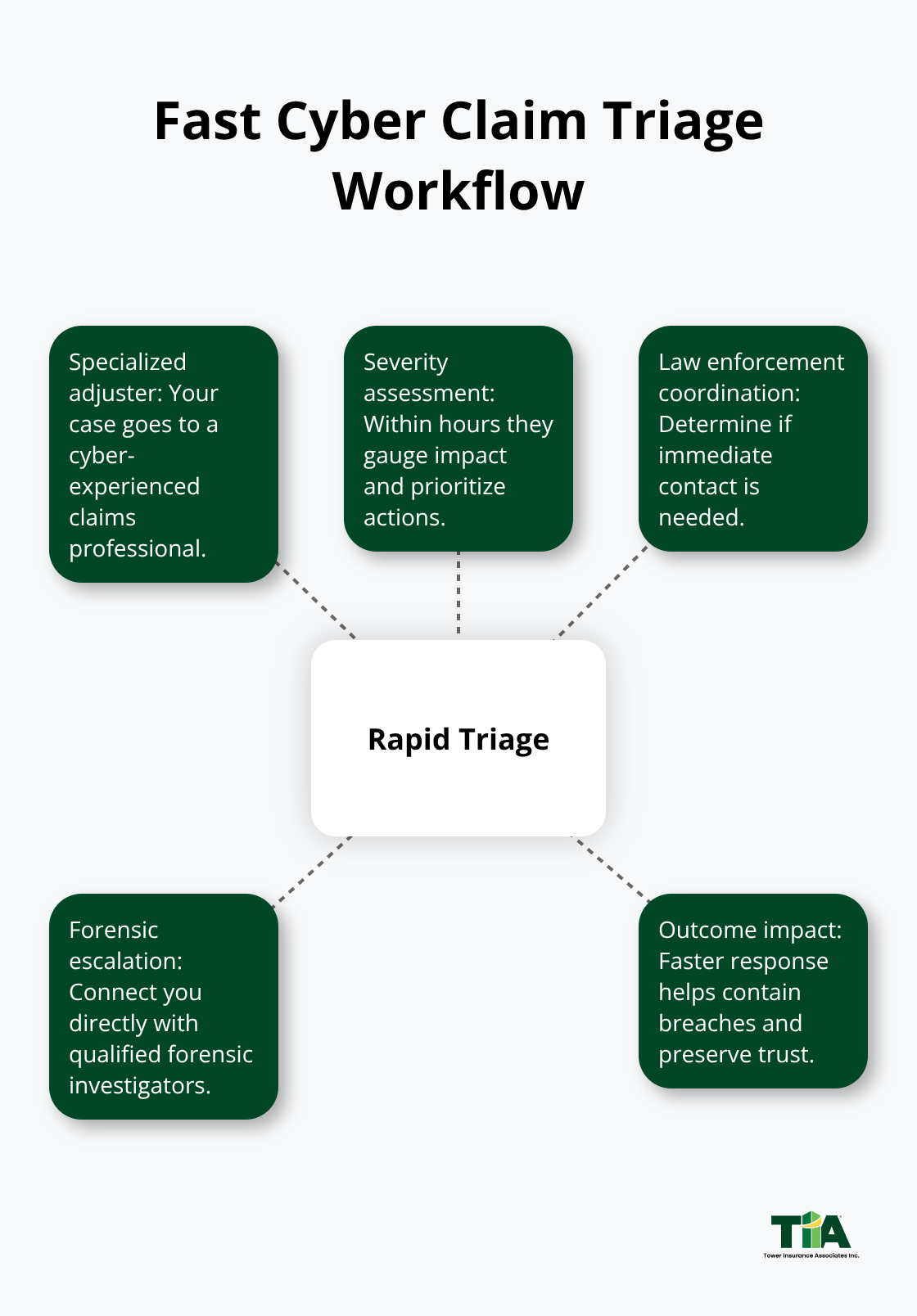
The moment you report a cyber incident to us at Tower Insurance Associates, Inc., your claim enters a triage process designed to move fast. We don’t assign your case to a general claims adjuster who handles auto accidents and property damage. Instead, your claim goes directly to someone with cyber liability experience who understands ransomware, data breaches, and business interruption losses. This person assesses the incident’s severity within hours, not days, determining whether your situation demands immediate coordination with law enforcement or forensic investigators. The difference between a fast response and a delayed one can mean the difference between containing a breach and losing customer trust permanently.
Access to Specialized Forensic Resources
We maintain relationships with specialized forensic firms and law enforcement contacts specifically for cyber incidents. When you need a forensic investigation to understand what attackers accessed or how they entered your systems, we connect you directly rather than leaving you to find qualified experts yourself. These forensic teams can preserve evidence properly, which matters because improper handling compromises both your insurance claim and any potential criminal prosecution.
Coordination with Law Enforcement
If your incident involves criminal activity (which most ransomware and extortion cases do), we coordinate with the FBI’s Internet Crime Complaint Center and local law enforcement from the start. This coordination prevents conflicting advice between your insurer and investigators, and it guarantees law enforcement understands your timeline and documentation needs. Businesses coordinating with authorities early actually recover faster because investigators can sometimes track ransom payments or identify the threat actor’s infrastructure, which helps prevent future attacks on your industry peers.
What Happens Next in Your Recovery
Once we’ve connected you with forensic experts and law enforcement, your focus shifts to the immediate steps you must take to protect your remaining systems and notify affected parties. These actions happen in parallel with our investigation coordination, and they determine how quickly you can restore normal operations.
Steps to Take Immediately After a Cyber Incident
Isolate Systems and Preserve Evidence
The first hour after discovering a cyber incident determines whether you contain the damage or watch it spread across your entire network. Disconnect the affected systems immediately, but do this carefully-pull network cables rather than forcing shutdowns, which can destroy evidence forensic investigators need later. Preserve everything: log files, screenshots of suspicious activity, timestamps of when you first noticed something wrong, and any communications from attackers.
Improper system handling during the initial response phase compromises both your claim and potential criminal investigations, so treat your compromised systems as a crime scene before anyone touches them further. While your IT team isolates systems, assign someone to document the timeline of discovery in writing. Note exactly when you first detected the breach, what systems showed signs of compromise, and what you observed. This documentation becomes critical evidence when insurers assess your claim, and it strengthens any law enforcement investigation running in parallel. Your forensic investigators will need this timeline to understand the attack’s scope and duration.
Notify Relevant Parties and Customers
Notification obligations begin immediately after containment, but notification strategy matters enormously. State data breach notification laws require you to contact affected individuals if personal information was exposed, and some states like California demand notification within 30 calendar days of discovery. However, waiting that long damages your reputation more than notifying customers quickly and transparently.
Companies that notify customers within days of discovery see better retention rates and less regulatory scrutiny than those who delay, according to breach response data from Verizon’s 2024 Data Breach Investigations Report. Contact your legal counsel before sending notifications to understand your specific obligations, then prepare a holding statement for customers and partners explaining what happened, what data was affected, and what protections you offer (usually credit monitoring for a set period).
Contact Your Insurance Provider Without Delay
After stabilizing communications and securing systems, contact your insurance provider without delay. Provide your incident timeline, forensic reports as they become available, and documentation of all response costs you incur. The sooner your insurer understands your situation, the sooner they can authorize support for forensic investigations, legal counsel, notification services, and business interruption losses while your systems come back online. This rapid communication accelerates your entire recovery process and prevents gaps in coverage authorization.
Final Thoughts
Cyber incidents strike without warning, and your response during the first hours determines whether you contain the damage or watch it spread across your network. Cyber liability claims assistance only works when you act fast, document everything, and connect with specialists immediately. Delays cost money, damage your reputation, and complicate recovery efforts that could otherwise succeed within days.
We at Tower Insurance Associates, Inc. provide direct access to specialists who understand ransomware, data breaches, and business interruption losses when you contact us after a cyber incident. We coordinate with forensic investigators and law enforcement from the start, eliminating confusion about responsibilities and timelines. Our relationships with specialized cyber response firms mean you don’t waste time searching for qualified experts while your systems remain compromised (we’ve served businesses in Culver City and beyond since 1961).
Review your cyber liability policy now to understand what your coverage actually includes and what documentation you’ll need to file a claim quickly. Identify your key contacts at your IT firm and legal counsel so you can reach them immediately when an incident occurs. Tower Insurance Associates, Inc. stands ready to help you navigate cyber crises with the speed and expertise your business needs.
Disclaimer: This blog post is for general informational purposes only and does not represent actual coverage, policy terms, or legal requirements. Insurance details vary by individual and jurisdiction. Please consult a licensed insurance professional for advice specific to your situation.