
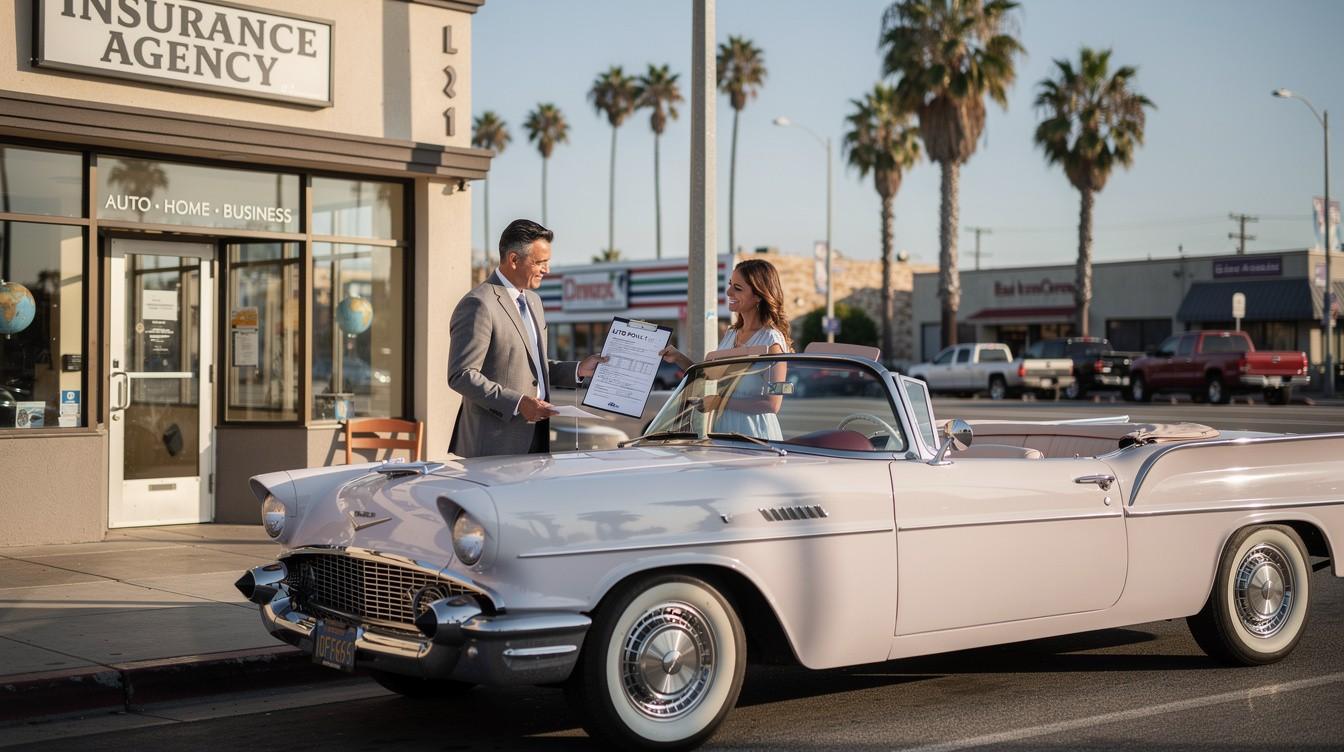
Your classic car isn’t like other vehicles on the road. It demands specialized protection that standard auto insurance simply doesn’t provide.
At Tower Insurance Associates, Inc., we understand that LA classic car insurance requires a different approach. We’ll walk you through the coverage options designed specifically for your collection and the unique risks Southern California presents.
Why Classic Cars Cost More to Insure
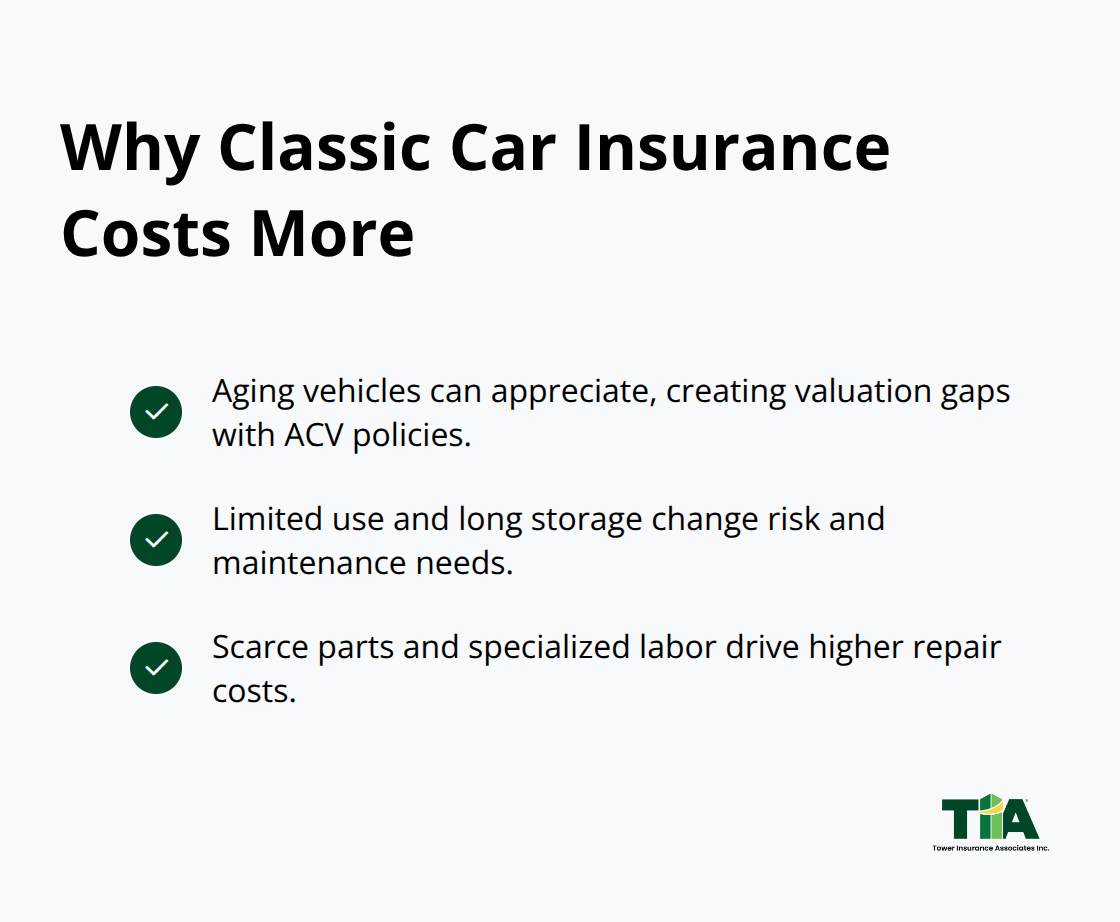
Classic cars sit in garages for months, appreciate in value, and require parts that dealers stopped making decades ago. These realities create insurance challenges that standard policies simply cannot address. A 1967 Chevrolet Corvette Stingray might travel 2,000 miles per year while a commuter vehicle racks up 12,000 miles annually. That dramatic difference in usage patterns means classic car owners face fundamentally different risk profiles than everyday drivers. Insurance companies recognize this distinction, which is why they’ve developed specialized products for collectors.
Age Creates Valuation Problems
Standard auto insurance policies calculate payouts based on actual cash value, which drops predictably each year for regular vehicles. A classic car works differently. A 1961 Jaguar E-Type appreciates, sometimes gaining 8 to 12 percent annually according to the Hagerty Price Guide. If your classic car suffers damage and valuation occurs at actual cash value under a standard policy, you’ll receive a fraction of what it’s truly worth. Agreed value coverage solves this by locking in a mutually acceptable value upfront, protecting you from underinsurance. This matters tremendously in Southern California, where collector vehicle values have risen steadily over the past decade.
Storage and Limited Use Change the Risk Equation
Classic car owners typically store vehicles in climate-controlled garages rather than park them on streets. This reduces theft and weather damage substantially compared to regular vehicles. However, it introduces new risks. Extended storage periods cause fuel to degrade, batteries to discharge, and seals to dry out. Rodents nest in engines. When you finally drive your classic to a car show or weekend cruise, mechanical failures become more likely after months of dormancy. Insurance companies factor these storage-specific hazards into pricing. They also account for your actual annual mileage, which is typically a fraction of what standard policies assume.
Parts Availability Drives Repair Costs Skyward
Finding a replacement transmission for a 1955 Thunderbird takes months and costs thousands. OEM parts simply don’t exist anymore, forcing shops to source from specialty suppliers or rebuild components. Labor costs spike because mechanics must work with vintage specifications and materials that differ from modern standards. A simple fender replacement on a classic can exceed $3,000 when the part itself costs $1,500 and restoration labor runs $100 to $150 per hour. Standard policies won’t cover these elevated repair expenses because they’re designed around contemporary vehicles where parts are abundant and standardized. Specialized classic car coverage accounts for these realities by offering replacement parts coverage that acknowledges the true cost of keeping your collection roadworthy.
These three factors-age, storage patterns, and parts scarcity-explain why classic car insurance carries a different price tag than standard auto policies. Understanding what drives these costs helps you recognize why specialized coverage isn’t an option but a necessity for serious collectors in Southern California.
Coverage Options for Classic and Collector Cars
Agreed value coverage stands as the foundation of any serious classic car insurance strategy. We recommend this option because it eliminates valuation disputes when claims happen. With agreed value, you and your insurer establish a specific dollar amount for your vehicle upfront, locking that figure in regardless of market fluctuations. This matters enormously for Southern California collectors where a 1969 Dodge Charger R/T valued at $65,000 today might appreciate to $72,000 next year. If damage occurs under a standard actual cash value policy, the insurer calculates depreciation and pays you less than your car’s true worth. Agreed value prevents this scenario entirely.
Specialized Parts Coverage Reflects Real Repair Costs
Replacement parts coverage addresses the financial reality that classic car repairs cost substantially more than standard policies account for. A 1975 Porsche 911 Carrera needs a reproduction fuel injection system that runs $4,200 from a specialty supplier, yet standard policies base payouts on generic parts pricing. Replacement parts coverage acknowledges these elevated costs and pays for sourcing from legitimate specialists rather than forcing you to accept generic alternatives that damage your vehicle’s authenticity and resale value. This coverage becomes essential in Southern California where climate extremes accelerate corrosion and component failure.
Roadside Support for Vintage Vehicles
Roadside assistance tailored for classic cars differs from standard towing because vintage vehicles require specialized handling. A 1963 Corvette Sting Ray cannot be towed on a standard flatbed without risking transmission damage. Dedicated classic car roadside assistance dispatches flatbed towing specifically, protecting your investment during mechanical failures. This specialized approach matters when your vehicle sits in storage for extended periods and mechanical issues arise after months of dormancy.
Multi-Vehicle Discounts for Collections
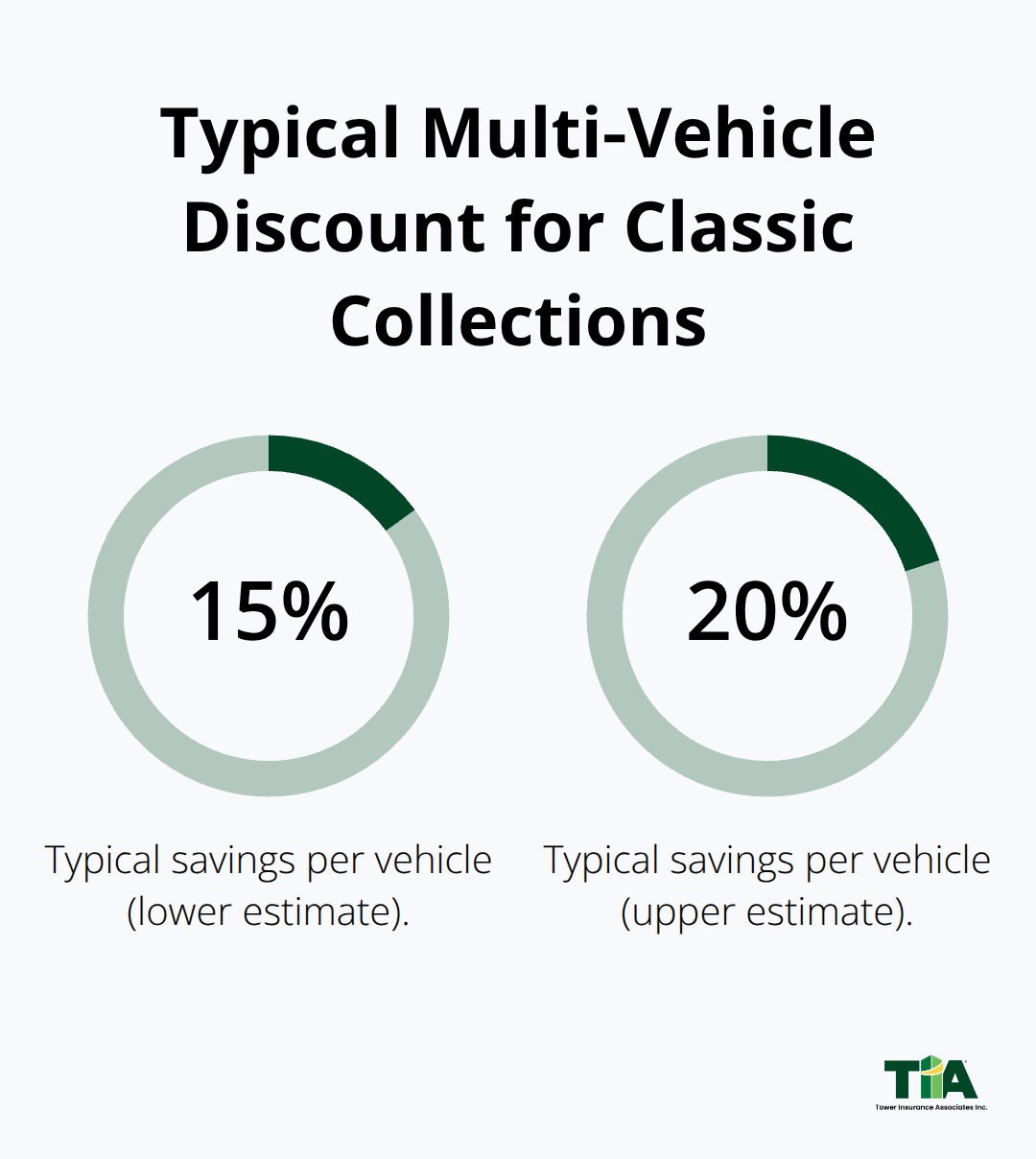
Multi-car discounts through a single insurer create significant savings for collectors maintaining multiple vehicles. Insuring three classics through one carrier typically costs 15 to 20 percent less per vehicle than separate policies, according to industry pricing analysis. An independent insurance agency like Tower Insurance Associates, Inc. represents multiple carriers, allowing you to find the combination that delivers both comprehensive coverage and competitive pricing for your entire collection rather than accepting one carrier’s limited options.
As you evaluate these coverage options, the specific risks in your Southern California location will shape which protections matter most for your collection.
Southern California’s Unique Threats to Your Collection
UV Exposure and Paint Degradation
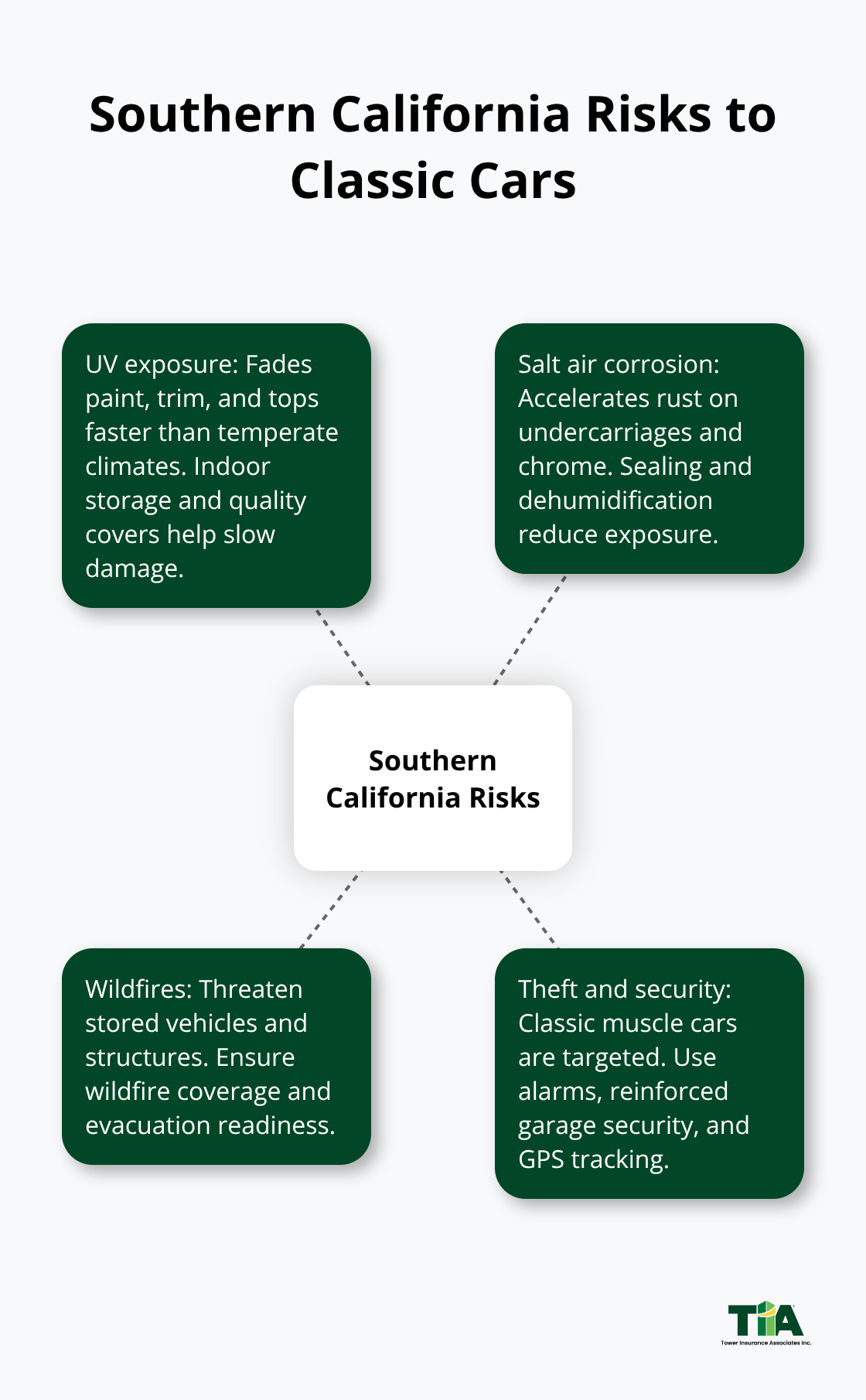
Southern California’s intense UV exposure degrades paint, trim, and convertible tops faster than anywhere else in the country. Collectors report 15 to 20 percent accelerated fading compared to temperate climates. This damage accumulates steadily, making climate-controlled storage essential rather than optional for protecting your investment’s appearance and resale value.
Salt Air Corrosion Near Coastal Areas
Salt air near coastal areas corrodes undercarriages and chrome within months if vehicles aren’t properly sealed and stored. Inland collectors in the valley avoid this problem entirely, but coastal locations demand aggressive protection strategies. Your insurance carrier will factor coastal location into pricing and may impose stricter storage requirements for vehicles kept near the ocean.
Wildfire Coverage Requirements
Wildfires present a genuine threat to classic car collections throughout Southern California. The 2023 wildfire season destroyed over 400 vehicles in San Diego County alone, demonstrating that standard homeowners policies won’t cover vehicles stored at your residence. Your classic car insurance must specifically address wildfire coverage if you live within five miles of identified fire zones (which includes most of Los Angeles, Orange County, and San Diego County). Heat damage to interiors and mechanical components accelerates in Southern California summers, where temperatures regularly exceed 95 degrees, causing leather to crack, dashboard plastics to warp, and engine oil to thin dangerously during storage.
Security Measures and Theft Prevention
Security requirements for Southern California collections exceed standard homeowner protections because thieves target classic cars specifically. American muscle cars from the 1960s and 1970s top theft lists in California. Your insurance carrier will require documented security measures including deadbolt locks on garage doors, alarm systems connected to monitoring services, and GPS tracking devices on vehicles valued above $50,000. Many insurers mandate that vehicles remain in locked garages except during active use, meaning your collection cannot sit in driveways or uncovered carports.
Finding the Right Carrier for Your Storage Setup
Different carriers impose different security standards for Southern California collections. Some demand motion-sensor lighting around storage areas, while others prioritize alarm system integration. Tower Insurance Associates, Inc., an independent insurance agency representing multiple top-rated carriers, can match your collection with insurers whose requirements align with your storage capabilities rather than forcing you into impractical security standards. This approach identifies which insurer’s security requirements you can actually meet while maintaining competitive pricing, rather than accepting whatever one carrier demands or shopping blindly across dozens of options that might impose conflicting standards on your collection.
Final Thoughts
Standard auto insurance leaves classic car collectors exposed to significant financial risk. Your 1967 Chevrolet Corvette Stingray or 1961 Jaguar E-Type requires protection that accounts for appreciated value, specialized parts, and the specific environmental threats Southern California presents. LA classic car insurance through a specialized carrier addresses these realities where standard policies fail.
Start by documenting what you own-gather the year, make, model, and current valuation for each vehicle, then note your storage setup, annual mileage, and security measures. This information helps insurers understand your actual risk profile rather than applying generic assumptions that inflate premiums unnecessarily. Different insurers impose different security requirements, valuation methods, and coverage options, so shopping independently across multiple carriers wastes time and produces inconsistent quotes that make comparison impossible.
We at Tower Insurance Associates, Inc. represent multiple carriers and access coverage options that individual insurers won’t offer directly. Our team handles the comparison work, identifies which security requirements align with your storage setup, and advocates for your claims when damage occurs. Contact Tower Insurance Associates, Inc. to request a quote for your collection and discuss your specific vehicles and Southern California storage situation.
Disclaimer: This blog post is for general informational purposes only and does not represent actual coverage, policy terms, or legal requirements. Insurance details vary by individual and jurisdiction. Please consult a licensed insurance professional for advice specific to your situation.