
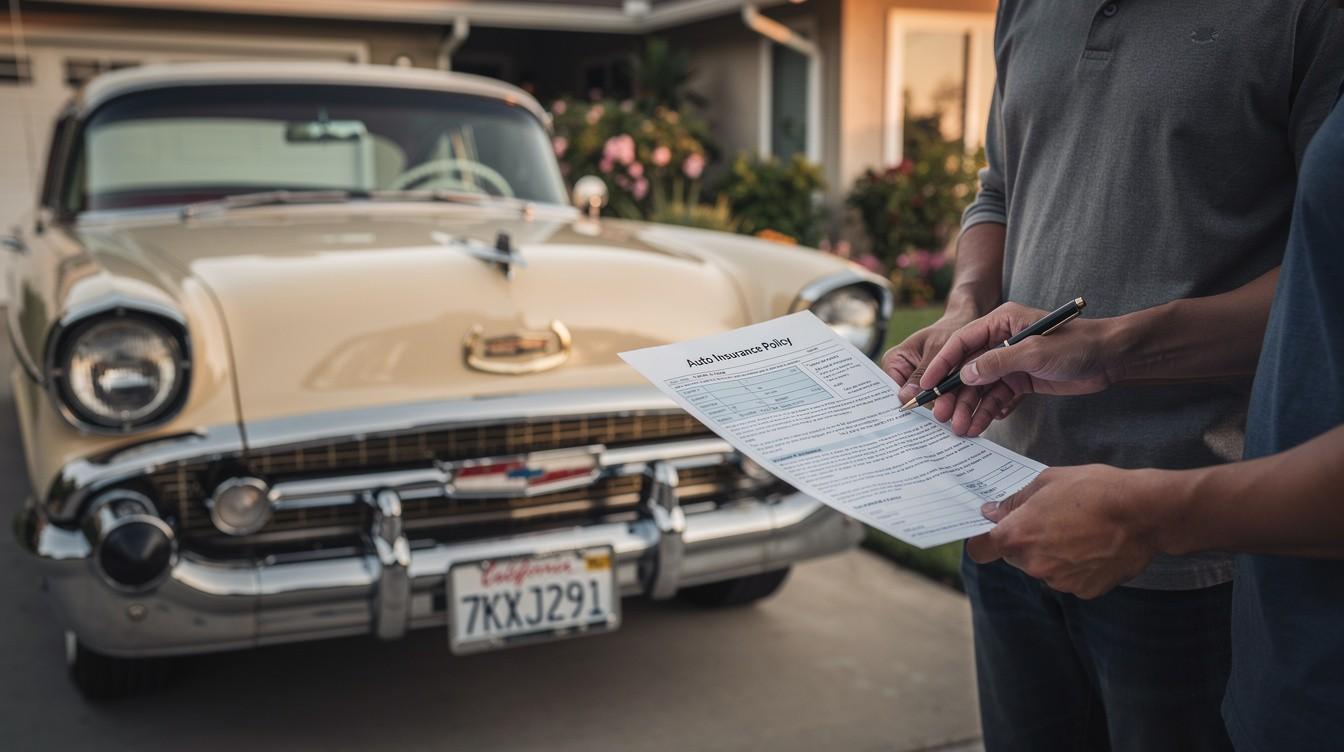
Owning a classic car in California means protecting an asset that’s worth far more than its everyday utility. An antique car policy in California works differently than standard auto insurance, and most collectors don’t realize how many coverage gaps exist until it’s too late.
At Tower Insurance Associates, Inc., we’ve seen collectors lose thousands because they underestimated replacement costs or missed coverage for restoration work. This guide walks you through the specific protections your vintage vehicle actually needs.
What California Really Requires for Antique Car Coverage
State Liability Standards Fall Short for Collectors
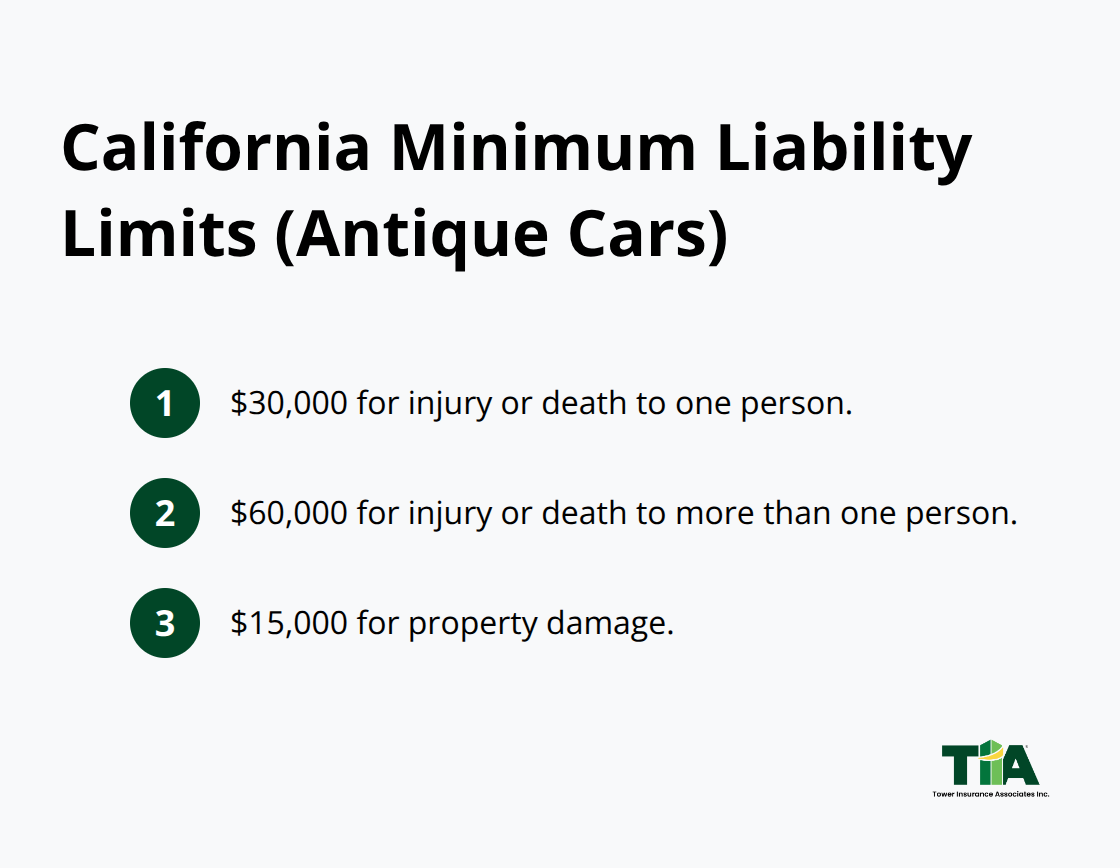
California’s minimum liability requirements-$30,000 for injury/death to one person, $60,000 for injury/death to more than one person, and $15,000 for property damage-technically apply to classic vehicles, but this baseline protection proves dangerously inadequate for collectors. Standard policies cap liability coverage at these minimums, leaving you exposed if you cause serious damage with a vehicle that may have appreciated significantly since purchase. Your classic car represents an investment that grows in value, not a depreciating asset that standard auto policies treat it as. Antique car policies flip this approach entirely by recognizing your vehicle’s true collector status and market appreciation.
Agreed Value Coverage Protects Your Real Investment
Agreed value coverage sets a predetermined amount that both you and your insurer accept as your vehicle’s worth-no arguments when a claim happens. The difference between this and standard policies matters enormously: a typical auto policy uses actual cash value, which means the insurer calculates what your car is worth at the time of loss, often resulting in lowball settlements that don’t reflect collector market reality. Vintage cars valued by owners receive only a fraction of that amount under standard policies because depreciation formulas ignore collector demand or restoration quality. With agreed value coverage, you document your vehicle’s condition and market value upfront, and that’s what you receive if total loss occurs.
Mileage Restrictions Shape Your Coverage Limits
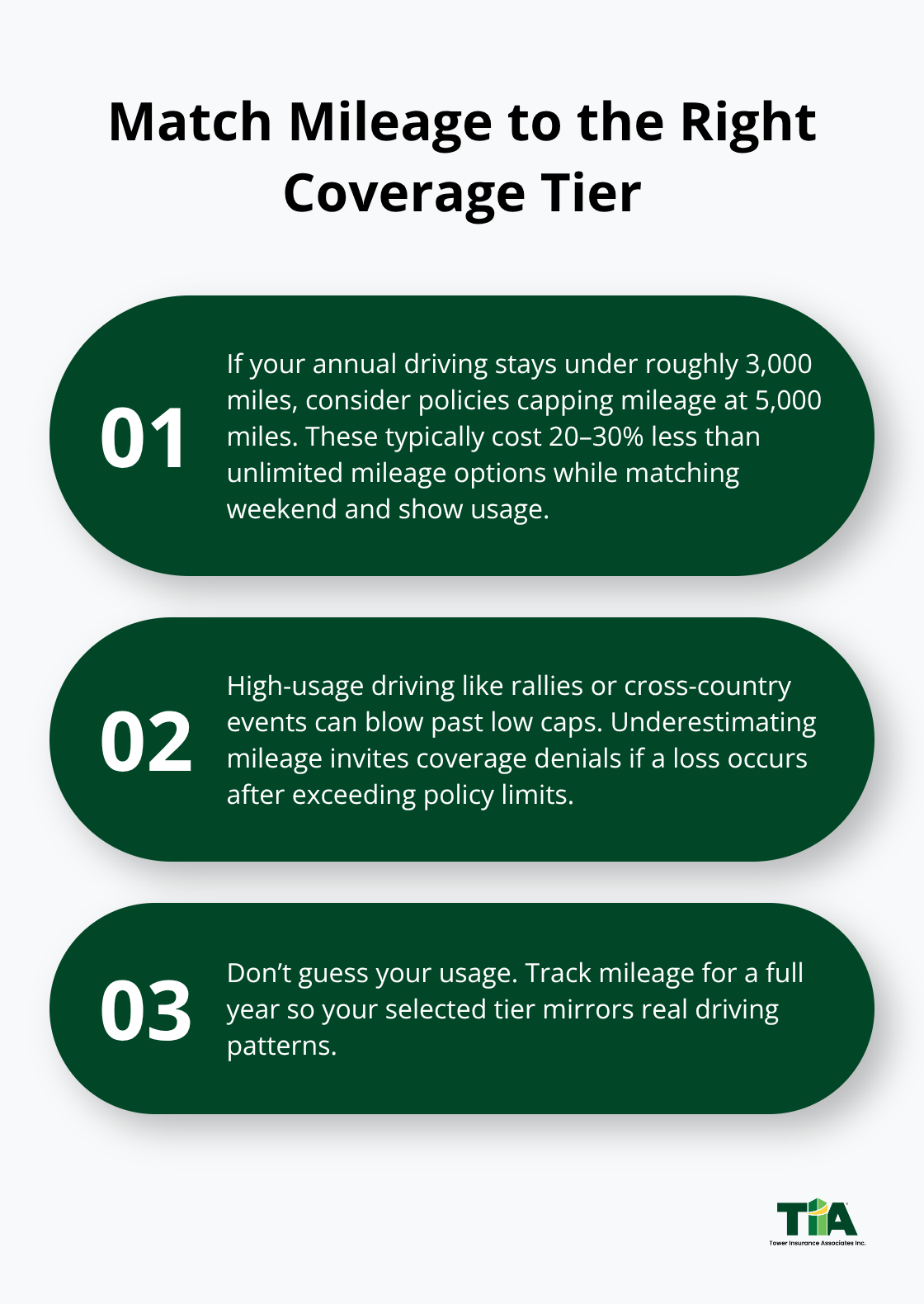
California collectors must understand mileage restrictions-most antique policies limit you to 2,500 to 5,000 miles annually because these vehicles typically serve as weekend or show cars rather than commuter vehicles. Exceeding these limits can void coverage, so knowing your actual driving patterns before selecting a policy prevents expensive surprises. Track your typical annual mileage for the past two years to select appropriate coverage that matches your real usage. This step protects you from coverage denials based on mileage violations.
Documentation Supports Your Coverage Amount
Professional photographs and a detailed appraisal of your vehicle’s current condition directly support your agreed value amount and protect you during claims. Document any restoration work, original parts, and modifications with receipts and photos before purchasing any policy. This documentation becomes your evidence during the claims process, ensuring you receive the full agreed value rather than facing disputes about your vehicle’s actual condition or worth.
How to Document and Protect Your Antique Car’s Real Value
Professional Appraisals Establish Your Vehicle’s True Worth
Professional appraisals matter far more than you think. You need a written appraisal from a certified appraiser who specializes in collector vehicles, not a general mechanic. The Specialty Equipment Market Association tracks that classic car values increased an average of 7.8% annually from 2015 to 2023, meaning your 1972 Chevelle worth $35,000 five years ago could easily command $48,000 today. Without updated documentation, you accept outdated agreed value amounts and leave money on the table during claims.
Create a Comprehensive Vehicle Inventory
You should create a detailed inventory of all original parts, restoration receipts, and upgrades with high-resolution photos showing your vehicle’s current condition from multiple angles and close-ups of any restoration work or modifications. Store these documents digitally in cloud storage and physically in a fireproof safe, separate from your vehicle. This documentation becomes your evidence during the claims process, ensuring you receive the full agreed value rather than facing disputes about your vehicle’s actual condition or worth.
Match Your Mileage Patterns to Coverage Tiers
Your mileage patterns directly determine which coverage tier fits your actual driving. If you drive your 1965 Mustang to three car shows annually plus occasional weekend cruises, you’re likely under 3,000 miles per year and should select policies capping mileage at 5,000 miles, which typically cost 20-30% less than unlimited mileage policies. Conversely, if you participate in vintage car rallies or drive cross-country for collector events, underestimating your annual mileage creates a coverage denial waiting to happen. Track your mileage for a full year before purchasing a policy rather than guessing.
Verify Specialized Roadside Assistance Coverage
Roadside assistance for antique vehicles differs significantly from standard coverage because your classic car requires specialized towing to preserve its condition and value. Standard roadside assistance tows to the nearest repair shop, which might damage rare upholstery or vulnerable mechanical components. Specialty antique car policies include towing to your preferred restoration shop or collector-friendly mechanic within a specified radius. You should verify that your roadside assistance provider has experience with classic vehicles and won’t use flatbed towing for vehicles requiring enclosed transport. Confirm coverage limits for towing distance, typically ranging from 50 to 150 miles, based on your distance from trusted repair facilities familiar with your vehicle’s specific year and model.
Once you’ve locked down proper documentation and roadside coverage, the next critical step involves identifying coverage gaps that most collectors overlook entirely-gaps that can cost thousands when restoration work or unexpected modifications enter the picture.
Coverage Gaps That Cost Collectors Thousands
Market Value Versus Replacement Cost Creates Massive Underinsurance
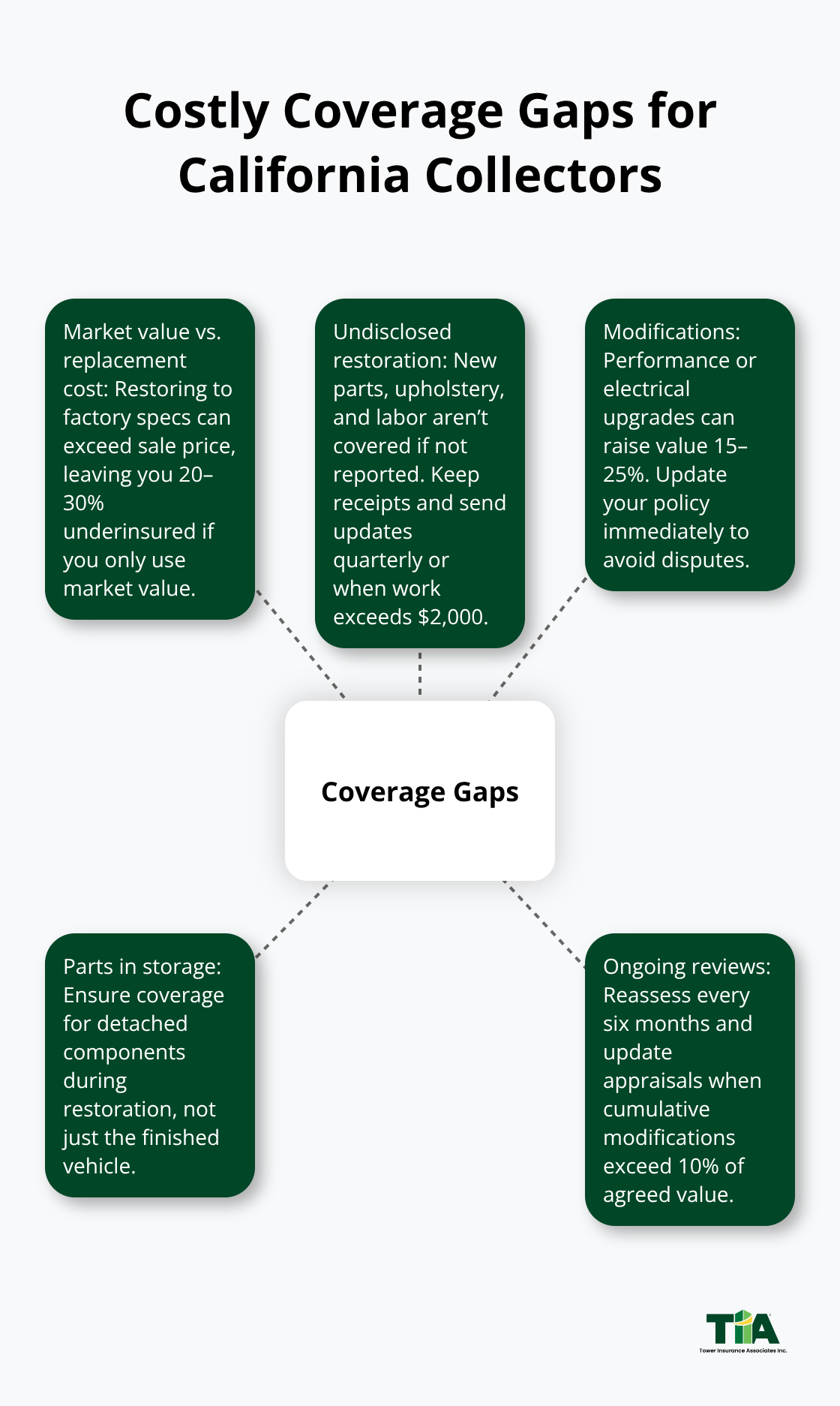
Most California collectors accept agreed value amounts without questioning whether those figures reflect actual replacement costs, and this mistake destroys insurance protection when restoration or damage occurs. Your 1967 Chevrolet Corvette might sell at auction for $65,000, but replacing every component to factory specifications after an accident could easily cost $85,000 to $95,000 because specialized restoration shops charge premium labor rates for authenticity work. Standard appraisals often capture market value rather than full replacement cost, leaving you underinsured by 20-30% on policies that seem adequate until a claim arrives.
You must specifically request replacement cost appraisals for antique vehicles, not market value appraisals, and work with your insurance agent to set agreed value amounts based on the appraisal that reflect current market value plus any restoration costs needed to restore your vehicle to pre-loss condition.
Undisclosed Restoration Work Voids Coverage Protection
Restoration work and parts represent a massive gap we see regularly. California collectors frequently restore vehicles during the policy period without updating their coverage, meaning a $35,000 agreed value policy covers a car that now contains $50,000 in new mechanical components, custom upholstery, and specialized restoration work. Your insurer won’t know about these improvements unless you document and report them, and claims adjusters won’t cover undisclosed modifications as part of your agreed value settlement. Create a detailed spreadsheet tracking every restoration project with completion dates, parts costs, and labor expenses, then provide these receipts to your insurer quarterly or whenever work exceeds $2,000. Additionally, confirm that your policy covers parts during restoration, not just the finished vehicle, because some policies exclude coverage for detached components stored separately from your car.
Modifications Require Immediate Policy Updates
The third critical gap involves policy updates after modifications or performance upgrades that increase your vehicle’s value or change its risk profile. Installing a modern engine block, upgrading electrical systems, or adding custom features can increase your vehicle’s worth by 15-25%, yet collectors rarely notify their insurers about these changes. Your original agreed value becomes outdated within months of significant work, and you’ll face coverage disputes if loss occurs after undisclosed modifications. Schedule a policy review with your insurer every six months if you actively restore your vehicle, and provide updated appraisals whenever cumulative modifications exceed 10% of your agreed value amount. Treat your antique car policy as a living document that changes as your vehicle evolves, not a set-it-and-forget-it protection that remains valid indefinitely.
Final Thoughts
Your antique car policy in California only protects your investment when you actively manage it as your vehicle evolves. Work with insurance specialists who represent multiple carriers and understand collector vehicles rather than general agents who treat your classic car like a standard sedan-these specialists know the difference between market value and replacement cost appraisals, understand mileage restriction tiers, and catch coverage gaps before claims happen. Schedule policy reviews every six months if you actively restore your vehicle, since market conditions shift constantly and your agreed value amount should reflect current collector demand and auction results.
Proper storage and maintenance practices directly support your coverage by reducing loss risk and demonstrating responsible ownership to your insurer. Store your vehicle in a climate-controlled garage, maintain comprehensive records of all maintenance and restoration work, and keep your vehicle in operating condition even during storage periods. These practices reduce your insurer’s risk exposure, often qualify you for premium discounts, and protect your investment from environmental damage.
Tower Insurance Associates, Inc. specializes in collector vehicle coverage and understands exactly how to structure an antique car policy in California that matches your real needs and protects your investment completely. Contact our team to review your current coverage and identify any gaps that could cost you thousands during a claim.
Disclaimer: This blog post is for general informational purposes only and does not represent actual coverage, policy terms, or legal requirements. Insurance details vary by individual and jurisdiction. Please consult a licensed insurance professional for advice specific to your situation.