
Los Angeles businesses operate in one of the nation’s most targeted regions for cyber attacks. The concentration of tech companies, startups, and valuable data makes LA a prime target for ransomware, data breaches, and sophisticated threats.
At Tower Insurance Associates, Inc., we know that standard cyber liability coverage often falls short for LA’s unique risk landscape. California’s strict regulations and the city’s digital-first economy demand tailored protection that addresses your specific vulnerabilities.
Why LA’s Cyber Threat Profile Demands Attention
The Scale of LA’s Tech Industry Creates Outsized Risk
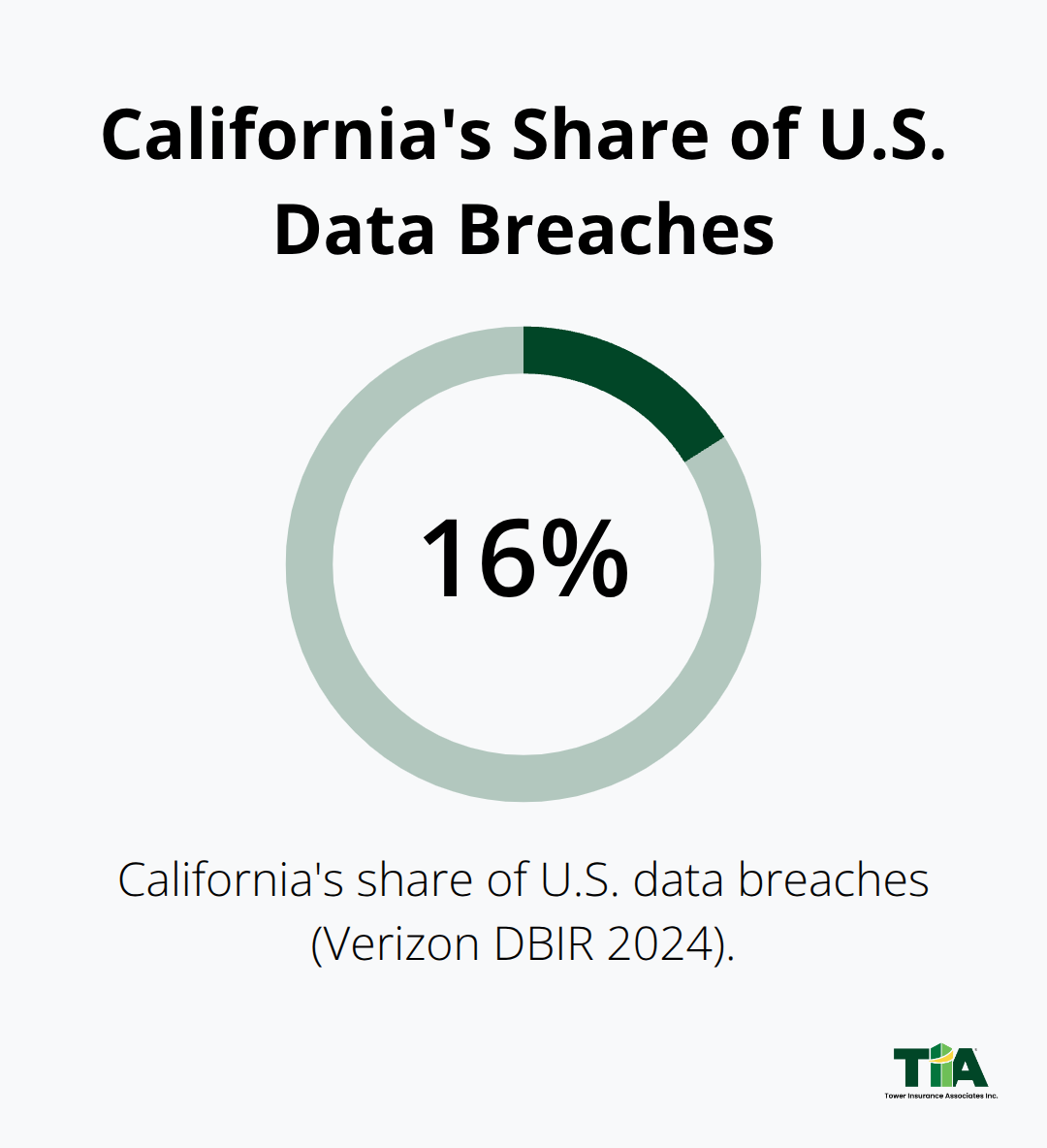
Los Angeles hosts over 6,000 tech companies and startups, making it the second-largest tech hub in the United States after Silicon Valley. This concentration creates a lucrative target environment for cybercriminals. According to the 2024 Verizon Data Breach Investigations Report, California accounted for 16% of all data breaches nationally-the highest of any state. LA-based businesses face cyber threat incidents at rates higher than the national average, with healthcare providers, financial services firms, and e-commerce companies experiencing the most frequent incidents.
The financial impact hits hard. Cybercrime reached an estimated $10.5 trillion in annual cost to businesses in 2025 and could climb as high as $15.63 trillion by 2029. Startups particularly attract cybercriminals because they lack mature security infrastructure, making them attractive targets despite their smaller size and limited resources.
California’s Regulatory Requirements Outpace Standard Policies
California’s regulatory framework adds another layer of complexity that generic cyber policies simply don’t address. The California Consumer Privacy Act requires businesses to notify affected individuals within 30 days of discovering a breach, with notification costs often exceeding $100 per person for large datasets. The California Online Privacy Protection Act imposes additional compliance obligations for any business collecting personal information from California residents, regardless of where your company operates.
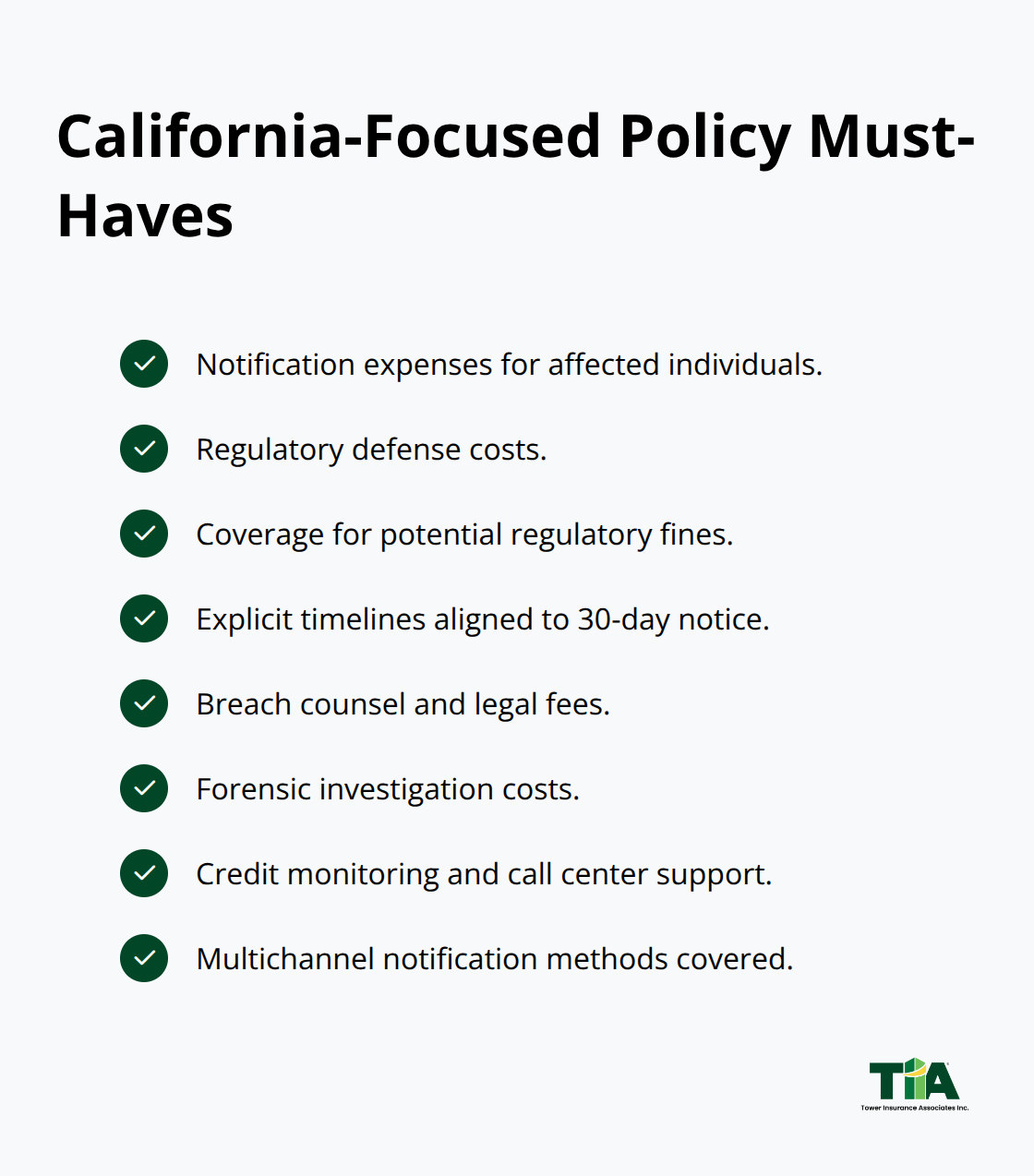
These state-specific requirements mean your cyber liability policy must explicitly cover notification expenses, regulatory defense costs, and potential fines. Many national carriers offer boilerplate cyber policies that fail to account for California’s stricter standards and faster notification timelines.
Supply Chain Vulnerabilities Compound Local Threats
LA businesses also face increased exposure to supply chain attacks, given their connections to international tech ecosystems and global vendor networks. The combination of high-value targets, regulatory pressure, and sophisticated threat actors creates a risk environment that demands coverage specifically calibrated to Los Angeles’ unique circumstances. Understanding your industry’s specific vulnerabilities and regulatory obligations sets the foundation for selecting appropriate coverage-which is exactly what we address next.
What Coverage Actually Protects LA Businesses From Cyber Losses
Notification Costs Demand Primary Coverage
Notification costs alone can devastate a business after a data breach. California’s 30-day notification requirement forces you to contact affected individuals quickly, and that process costs far more than most business owners anticipate. For a breach affecting 10,000 records, notification expenses typically run $500,000 to $1 million when you factor in forensic investigations, legal review, credit monitoring services, and direct notification to individuals. The global average cost of a data breach fell to $4.44 million, with notification representing a significant portion of that total.
Your cyber liability policy must explicitly cover forensic costs, legal fees for breach counsel, and actual notification expenses. Many standard policies cap notification coverage at inadequate levels or exclude certain notification methods entirely, leaving you exposed to six-figure bills. When you review your current policy, verify whether it specifies coverage limits for breach response as primary rather than secondary coverage, since generic cyber policies frequently treat notification as an afterthought.
Business Interruption Protection Covers Revenue Loss
Business interruption protection addresses the revenue loss that follows a cyber incident. When ransomware shuts down your systems, you lose customer transactions, service delivery capacity, and operational productivity-often for days or weeks while you restore systems and verify data integrity. The Verizon 2024 report documented that average downtime following a cyber incident reached 21 days for some organizations, with each day of outage costing businesses in LA approximately $10,000 to $50,000 depending on industry and company size.
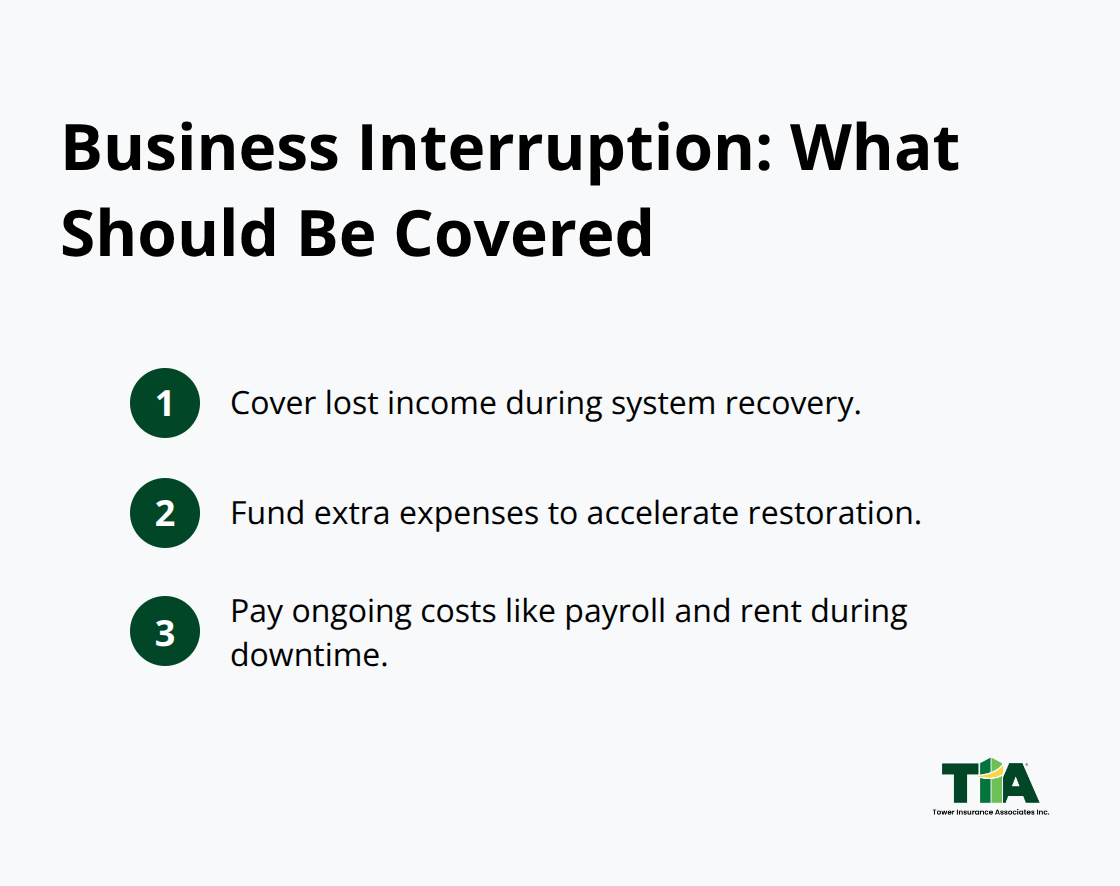
Your policy should cover lost income during the recovery period, extra expenses incurred to accelerate system restoration, and ongoing operational costs like payroll and rent that continue despite zero revenue. Without this protection, a two-week shutdown can wipe out months of profit margins.
Legal Defense and Regulatory Coverage Protects Against Enforcement
Legal defense and liability coverage protects you when customers sue over compromised personal information or when regulatory agencies investigate your breach response. California’s Attorney General actively pursues enforcement actions against companies that fail to meet notification requirements or implement adequate security measures, with settlements often exceeding $1 million. Coverage must include defense costs, settlement amounts, and potential regulatory fines, which operate separately from customer lawsuit exposure.
The distinction matters because regulatory defense costs can bankrupt a small business if your policy treats them as excluded or capped at minimal levels. A single enforcement action from state regulators can cost more than your annual revenue if you lack proper coverage. This reality makes selecting the right policy-one tailored to California’s specific enforcement environment-essential for protecting your business. Understanding what coverage you need sets the stage for evaluating your current vulnerabilities and identifying gaps in your protection.
How to Assess and Customize Your Cyber Coverage
Map Your Data Flows and Identify Sensitive Information
Most LA businesses drastically underestimate their actual cyber risk because they base coverage decisions on generic industry benchmarks rather than their specific operational vulnerabilities. Start by mapping your actual data flows and identifying where sensitive information lives within your systems. If you process customer payments, you operate under Payment Card Industry Data Security Standard requirements that demand specific security controls and cyber liability coverage limits. If you handle healthcare information, HIPAA compliance adds another layer of mandatory coverage specifications. The National Institute of Standards and Technology Cybersecurity Framework provides a free assessment tool that helps you evaluate your current security posture against industry standards, which gives you concrete data to share with insurance advisers when customizing your policy. Document which systems connect to the internet, which employees access sensitive data remotely, and which vendors have access to your networks. This inventory becomes your foundation for identifying coverage gaps that matter specifically to your operation, not some theoretical business similar to yours.
Evaluate Your Existing Security Investments
Your existing security investments directly impact which coverage options you actually need and which ones represent unnecessary expense. If you’ve already invested in endpoint detection and response software or implemented multi-factor authentication across your network, your breach probability drops measurably, which should lower your premiums and potentially allow you to accept higher deductibles on less critical coverage areas. Conversely, if you’re still running unpatched systems or lack network segmentation, your cyber liability premium will reflect that risk accurately.
Obtain a Professional Security Assessment
A professional security assessment from a firm like Rapid7 or Qualys provides specific vulnerability findings and remediation costs. Armed with that assessment report, you can discuss with your insurance adviser exactly which vulnerabilities your policy should cover versus which ones you should remediate before purchasing coverage. This approach eliminates guesswork and prevents you from either over-insuring against risks you’ve already eliminated or under-insuring against exposures you haven’t addressed.
Work with Local Insurance Experts to Fill Coverage Gaps
Insurance advisers who understand LA’s specific regulatory environment and threat landscape can identify coverage gaps that national carriers often miss. An independent agency representing multiple carriers (rather than a single insurer) can match your actual vulnerabilities to policies specifically designed for California businesses. This local expertise matters because your coverage needs differ fundamentally from a business operating in states with less stringent privacy laws or lower concentrations of cyber threats.
Final Thoughts
Cyber threats targeting Los Angeles businesses show no signs of slowing down, and generic insurance policies simply won’t address the exposure you face. California’s strict privacy laws, the city’s concentration of tech companies, and sophisticated attackers create a risk environment that demands coverage specifically built for LA’s circumstances. Your Los Angeles cyber liability policy must account for the state’s 30-day notification requirements, cover the full cost of breach response and business interruption, and include regulatory defense coverage that reflects how aggressively state authorities pursue enforcement actions.
The businesses that survive cyber incidents intact invested time upfront to understand their specific vulnerabilities and matched those vulnerabilities to appropriate coverage. You’ve now seen how to map your data flows, evaluate your security investments, and identify which coverage gaps matter most to your operation. The final step involves connecting with advisers who understand both your industry and California’s regulatory landscape.
We at Tower Insurance Associates, Inc. understand the cyber risks that keep LA entrepreneurs awake at night. As an independent agency representing multiple top-rated carriers, we match your actual vulnerabilities to policies designed for California’s unique threat environment. Contact Tower Insurance Associates, Inc. to discuss how tailored cyber liability coverage protects your business from the threats that matter most.
Disclaimer: This blog post is for general informational purposes only and does not represent actual coverage, policy terms, or legal requirements. Insurance details vary by individual and jurisdiction. Please consult a licensed insurance professional for advice specific to your situation.