
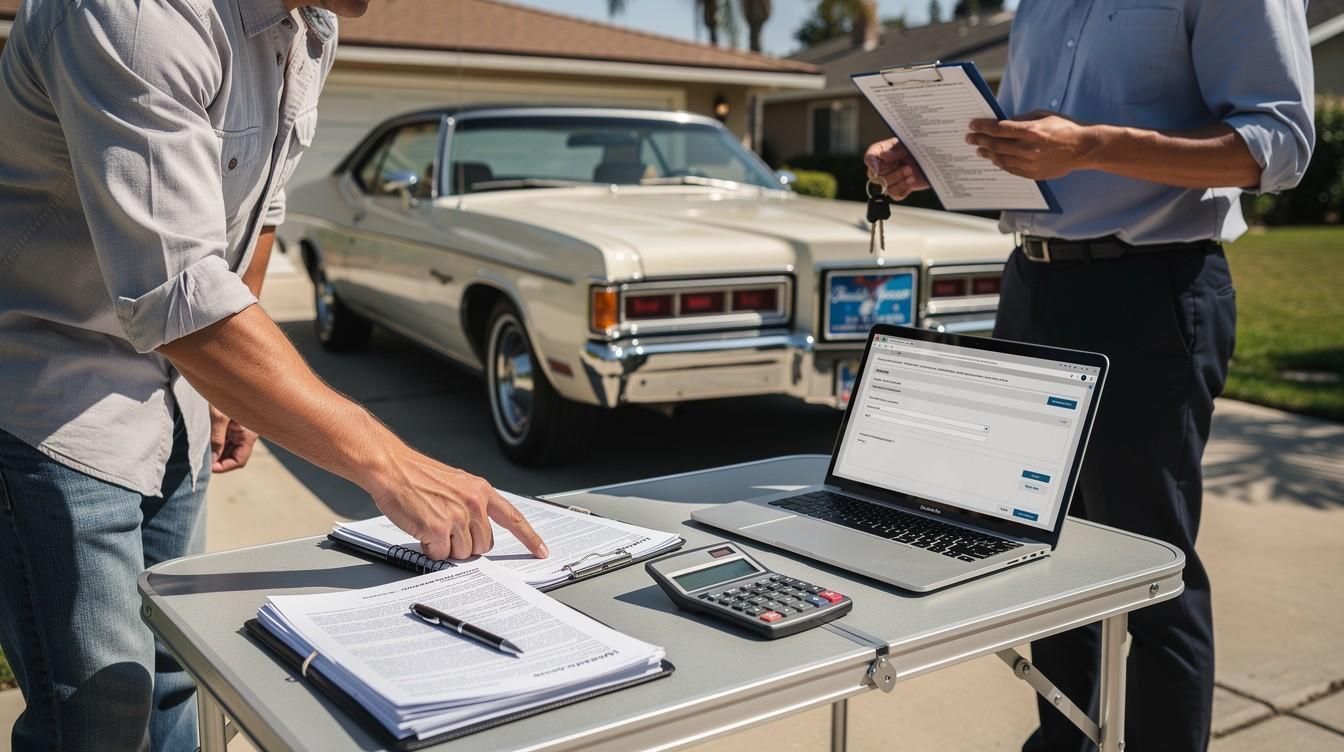
Classic cars represent a significant investment, and protecting them requires more than a standard auto policy. At Tower Insurance Associates, Inc., we understand that your vintage vehicle needs specialized coverage tailored to its unique value and usage patterns.
California’s classic car insurance landscape has specific requirements and options that differ from regular auto policies. This guide walks you through everything you need to know about securing the right classic car policy in California.
What Makes a Classic Car in California
Age Requirements Vary by Insurer
California doesn’t have an official state definition for classic cars, which means insurance companies set their own age thresholds. Most insurers define a classic car as between 25 and 40 years old, though some accept vehicles as young as 20 years. The California Department of Motor Vehicles allows vehicles over 40 years old to register as historical vehicles, which opens different insurance pathways. Age alone doesn’t determine eligibility-condition and usage patterns matter equally. A well-maintained 1995 vehicle might qualify for classic car coverage, while a neglected 1980s car could be rejected.
Mileage Limits Control Your Premium
Classic car policies typically cap annual mileage between 2,500 and 7,500 miles per year, depending on the carrier. This matters because insurers view classic cars as garage-kept investments rather than daily drivers. If you drive your classic car to weekend car shows, occasional dinners out, or regional car club events, you’ll stay within limits. But if you commute 20 miles daily or take long road trips regularly, you’ll exceed these caps and need standard auto insurance instead.
Drivers between 7,500 and 10,000 miles may still qualify for reduced rates compared to high-mileage drivers. Document your actual driving patterns honestly when applying, because misrepresenting usage can void your coverage when you file a claim.
Condition Standards Protect Your Coverage
Insurers require classic cars to be in excellent mechanical and cosmetic condition, with original or authentically restored parts. This means rust, engine problems, or significant wear disqualify most vehicles. You’ll need to provide photos, maintenance records, and sometimes an inspection report showing the car runs reliably and looks well-maintained. Carriers want proof the vehicle sits garaged when not in use and stays protected from weather damage.
If you’re mid-restoration, most classic car policies won’t cover you-you need the project completed first. The condition requirement protects both you and the insurer, since a well-maintained classic car is far less likely to have mechanical failures that cause accidents. Once your vehicle meets these standards, get a quote to explore your coverage options and protect your investment.
Coverage Options for Classic Cars
Agreed Value Protection Locks in Your Vehicle’s Worth
Agreed value protection stands as the only sensible choice for classic car owners in California. Standard auto policies use actual cash value, which depreciates your vehicle annually and leaves you severely underinsured when a total loss occurs. With agreed value coverage, you and your insurer establish your car’s worth upfront through documentation and inspection, then that figure stays locked in your policy. If your 1967 Chevelle suffers total loss, you receive the agreed amount regardless of market fluctuations.
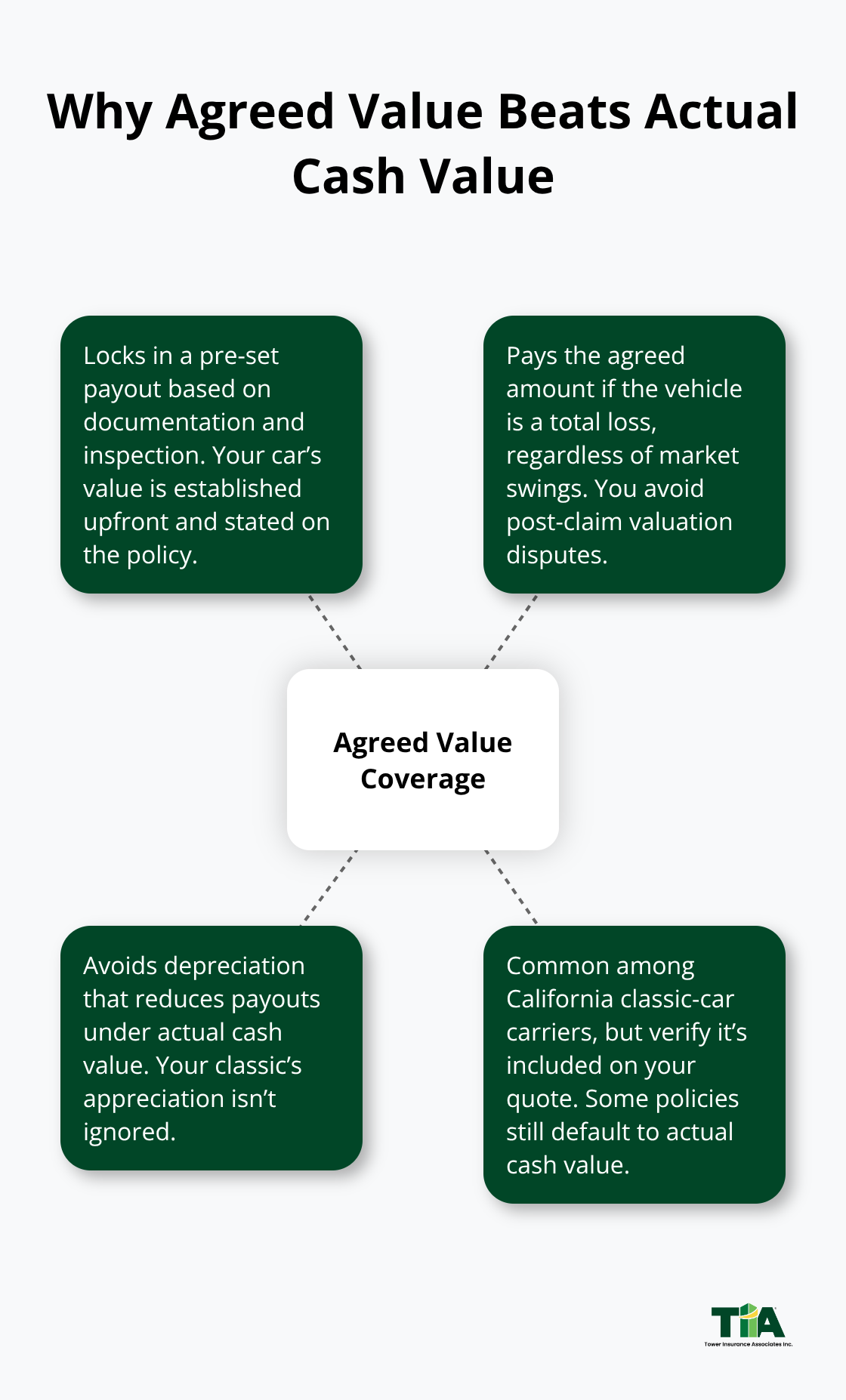
This matters tremendously because classic cars often appreciate, yet standard policies ignore that reality entirely. Most California carriers offering classic car policies include agreed value as standard, though you should confirm this when comparing quotes since some still default to actual cash value for older vehicles.
Comprehensive Coverage Protects Against California’s Unique Risks
Comprehensive coverage protects against theft, vandalism, weather damage, and animal strikes-real risks for garaged classic cars, especially in California’s fire-prone regions. Your vehicle rarely travels on busy roads or sits in traffic, which means comprehensive claims represent a genuine concern for stationary assets. Some insurers bundle comprehensive coverage with collision at reduced rates for classic cars, while others let you exclude collision entirely if you prefer lower premiums.
Collision Coverage Addresses Accident Risk
Collision coverage addresses accidents, though your low mileage limits mean statistically you face minimal collision risk if you drive to car shows and local events. You can often exclude this coverage without penalty if you store your classic car safely and drive it sparingly. Evaluate your actual driving patterns honestly-weekend car club meetings and occasional dinners out typically fall well within safe parameters for skipping collision protection.
Specialized Add-Ons Cover Modifications and Accessories
Your restoration parts, custom upholstery, upgraded sound systems, and vintage accessories typically fall outside standard coverage limits, requiring specialized add-ons. Document every modification and aftermarket addition with photos and receipts, then provide this inventory to your agent so coverage accurately reflects your actual investment. These enhancements can represent thousands of dollars in value that standard policies simply ignore.
Getting Your Coverage Right Requires Honest Documentation
When you apply for classic car insurance, provide accurate information about your vehicle’s condition, modifications, and intended use. Misrepresenting usage or condition can void your coverage when you file a claim, leaving you financially exposed. Multiple carriers offer classic car policies with different combinations of agreed value, comprehensive, and specialized coverage options, so comparing quotes helps you find the right fit for your specific vehicle and driving habits.
Getting Classic Car Insurance in California
Photograph and Document Your Vehicle Thoroughly
Start by photographing your classic car from multiple angles, including the engine bay, interior, odometer, and any restoration work or modifications. Collect maintenance records spanning the past two to three years, showing regular servicing and repairs completed. If you’ve had the vehicle professionally appraised, include that appraisal report since insurers weight professional valuations heavily when establishing agreed value. Your documentation should demonstrate that the car runs reliably and sits garaged when not in use. Carry this file with you when meeting with agents so you can reference specific details about your classic car’s condition rather than relying on memory or vague descriptions.
Work with an Independent Agent Who Represents Multiple Carriers
Finding the right agent matters more for classic cars than standard vehicles because coverage options vary dramatically across carriers. An independent agency represents multiple insurers, which means you access different options under one conversation rather than contacting carriers individually. When you contact agents, provide your documentation upfront and ask specifically about agreed value limits, whether comprehensive coverage bundles with collision, what modifications they cover, and their annual mileage thresholds. Some carriers cap agreed value at $75,000 while others go higher, and mileage limits range from 2,500 to 10,000 miles annually depending on the insurer.
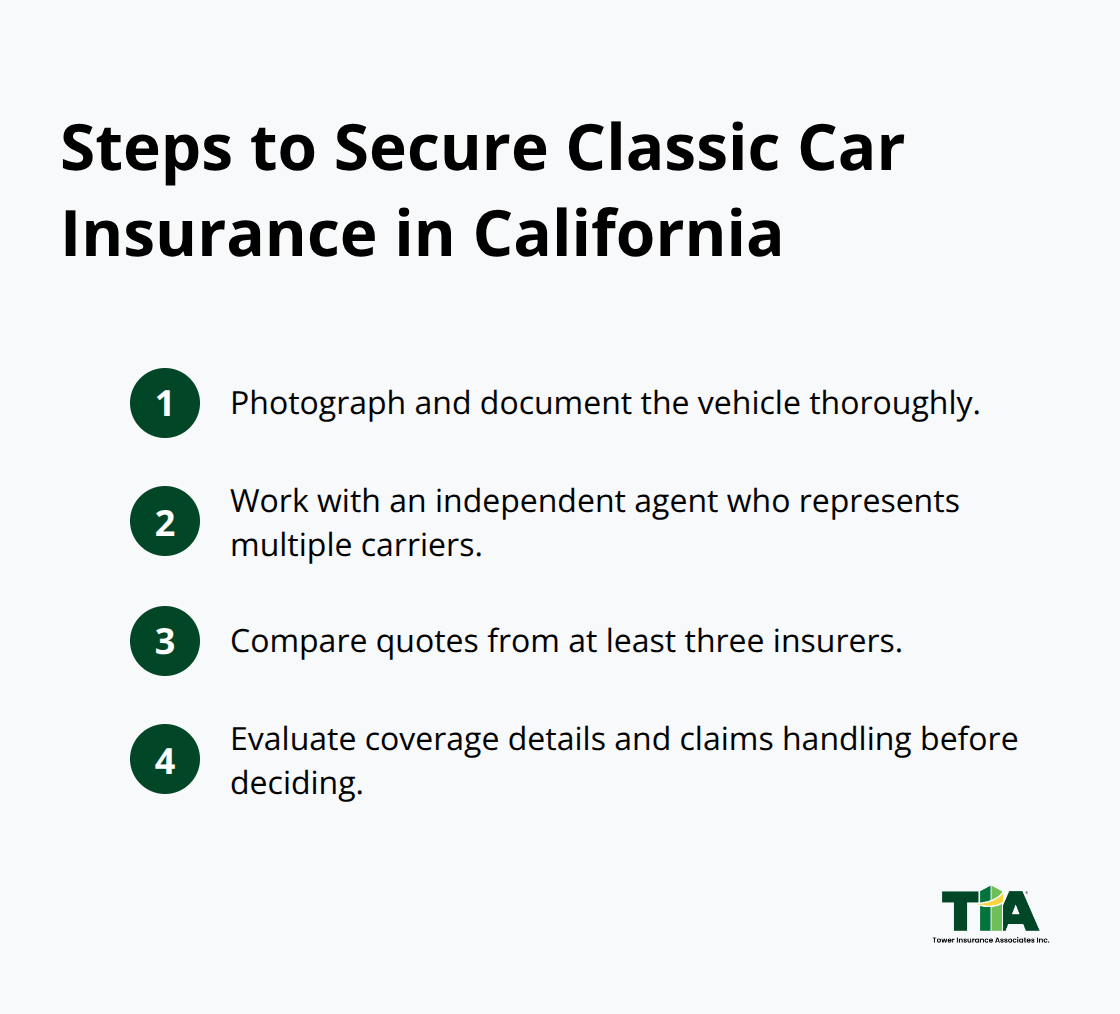
Compare Quotes from At Least Three Carriers
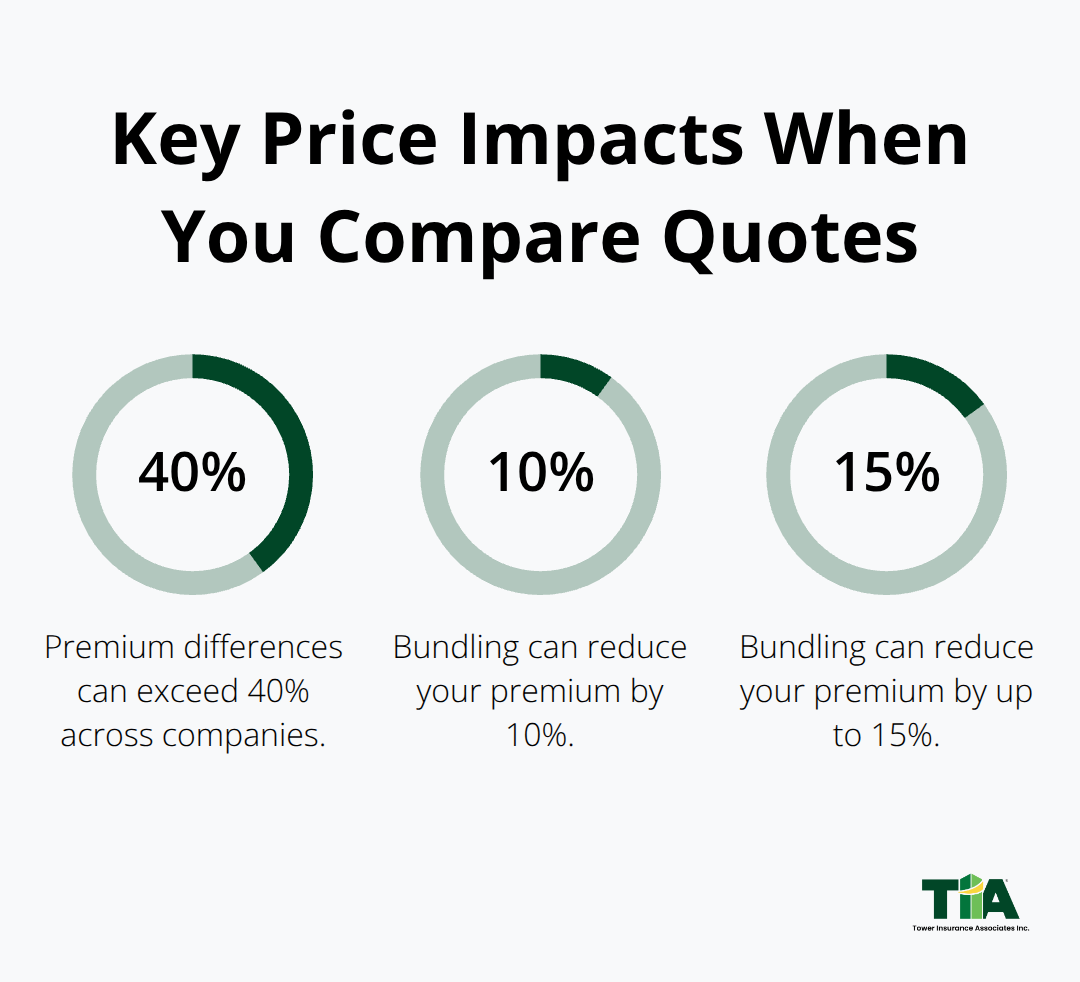
Request quotes from at least three carriers before deciding, since premium differences for identical vehicles can exceed 40 percent across companies. Verify that each quote includes agreed value protection rather than actual cash value, and confirm whether specialized coverage for accessories and modifications comes standard or costs extra. Ask about multi-policy discounts if you insure your primary vehicle with the same carrier, since bundling often reduces your classic car premium by 10 to 15 percent. These discounts make a meaningful difference when you’re protecting a valuable asset.
Evaluate Coverage Details Before Making Your Decision
Each quote should clearly state the agreed value amount your insurer will pay in case of total loss, the annual mileage limit, and which modifications receive coverage. Confirm whether the policy includes comprehensive coverage as standard and whether you can exclude collision coverage if you prefer lower premiums. Ask carriers how they handle claims for classic cars and whether they work with specialty repair shops that understand vintage vehicle restoration, since this matters significantly if your car requires specialized repairs.
Final Thoughts
Classic car ownership demands protection that standard auto policies simply cannot provide. Your vintage vehicle represents years of investment, restoration work, and personal passion-coverage built for everyday commuters misses the mark entirely. A classic car policy in California addresses your vehicle’s actual value through agreed value protection, respects your limited driving patterns with reasonable mileage caps, and covers the specialized modifications that make your car unique.
Agreed value coverage locks in your vehicle’s worth and prevents the underinsurance trap that actual cash value creates. Comprehensive protection matters more than collision for garaged vehicles, especially given California’s fire and theft risks. Documenting your car’s condition, modifications, and maintenance history upfront prevents coverage disputes when you file a claim.
Your next step involves connecting with an independent agent who represents multiple carriers and understands classic car insurance. We at Tower Insurance Associates, Inc. work with top-rated carriers to find tailored coverage that matches your vehicle and driving habits (since 1961, we’ve served California drivers). Contact us today to discuss your classic car’s specific protection needs and get quotes that reflect your actual investment.
Disclaimer: This blog post is for general informational purposes only and does not represent actual coverage, policy terms, or legal requirements. Insurance details vary by individual and jurisdiction. Please consult a licensed insurance professional for advice specific to your situation.