

Cyber attacks cost California businesses an average of $4.45 million per incident, according to IBM’s 2024 Data Breach Report. The threat landscape keeps expanding, making it harder for companies to know which coverage actually fits their needs.
At Tower Insurance Associates, Inc., we help California businesses compare multi-carrier cyber quotes side-by-side so you can find the right protection at the right price. This guide walks you through everything you need to know.
Why Your California Business Needs Cyber Coverage Now
The Financial Reality of Data Breaches in California
Cyber attacks cost California businesses an average of $4.45 million per incident, according to IBM’s 2024 Data Breach Report. The state’s strict data privacy laws-including the California Consumer Privacy Act and California Online Privacy Protection Act-create significant liability exposure when companies mishandle customer information. A data breach affecting just 500 California residents triggers regulatory investigations, notification costs, and potential fines that easily exceed $100,000.
California consistently ranks in the top three states for data breaches, with over 300 incidents reported annually in recent years, according to the Identity Theft Resource Center. The financial impact extends far beyond regulatory penalties. Incident response costs, forensic investigations, legal fees, and customer notification expenses accumulate rapidly. Many California businesses underestimate these costs until they experience a breach firsthand.
What Cyber Insurance Actually Covers
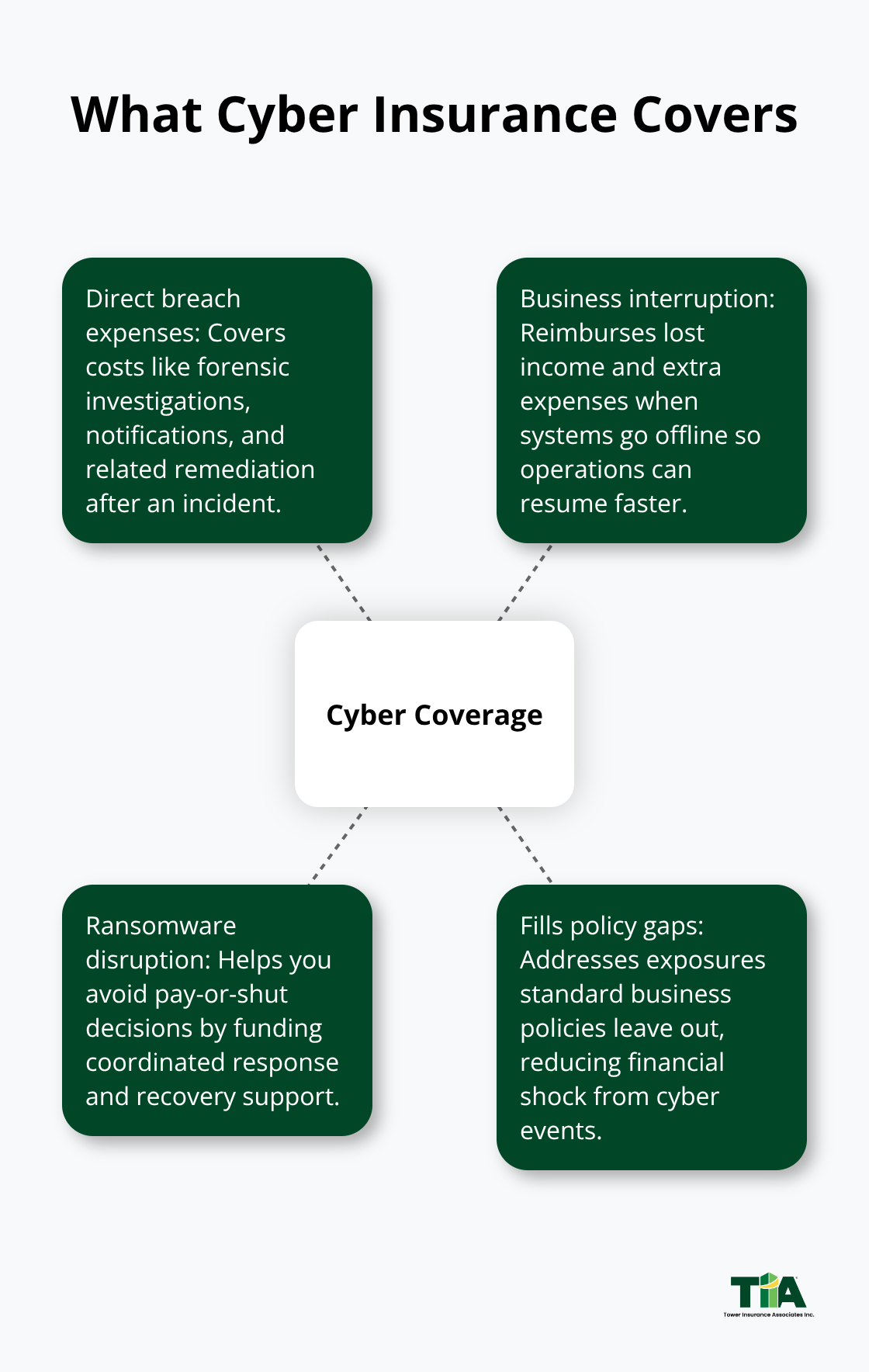
Cyber insurance covers direct breach expenses plus business interruption losses when your systems go offline. Without coverage, a single ransomware attack forces a small business to choose between paying the ransom or shutting down operations entirely. This protection addresses the gaps that standard business policies leave exposed.
Industry-Specific Threats Demand Targeted Coverage
The threats California companies face are specific and evolving. Ransomware attacks targeting healthcare providers and financial services firms have increased year-over-year according to recent threat intelligence reports. Manufacturing companies face supply chain compromises. Retail businesses deal with point-of-sale malware stealing customer payment data. Professional service firms handle sensitive client information that attackers actively pursue.
Your industry determines which threats pose the greatest risk, which directly affects the coverage you need. A healthcare provider’s policy looks completely different from a law firm’s policy because their exposure differs significantly.
Compliance Obligations Make Coverage Non-Negotiable
California’s regulatory environment makes cyber insurance non-negotiable for compliance-focused businesses. Healthcare providers must meet HIPAA requirements. Financial institutions face strict cybersecurity standards. Any company handling California resident data must demonstrate reasonable security measures under state law. Cyber insurance policies increasingly include compliance support and legal defense, helping you navigate these complex requirements without draining internal resources.
When you’re ready to explore what coverage actually fits your business, comparing quotes from multiple carriers reveals the real differences in protection and price.
What Sets Cyber Insurance Carriers Apart
Coverage Limits Hide Real Protection Gaps
Multi-carrier cyber quotes reveal stark differences that standard policies hide. Some carriers limit coverage to first-party expenses like forensic investigations and notification costs, while others include third-party liability protection for lawsuits filed by affected customers. A $2 million policy limit sounds adequate until you realize it applies only to legal defense costs, leaving you exposed for actual damages. California businesses often choose carriers based on premium alone, then discover their chosen policy excludes ransomware negotiation expenses or regulatory defense costs when a breach occurs. The carriers offering the lowest quotes frequently impose the highest deductibles or shortest response windows, creating a false economy that costs more when you need the coverage most.
Response Times Determine Real-World Outcomes
Response time matters more than most California business owners understand. When ransomware locks your systems, every hour costs money through lost productivity and operational disruption. Carriers advertise 24/7 breach response teams with rapid notification guarantees, while regional carriers sometimes require longer response windows. A healthcare provider hit with ransomware cannot wait extended periods for incident response coordination. The claims process itself varies dramatically between carriers-some require detailed pre-approval for forensic firms before you engage investigators, while others authorize response activities immediately and handle paperwork afterward.
Deductible Structures Create Hidden Costs
Deductible structures range from flat fees to percentage-based deductibles that increase with your revenue. A company generating $10 million annually might face a substantial deductible on a percentage-based structure, making the “savings” from a lower premium disappear quickly when a claim occurs. These variations mean two policies with identical premiums can produce vastly different out-of-pocket expenses during an actual breach.
California Compliance Expertise Separates Carriers
California’s regulatory environment demands carriers experienced in CCPA notification requirements and data breach notification timelines-missing these deadlines triggers additional fines regardless of your coverage. Carriers written for national markets without local expertise often lack the specific knowledge needed to navigate California’s strict data privacy laws. Some carriers provide dedicated compliance support and legal defense tailored to state requirements, while others offer generic breach response that leaves you responsible for understanding complex state obligations. This expertise gap means the difference between a carrier that actively supports your compliance versus one that simply processes your claim after violations occur.
When you compare quotes from multiple carriers, these differences become visible-and that’s exactly what you need to identify which policies actually support your California business versus those that create expensive gaps when breaches happen.
Getting Multi-Carrier Cyber Quotes That Actually Compare
Gather the Right Business Information First
Collecting quotes from multiple carriers sounds straightforward until you realize that cyber insurance policies vary so dramatically that comparing them requires specific business information upfront. Start by documenting your company’s revenue, number of employees, annual data volume processed, and specific industry classification because carriers price policies differently based on these factors. Your revenue directly affects deductible calculations on percentage-based structures, while employee count influences ransomware risk assessments since attackers often target companies through staff vulnerabilities.
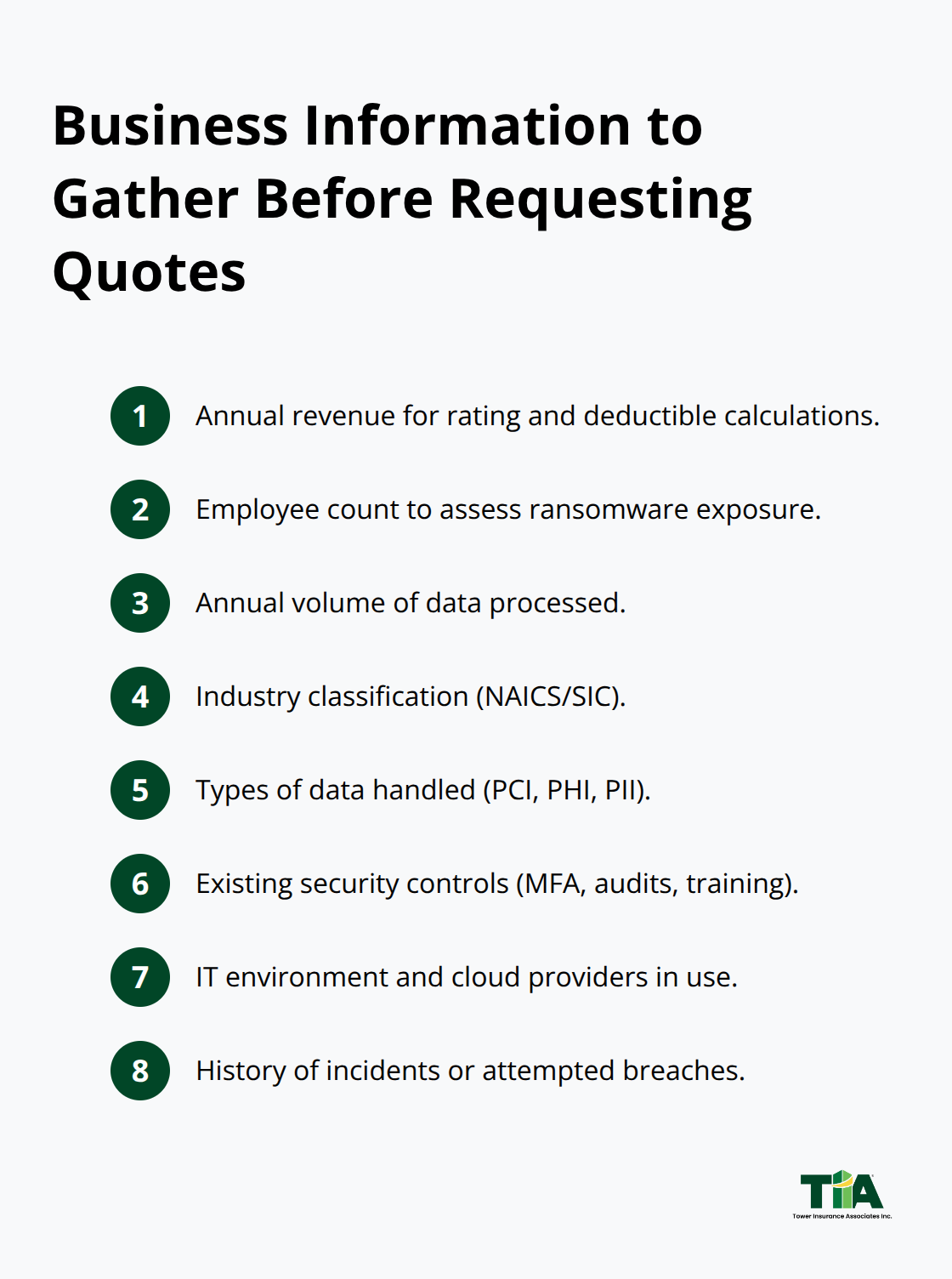
Document which types of customer data you handle-payment card information, health records, personal identifiers-because carriers adjust premiums based on the sensitivity of data your business maintains. California businesses should also list any existing security measures already in place, such as multi-factor authentication systems or annual security audits, since carriers frequently offer premium discounts for demonstrated security practices. Include details about your current IT infrastructure, whether you use cloud services, and if you’ve experienced any previous cyber incidents or attempted breaches.
Work with an Independent Agent to Request Quotes Simultaneously
An independent insurance agent who represents multiple carriers can request quotes simultaneously rather than contacting carriers individually, which saves weeks of back-and-forth communication. This approach produces comparable quotes on the same timeline, making it far easier to evaluate differences in coverage and pricing. An independent agency representing multiple top-rated carriers can coordinate this process for California businesses seeking comprehensive cyber coverage options.
Compare Coverage Triggers and Claim Procedures
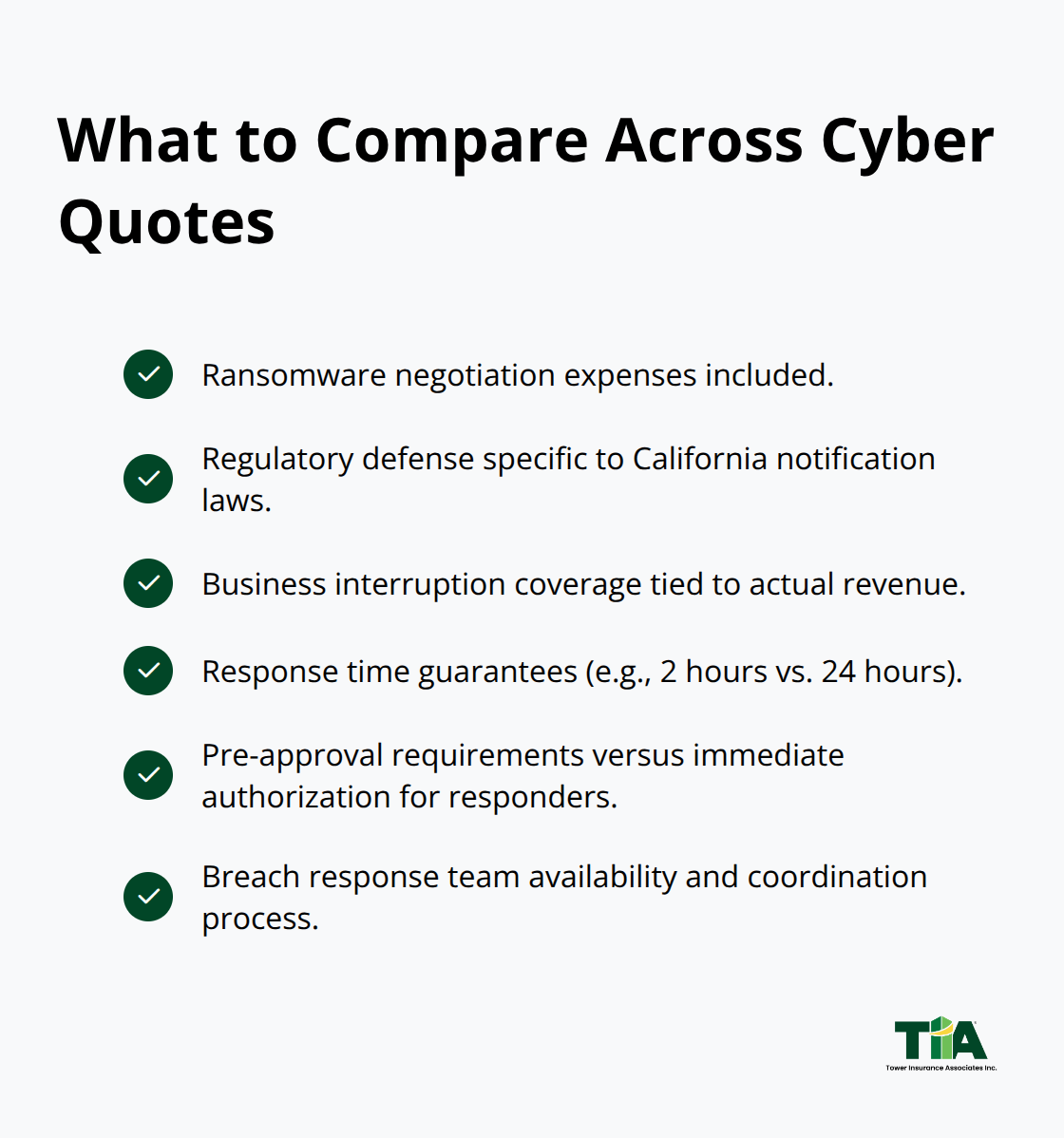
When evaluating the quotes that arrive, ignore the premium alone and instead compare the actual coverage triggers and claim procedures across policies. Verify whether each quote includes ransomware negotiation expenses, regulatory defense costs specific to California’s data breach notification laws, and business interruption coverage that accounts for your revenue during system downtime. Check the response time guarantees-some carriers commit to breach response team deployment within two hours while others require 24-hour windows, a critical difference when ransomware locks your operations.
Examine Deductible Structures and Coverage Limits
Examine whether deductibles apply per incident or annually, since annual deductibles create scenarios where your first claim exhausts the deductible but subsequent claims that same year still require out-of-pocket payment. Request clarity on whether forensic investigation costs count toward your policy limit or remain separate, because this distinction dramatically affects how far your coverage extends during complex breaches. California businesses particularly need carriers that explicitly cover CCPA notification expenses and regulatory fines, not policies that leave these costs entirely on your business.
Recognize That Lowest Price Signals Narrowest Coverage
The lowest-priced quote frequently comes from carriers offering the narrowest coverage, longest response times, or highest deductibles-selecting based on premium alone consistently produces regret when actual breaches occur and businesses discover their chosen policy leaves critical gaps exposed. This information isn’t busywork; it directly determines whether a carrier’s quote actually reflects your real risk profile or represents an artificially low premium that disappears when you file a claim.
Conclusion
Selecting cyber insurance for your California business requires you to focus on three concrete factors: coverage that matches your actual risk profile, response capabilities that minimize downtime costs, and deductibles you can afford when breaches happen. The lowest premium never equals the best protection, and comparing multi-carrier cyber quotes side-by-side exposes these differences immediately. A $500 annual savings on premium vanishes fast when your chosen carrier requires 24-hour response windows or excludes ransomware negotiation costs that your business desperately needs.
California’s regulatory environment demands carriers with local expertise who understand CCPA notification requirements, data breach notification timelines, and potential regulatory fines rather than national carriers applying generic breach response procedures. Your industry determines which threats matter most-healthcare providers face different exposures than retail businesses, which face different exposures than professional service firms. When you compare quotes, verify that each carrier explicitly covers California-specific compliance obligations rather than assuming all policies include this protection.
To begin comparing cyber insurance options tailored to your California business, start by gathering your business information and requesting quotes from multiple carriers. Contact Tower Insurance Associates, Inc. to coordinate multi-carrier cyber quotes that reveal real differences in coverage and pricing without weeks of individual carrier contact.
Disclaimer: This blog post is for general informational purposes only and does not represent actual coverage, policy terms, or legal requirements. Insurance details vary by individual and jurisdiction. Please consult a licensed insurance professional for advice specific to your situation.