

Culver City businesses face growing digital threats that can cripple operations and drain resources. Ransomware attacks, data breaches, and phishing scams are no longer rare-they’re becoming routine for companies of all sizes.
At Tower Insurance Associates, Inc., we help local business owners understand how cyber liability coverage protects against these mounting risks. The right policy covers breach response costs, business interruption losses, and legal defense when attacks happen.
Why Cyber Threats Cost Culver City Businesses Real Money
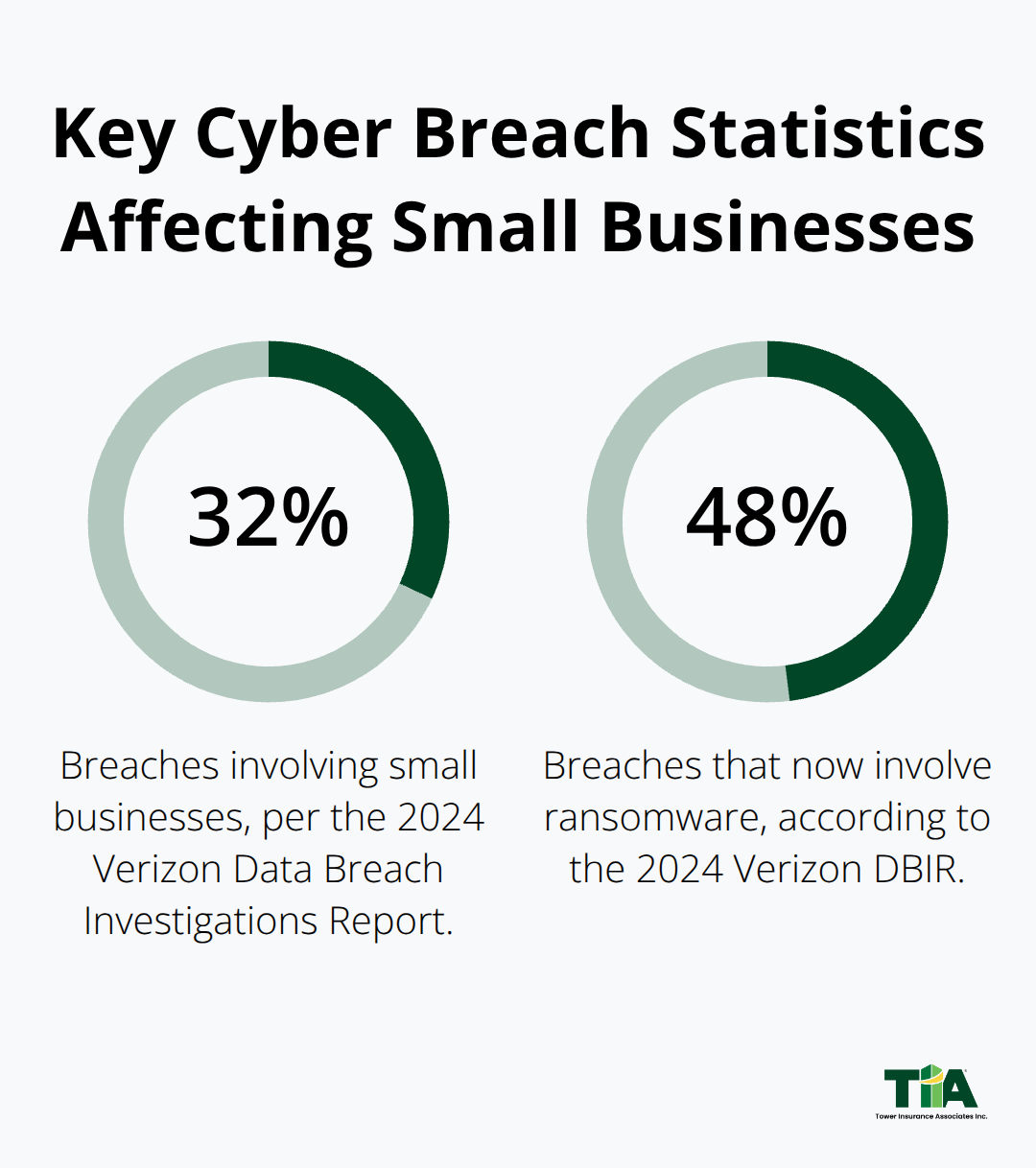
Small and mid-sized businesses in Culver City face cyber attacks at an alarming rate. According to the 2024 Verizon Data Breach Investigations Report, 32% of breaches involved small businesses, and 48% of all breaches now involve ransomware. These aren’t isolated incidents anymore-they’re predictable operating hazards for companies that lack proper defenses.
Attackers now target smaller firms specifically, knowing they often have fewer security resources than larger enterprises.
The Financial Reality When Breaches Strike
When a breach hits your business, costs extend far beyond stolen data. The 2024 IBM Cost of a Data Breach Report found the average breach cost $4.45 million globally, with notification expenses, forensic investigation, legal fees, and regulatory fines consuming significant portions of that total. A Culver City business with 50 employees that experiences a ransomware attack forcing a week-long shutdown can lose $35,000 to $70,000 in daily revenue alone, depending on your industry. Forensic specialists, customer notifications (California requires notification within 30 days under breach notification laws), and potential regulatory penalties add up quickly. Business interruption coverage protects against these exact scenarios by covering lost income while your systems remain offline and you manage the crisis response.
California’s Strict Data Privacy Regulations
California imposes some of the nation’s toughest data privacy regulations, which means your cyber liability coverage must account for compliance costs. The California Consumer Privacy Act requires businesses to disclose what personal data they collect, how it’s used, and who it’s shared with. Failure to protect consumer information exposes you to statutory damages of $100 to $750 per consumer per incident. Culver City businesses in real estate, medical practices, accounting, and law firms handle particularly sensitive data, making compliance failures exponentially more expensive.
Why Vendor Connections Multiply Your Risk
Third-party vendors create additional access points to your systems, and cybersecurity must extend to these external connections. A vendor with weak security controls can become an entry point for attackers, enabling breaches that look like insider attacks. Culver City businesses often work with critical vendors-CPAs, banks, payroll providers-who access highly sensitive data. Your cyber liability coverage should address vendor-related incidents, but the real protection starts with vendor risk assessments that reveal each vendor’s security strengths and weaknesses before you grant them access.
Common Cyber Threats Facing Culver City Businesses
Ransomware Attacks That Lock Your Operations
Ransomware dominates the threat landscape for Culver City businesses. According to the 2024 Verizon Data Breach Investigations Report, ransomware now appears in 48% of all breaches, and attackers increasingly target small and mid-sized firms because they know these companies often lack robust backup systems and incident response plans. When ransomware locks your files, you face an immediate choice: pay the extortion demand or lose access to critical business data.
A Culver City accounting firm that falls victim to ransomware cannot process client tax returns, payroll, or financial statements-every day of downtime means lost revenue and damaged client relationships. Recovery costs from forensic investigation, system restoration, and operational downtime often exceed $100,000.
Phishing Attacks That Exploit Your Employees
Phishing and social engineering attacks remain the entry point for most breaches because they exploit human behavior rather than technical weaknesses. Attackers send emails that appear to come from trusted vendors, banks, or colleagues, tricking employees into clicking malicious links or downloading infected attachments. A single employee at a law firm, medical practice, or real estate company who falls for a phishing email can grant attackers access to client files, financial records, or personal health information.
These attacks succeed because they are personalized and convincing-attackers research your company, your vendors, and your key personnel before launching campaigns. The more sensitive your industry, the more attractive you become to sophisticated threat actors who know your data commands high value on the dark web.
Vendor Connections That Create Hidden Entry Points
Third-party vendor connections create a hidden attack surface that many Culver City businesses ignore completely. Your critical vendors-CPAs, banks, payroll processors, cloud storage providers-connect directly to your systems and access sensitive data. If a vendor’s security controls are weak, attackers can infiltrate your network through that vendor’s account, making the breach appear to originate from inside your organization.
A Culver City property management company that grants a vendor access to tenant databases and financial records without verifying that vendor’s security practices essentially hands attackers a backdoor to sensitive information. Vendor risk assessments identify which vendors pose the highest threat and what security controls they actually have in place.
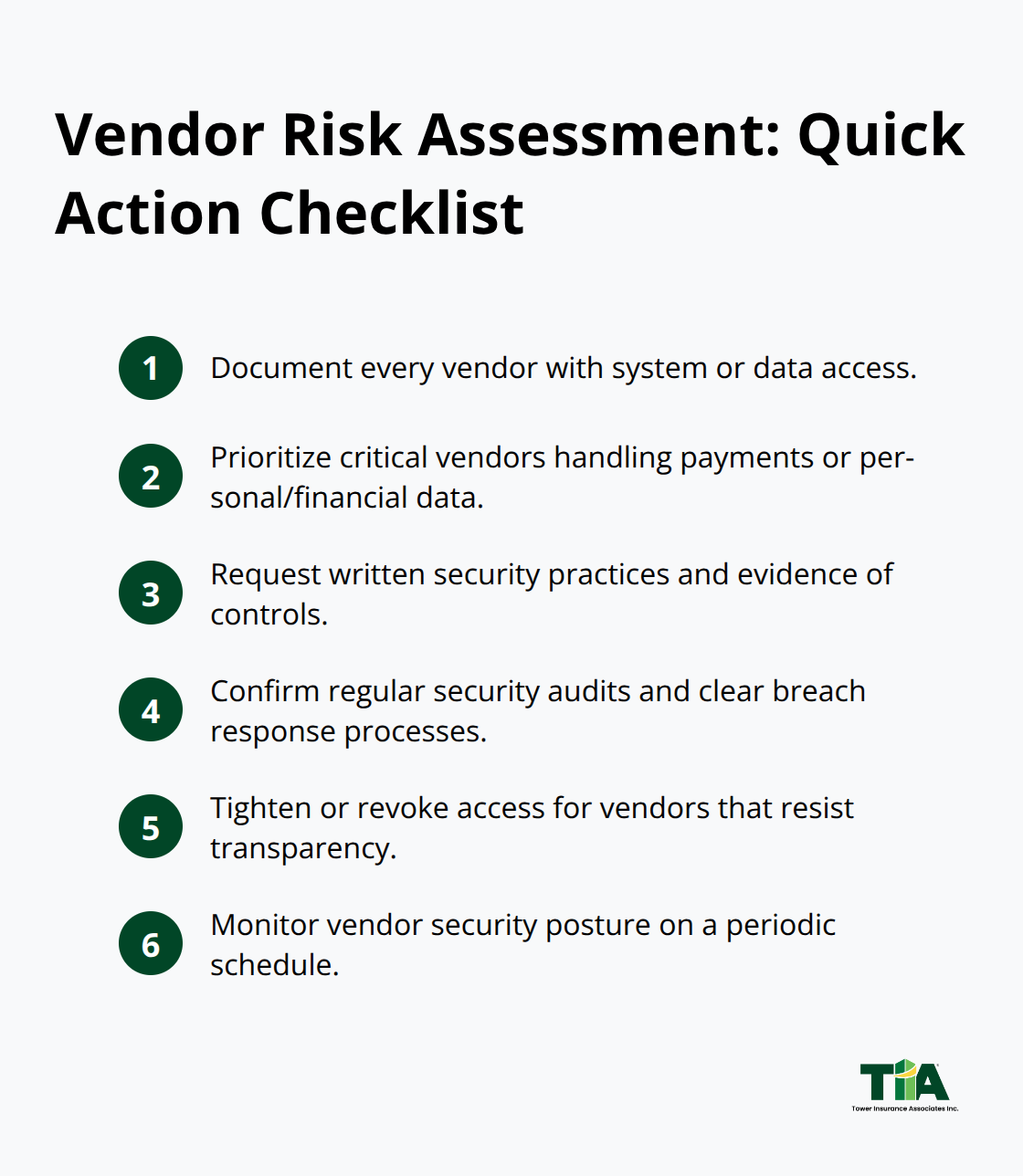
Start by documenting every vendor with system access, then prioritize the critical ones-those handling payments, personal data, or financial information. Ask each vendor about their security practices, whether they conduct regular security audits, and how they handle data breaches. Many vendors will resist these questions or provide vague answers, which itself signals weak security maturity and warrants closer scrutiny before you grant them continued access to your systems.
What Cyber Liability Coverage Actually Pays For
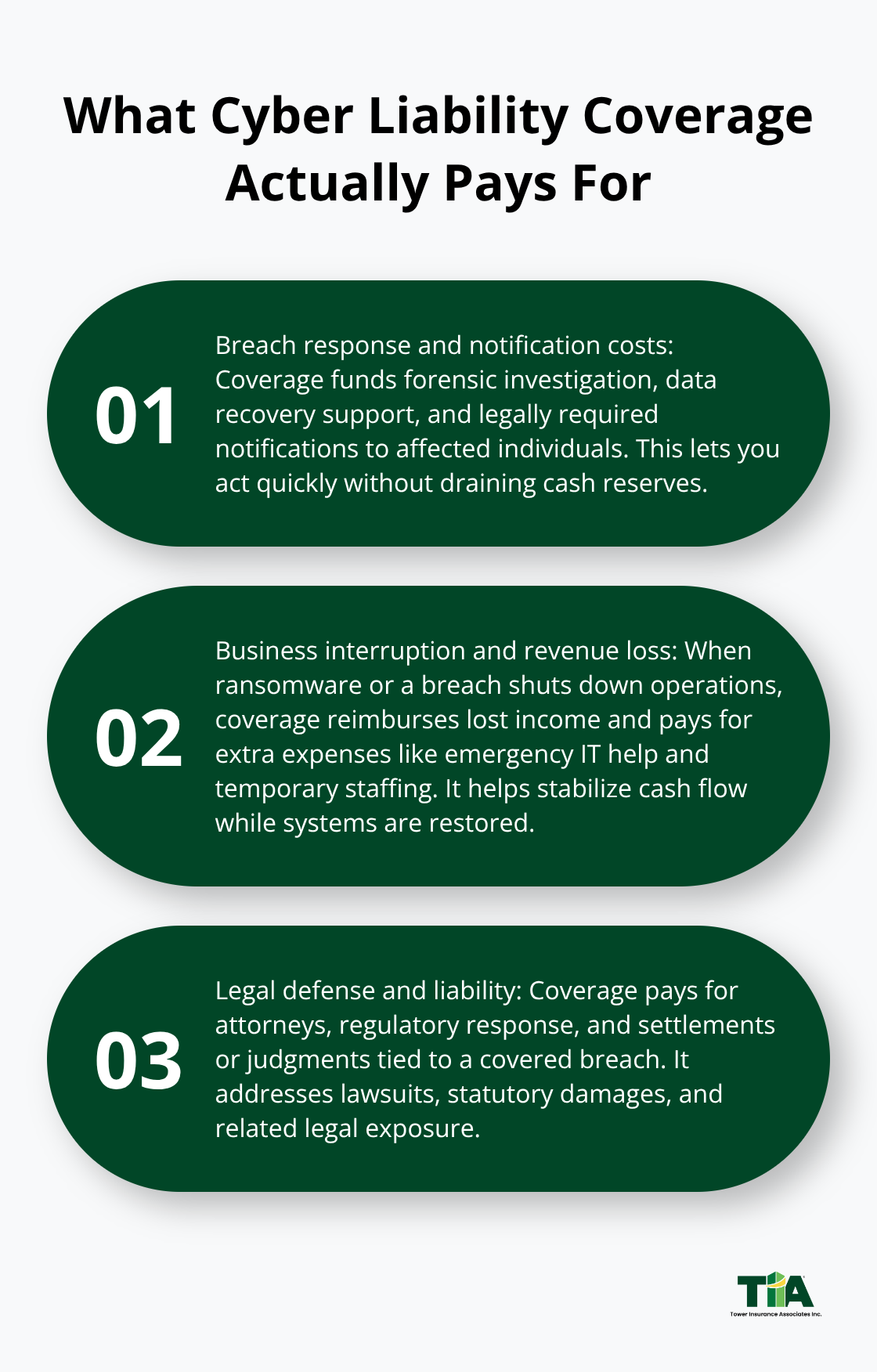
Cyber liability coverage stops being theoretical the moment a breach hits your business. A solid cyber liability policy covers three distinct categories of expenses that most Culver City business owners underestimate. First, breach response and notification costs consume enormous resources immediately after an attack.
When ransomware locks your systems or hackers steal customer data, you need forensic investigators to determine what happened, IT specialists to restore operations, and legal counsel to navigate notification requirements.
Breach Response and Notification Costs
California’s breach notification law requires you to notify affected individuals within 30 days, and that notification process alone-printing letters, mailing notices, setting up credit monitoring services-costs between $5,000 and $50,000 depending on how many people were affected. Forensic investigation fees typically run $10,000 to $100,000 for a mid-sized breach, and you’re looking at substantial out-of-pocket expenses before your systems are even fully operational again. Your cyber liability policy covers these immediate response expenses so you can act quickly without depleting cash reserves.
Business Interruption and Revenue Loss Protection
Business interruption coverage protects your revenue when operations shut down. A Culver City real estate brokerage hit by ransomware cannot show properties, process transactions, or access client files-every day offline means lost commissions and angry clients. If your business generates $5,000 daily in revenue, a week-long shutdown costs $35,000 before you factor in the work required to rebuild client confidence and recover lost deals. This coverage reimburses lost income and covers extra expenses incurred while you’re recovering, such as emergency IT contractors working around the clock or temporary staff hired to handle phone calls and basic operations.
Legal Defense and Liability Coverage
Legal defense and liability coverage handles the aftermath when customers sue. Data breaches expose your business to lawsuits from affected individuals claiming emotional distress, identity theft costs, or credit monitoring expenses. A single class-action lawsuit from customers whose information was compromised can cost $50,000 to $500,000 in legal defense alone, not counting settlement amounts. Regulatory fines from California’s Attorney General or the California Privacy Protection Agency add another layer of financial exposure-statutory damages under consumer privacy laws reach $100 to $750 per consumer per incident, meaning a breach affecting 1,000 customers creates potential liability of $100,000 to $750,000 before settlement negotiations even begin.
Pairing Coverage With Active Risk Management
Cyber liability coverage works best when paired with active risk management. Coverage pays for damage after breaches occur, but vendor risk assessments prevent breaches from happening in the first place. Start with a comprehensive risk assessment that identifies your security gaps, then evaluate each vendor’s security controls before they access your systems. Ask vendors specifically about their cybersecurity practices, whether they conduct annual security audits, and how they respond to breaches on their end. Many vendors resist these questions or provide vague answers-that resistance itself signals weak security maturity and should trigger stricter access controls or vendor replacement.
Prioritize your critical vendors first: CPAs and accountants handling financial data, banks and payroll processors managing money, cloud storage providers holding customer information. These vendors require documented security practices and ongoing monitoring because their compromise becomes your compromise. Combining cyber liability coverage with a documented vendor management program that includes initial risk assessments, security requirement agreements, and periodic monitoring of vendor security posture addresses both the financial protection you need after an incident and the prevention strategies that reduce your likelihood of needing that protection.
Final Thoughts
Culver City businesses operate in a threat environment where cyber attacks are no longer hypothetical risks but operational certainties. The financial, legal, and operational damage from ransomware, phishing, and vendor compromises demands a two-part defense strategy: active prevention through vendor risk management and financial protection through cyber liability coverage. A vendor risk assessment identifies which third-party connections pose the highest threat to your operations, while your critical vendors-CPAs, banks, payroll processors-require documented security requirements and periodic monitoring because their security failures become your security failures.
When a breach occurs despite your best prevention efforts, your policy covers the immediate costs that threaten business survival: forensic investigation, customer notification, system restoration, and legal defense. A week-long operational shutdown or a class-action lawsuit from affected customers can destroy a Culver City business without proper coverage in place. Local expertise matters because Culver City’s business landscape-real estate brokerages, medical practices, law firms, accounting firms, property management companies-faces specific regulatory requirements and vendor relationships that generic insurance policies miss.
We at Tower Insurance Associates, Inc. represent multiple top-rated carriers, meaning we find Culver City cyber liability coverage tailored to your actual operations rather than pushing a one-size-fits-all policy. Contact us to discuss how cyber liability protection fits into your overall business risk strategy.
Disclaimer: This blog post is for general informational purposes only and does not represent actual coverage, policy terms, or legal requirements. Insurance details vary by individual and jurisdiction. Please consult a licensed insurance professional for advice specific to your situation.