
Classic cars deserve protection that matches their value, and finding the right classic car insurance quotes is the first step toward that security.
At Tower Insurance Associates, Inc., we know that comparing coverage options can feel overwhelming. This guide walks you through the types of coverage available, how to request quotes, and what factors actually affect your rates.
What Coverage Types Actually Protect Your Classic Car
Agreed Value Coverage: The Foundation of Classic Car Protection
Agreed value coverage is non-negotiable for classic cars, and it works completely differently from what you’ll find in standard auto policies. Instead of calculating depreciation based on your car’s age, agreed value locks in a fixed payout amount that you and your insurer establish upfront. This matters because a 1967 Chevrolet Corvette or a restored 1955 Thunderbird often appreciates in value, yet standard policies would pay you based on depreciated actual cash value. Agreed value coverage fixes the payout at a pre-agreed amount in total loss scenarios, protecting your car’s value beyond depreciation concerns.
To set the right agreed value, you’ll need documentation: professional appraisals, restoration receipts, condition photos, and market data showing comparable sales. Insurers like Hagerty re-evaluate the agreed value annually using your car’s condition, mileage, and historical significance. Grundy and American Modern also emphasize agreed value as central to their policies. The key point is simple: don’t guess at your car’s value. A $40,000 classic car underinsured at $25,000 means a $15,000 loss in a total loss claim, which defeats the entire purpose of specialized coverage.
Liability, Comprehensive, and Collision: Core Protections
Liability and comprehensive coverage round out the core protections, though they function similarly to standard auto insurance in structure. Liability covers damage you cause to others and is mandatory in all states except New Hampshire, typically starting at your state’s minimum requirements but often needing higher limits for valuable classics. Comprehensive covers theft, weather, and vandalism-critical for classic cars since parts are difficult to source and expensive. Collision covers accidents with other vehicles or objects.
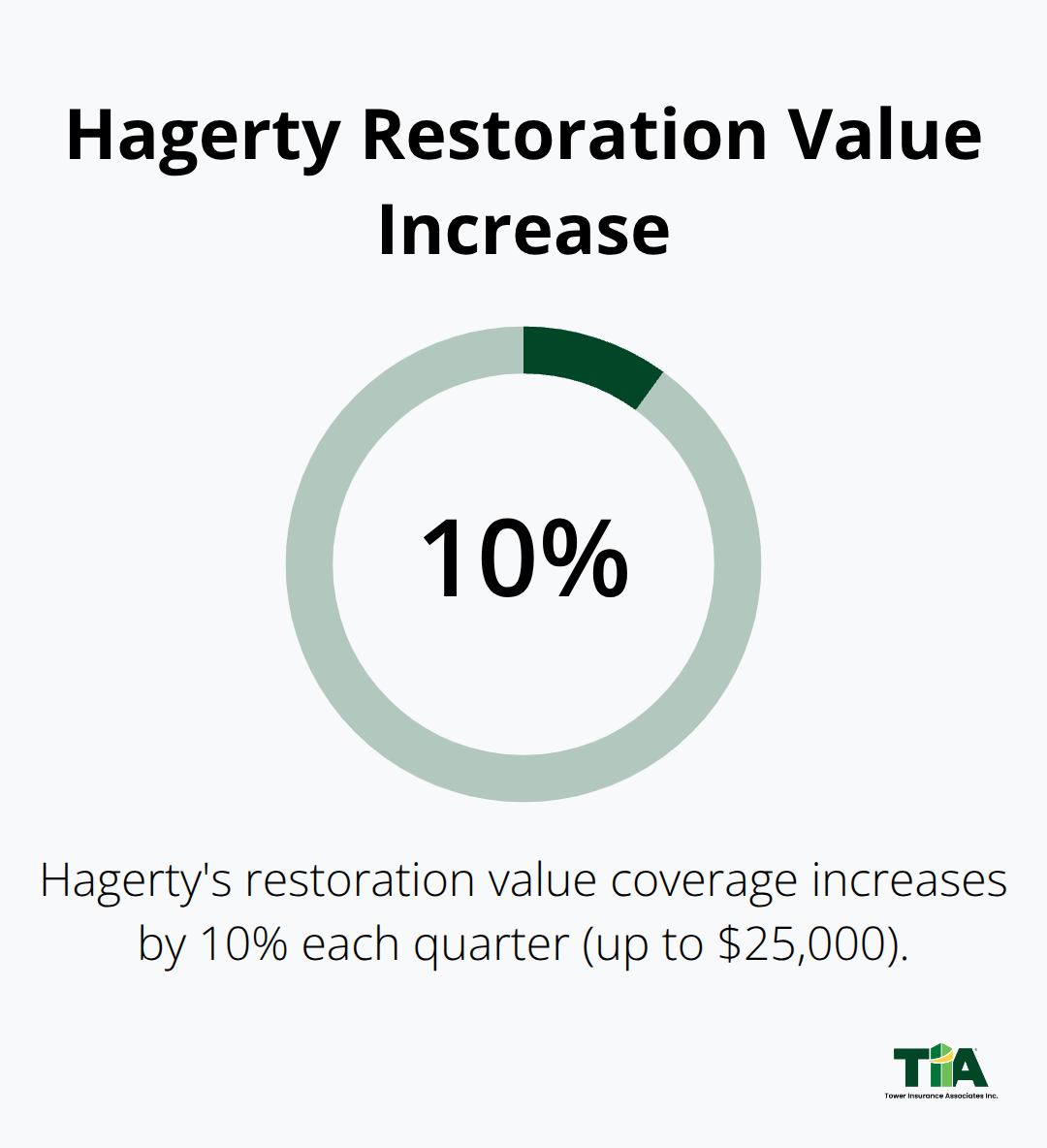
The real difference lies in optional add-ons available through specialist insurers: spare parts coverage (ranging from $500 with Grundy to $2,000 with American Modern), roadside assistance that includes specialized towing, and coverage for custom or restoration work. Hagerty’s restoration value coverage actually increases by 10% each quarter up to $25,000, meaning your policy grows as you invest in improvements.
Comparing Coverage Details and Mileage Limits
When you compare quotes, verify whether your prospective insurer covers OEM or fabricated parts, whether spare parts coverage is included or optional, and what mileage allowances apply. Annual mileage limits vary dramatically across carriers-Grundy offers unlimited miles while Safeco caps limited-use vehicles at 5,000 miles annually. Your usage pattern should drive this choice: a show car attending quarterly exhibitions differs entirely from a weekend cruiser.
This is where specialist knowledge matters most, since policies designed for hobby use won’t cover daily commuting, and bundling requirements vary by carrier. An independent agency representing multiple top-rated carriers can help you navigate these distinctions and find vehicle insurance coverage that matches both your vehicle and your actual driving habits.
Getting the Right Information Before You Compare
Document Your Classic Car Thoroughly
Before you request a single quote, spend time documenting your classic car thoroughly. Insurers need specifics: the vehicle’s year, make, model, current condition, restoration status, and how you actually plan to use it. Vague descriptions lead to vague quotes that don’t reflect your real coverage needs. Take photographs showing the car’s overall condition, engine bay, interior, and any custom work or restoration.
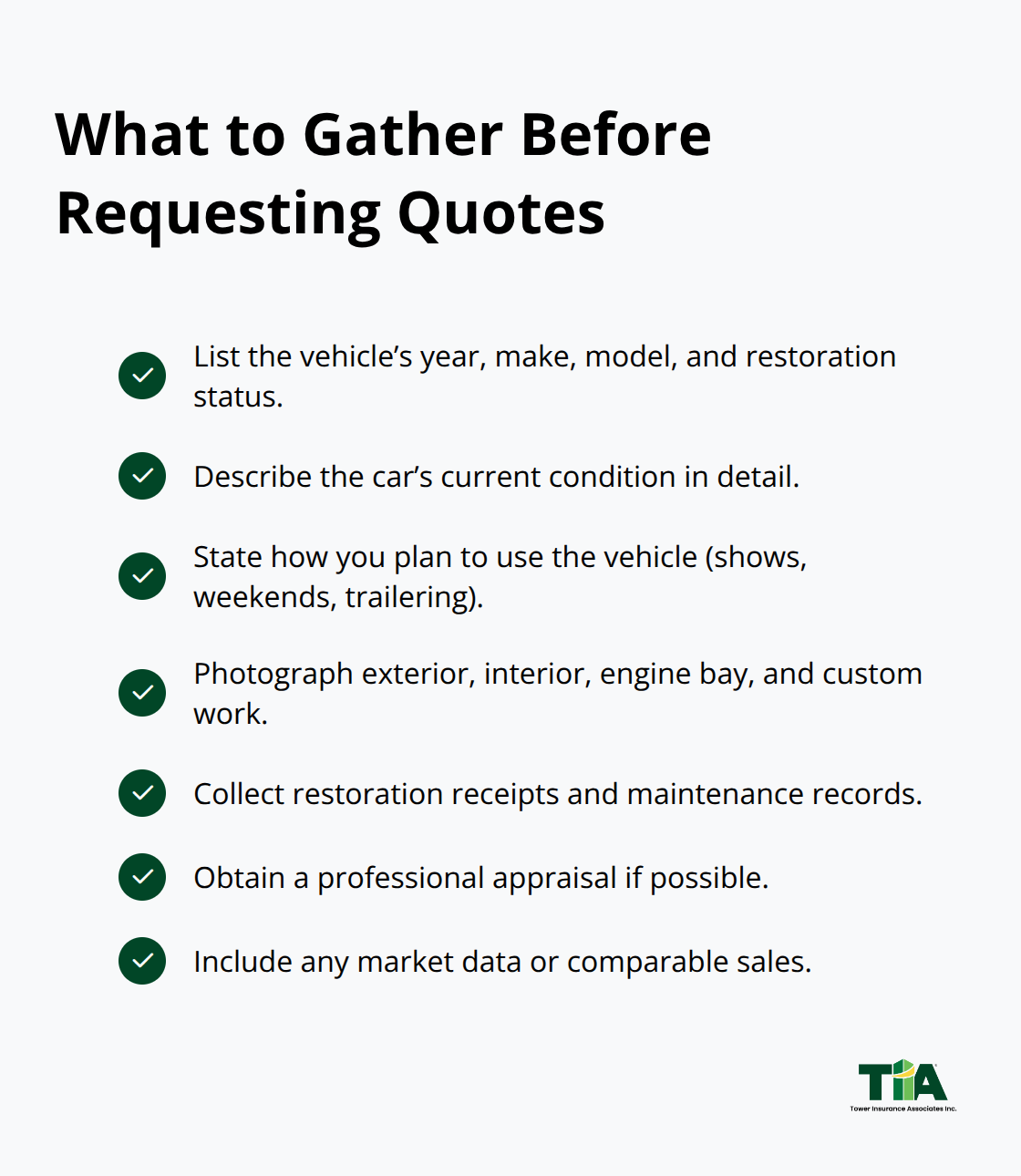
Gather restoration receipts, maintenance records, and professional appraisals if you’ve had them done.
This documentation serves two purposes: it helps insurers calculate accurate agreed value, and it protects you during a claim by proving the car’s condition and value at policy inception. If you haven’t had a formal appraisal, obtain one before requesting quotes. A professional appraiser familiar with collector vehicles will establish a baseline value that multiple insurers can reference, preventing wild swings between quotes caused by different valuation methods.
Assess Your Actual Usage and Storage
Your usage patterns affect pricing significantly, so provide honest information about mileage expectations. Most classic car owners underestimate annual miles until they start tracking them. If you plan to attend four car shows per year plus occasional weekend drives, that amounts to roughly 3,000 miles. If you trailer the car to distant events, mileage might be negligible. Storage location also affects every quote you receive: a locked, climate-controlled garage in a low-theft area costs significantly less to insure than a carport or driveway.
When you contact insurers like Grundy, American Modern, Safeco, or Hagerty, provide this information upfront rather than letting them guess. Security measures matter too-alarms and surveillance cameras further reduce insurance costs and improve safety.
Request Quotes from Multiple Carriers
Request quotes from at least three carriers, and when comparing the numbers, don’t stop at the premium. Examine what each quote includes: spare parts coverage amounts, deductible options, mileage limits, whether roadside assistance is bundled or optional, and any available discounts. A $400 annual premium with $500 spare parts coverage and 7,500 miles differs fundamentally from a $350 premium with zero parts coverage and 5,000 miles. The lower price often reflects less protection, not better rates.
Ask each insurer specifically whether your driving record or vehicle age affects eligibility, and confirm that agreed value coverage is included, not an add-on. An independent agency representing multiple top-rated carriers can help you navigate these distinctions and find coverage that matches both your vehicle and your actual driving habits.
Create a Side-by-Side Comparison
After collecting quotes, create a simple comparison: list the premium, agreed value amount, mileage allowance, spare parts coverage, and any bundling discounts. This visual comparison reveals which insurer offers the best value for your specific vehicle and usage, not just the cheapest price. The factors that affect your rates-vehicle age, condition, driving history, and storage-now become clear when you see how different carriers weight them differently.
What Really Moves Your Classic Car Insurance Rates
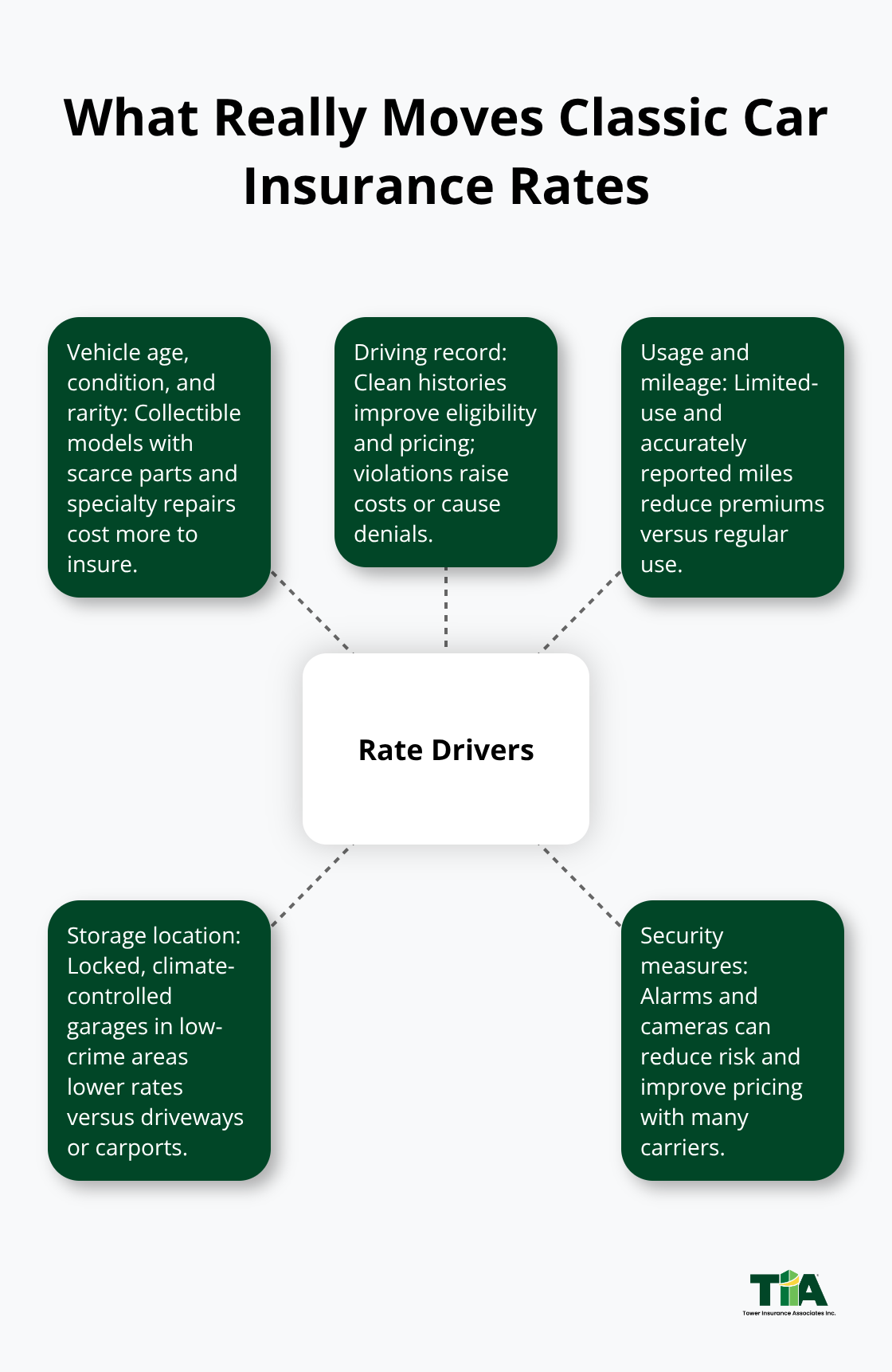
Vehicle age, condition, and rarity Shape Your Premium
Vehicle age alone does not determine your premium-condition and rarity matter far more. A 1990 Honda Civic will not qualify for classic coverage at all, but a 1967 Chevrolet Corvette in original condition and a heavily customized 1967 Corvette street rod will receive vastly different quotes despite the same year.
Insurers like Hagerty and American Modern evaluate whether your car appreciates or depreciates, how many comparable examples exist in the market, and whether restoration work adds genuine value or merely reflects personal preference. A rare muscle car or foreign sports car commands higher premiums than common models because replacement parts cost more and specialty repair shops charge premium rates.
Condition matters because a car stored indoors for decades with 3,000 annual miles presents lower risk than the same model driven 10,000 miles yearly through varying weather. When you request quotes, provide detailed condition information: original paint or repaint, original interior or restoration, engine modifications, and whether the vehicle is stock or customized. This specificity prevents insurers from overestimating risk and quoting conservatively.
Your Driving Record and Usage Patterns Affect Eligibility
Your driving record directly impacts eligibility and pricing across every carrier. American Collectors Insurance and Hagerty typically require a clean five-year driving record with minimal violations, while some states enforce stricter standards. If you have received speeding tickets or at-fault accidents in the last three years, expect denial from specialist carriers or significantly higher premiums.
Honest usage reporting matters more than you might think. Safeco’s limited-use policies run cheaper than their regular-use options, but the real savings come from accurate mileage expectations. Overestimating mileage inflates your quote unnecessarily while underestimating creates eligibility problems at claim time. Most classic car owners underestimate annual miles until they start tracking them. If you plan to attend four car shows per year plus occasional weekend drives, that amounts to roughly 3,000 miles.
Storage Location and Security Create the Largest Price Variance
Storage location creates the largest pricing variance after driving history. A locked garage in a low-crime area costs substantially less than a carport or driveway, and climate-controlled storage further reduces premiums since weather damage becomes minimal. Security measures like alarms and surveillance cameras reduce costs and improve safety, though most carriers do not require them.
The combination of these factors means two identical 1955 Thunderbirds can have premiums differing by 50 percent or more based solely on storage, usage, and driving history rather than the vehicle itself. When you contact insurers, provide storage details upfront-this information shapes every quote you receive. An independent agency like Tower Insurance Associates, Inc. representing multiple top-rated carriers can help you navigate how different insurers weight these factors and find coverage that matches your specific situation.
Final Thoughts
Comparing classic car insurance quotes requires attention to three core elements: understanding what agreed value coverage actually protects, gathering accurate information about your vehicle and usage, and recognizing how storage, driving history, and vehicle condition shape your rates. The quotes you collect will vary significantly because insurers weight these factors differently based on their underwriting philosophy and risk appetite. Independent agencies representing multiple top-rated carriers understand how Hagerty evaluates restoration value differently than American Modern, why Grundy’s unlimited mileage appeals to certain collectors, and which insurers prioritize spare parts coverage versus mileage flexibility.
A generalist agent selling standard auto policies cannot navigate these distinctions effectively, leaving you to decode technical policy language alone. Rather than accepting the first quote you receive, contact an independent agency that understands classic car insurance and can compare options across carriers simultaneously. This approach typically uncovers discounts you would miss shopping alone, identifies coverage gaps in low-cost quotes, and ensures your agreed value reflects your car’s true market worth.
Start by gathering your documentation, assessing your actual usage honestly, and requesting classic car insurance quotes from at least three carriers. Then contact Tower Insurance Associates, Inc. to discuss how your specific vehicle, storage situation, and driving habits affect your options (we’ve served Culver City since 1961 by representing multiple top-rated carriers). Visit our classic car insurance page to learn more about how we can help you find the right coverage.
Disclaimer: This blog post is for general informational purposes only and does not represent actual coverage, policy terms, or legal requirements. Insurance details vary by individual and jurisdiction. Please consult a licensed insurance professional for advice specific to your situation.