
Cyber attacks on Los Angeles businesses are accelerating. Ransomware, data theft, and system breaches now cost companies an average of $4.45 million per incident, according to IBM’s 2024 Cost of a Data Breach Report.
A Los Angeles cyber policy tailored to your business can be the difference between recovery and closure. Here at Tower Insurance Associates, Inc., we help local companies understand their coverage options and select protection that matches their actual risk exposure.
What Threats Are Actually Hitting Los Angeles Businesses Right Now
Ransomware and Data Theft Target Local Companies
Ransomware attacks against Los Angeles companies have intensified over the past two years, with threat actors targeting everything from healthcare providers to professional services firms. The FCC reports that digital information theft is now the most commonly reported fraud, making data security non-negotiable for any business handling customer information. Small and midsize Los Angeles businesses face particular vulnerability because they often lack dedicated security staff, yet they process sensitive client data that makes them attractive targets. Manufacturing firms, law offices, and accounting practices in the region face constant pressure from attackers who know these industries hold valuable intellectual property and financial records.
The Real Cost of a Breach
The financial cost of ignoring these threats extends far beyond initial incident response. IBM’s 2024 Cost of a Data Breach Report showed breaches cost companies an average of $4.45 million per incident, but the damage multiplies from there. A breach destroys customer trust, triggers regulatory fines under California’s privacy laws, and can force a business to shut down operations while systems are restored. Your company’s reputation suffers damage that takes years to repair, and your ability to win new contracts diminishes significantly after a public incident.
California’s New Audit Requirements
The California Privacy Rights Act, approved by voters in 2020, requires the California Privacy Protection Agency to mandate annual cybersecurity audits for businesses whose processing poses significant risk to privacy or security. Los Angeles companies that collect California consumer personal information must now conduct annual audits assessing whether their cybersecurity measures meet defined standards. The CPPA determines audit requirements based on factors including the size and complexity of your business and the nature of your processing activities.
Steps to Take Now
The compliance burden is real and growing. Your company cannot simply hope to stay under regulatory radar, because the CPPA’s framework applies to any business processing consumer data at significant risk. Start mapping what personal information your company collects, stores, uses, and shares. Document data types, processing purposes, retention periods, and your current security controls to support the audit scope you will need to define. Plan to use an external, independent auditor rather than relying solely on internal assessments, because regulators expect genuine third-party verification.
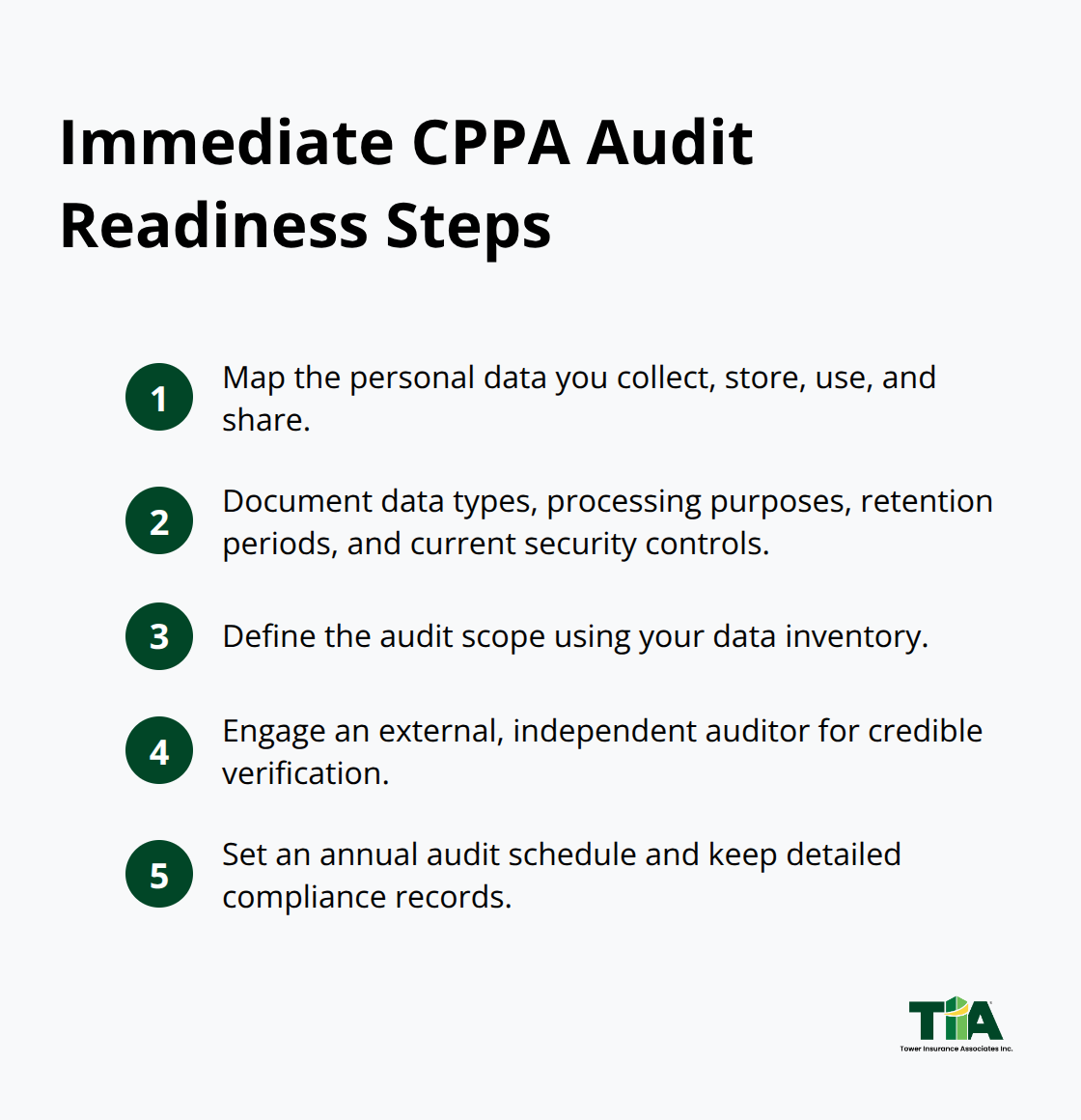
Establish an annual audit schedule now and keep detailed records of your cybersecurity controls so you can demonstrate compliance when regulators or insurers ask.
Resources and Risk Sectors
The FCC’s Small Biz Cyber Planner 2.0 provides a framework to help you create a customized plan, and resources from the National Cyber Security Alliance and Global Cyber Alliance offer free toolkits with practical resources tailored for small businesses. The emphasis on significant risk suggests higher scrutiny for sectors handling sensitive data or large customer bases, so healthcare, legal, and financial services firms in Los Angeles face the most immediate pressure to show auditable security posture. These regulatory requirements make cyber liability insurance increasingly important-coverage that protects your business when breaches occur despite your best prevention efforts.
What Cyber Liability Actually Covers
General liability policies were designed decades ago to handle slip-and-fall claims and product defects, not the digital threats that now dominate business risk. When a hacker breaches your customer database or ransomware locks your files, your standard business liability policy will not respond because cyber losses fall outside its scope. Cyber liability insurance addresses this gap directly-it covers incident response costs, forensic investigations, notification expenses, regulatory fines, and business interruption losses when a breach or attack occurs. The distinction matters enormously because without cyber coverage, your company absorbs the full average cost of a breach out of pocket, which for most Los Angeles businesses means immediate financial crisis.
First-Party and Third-Party Protection
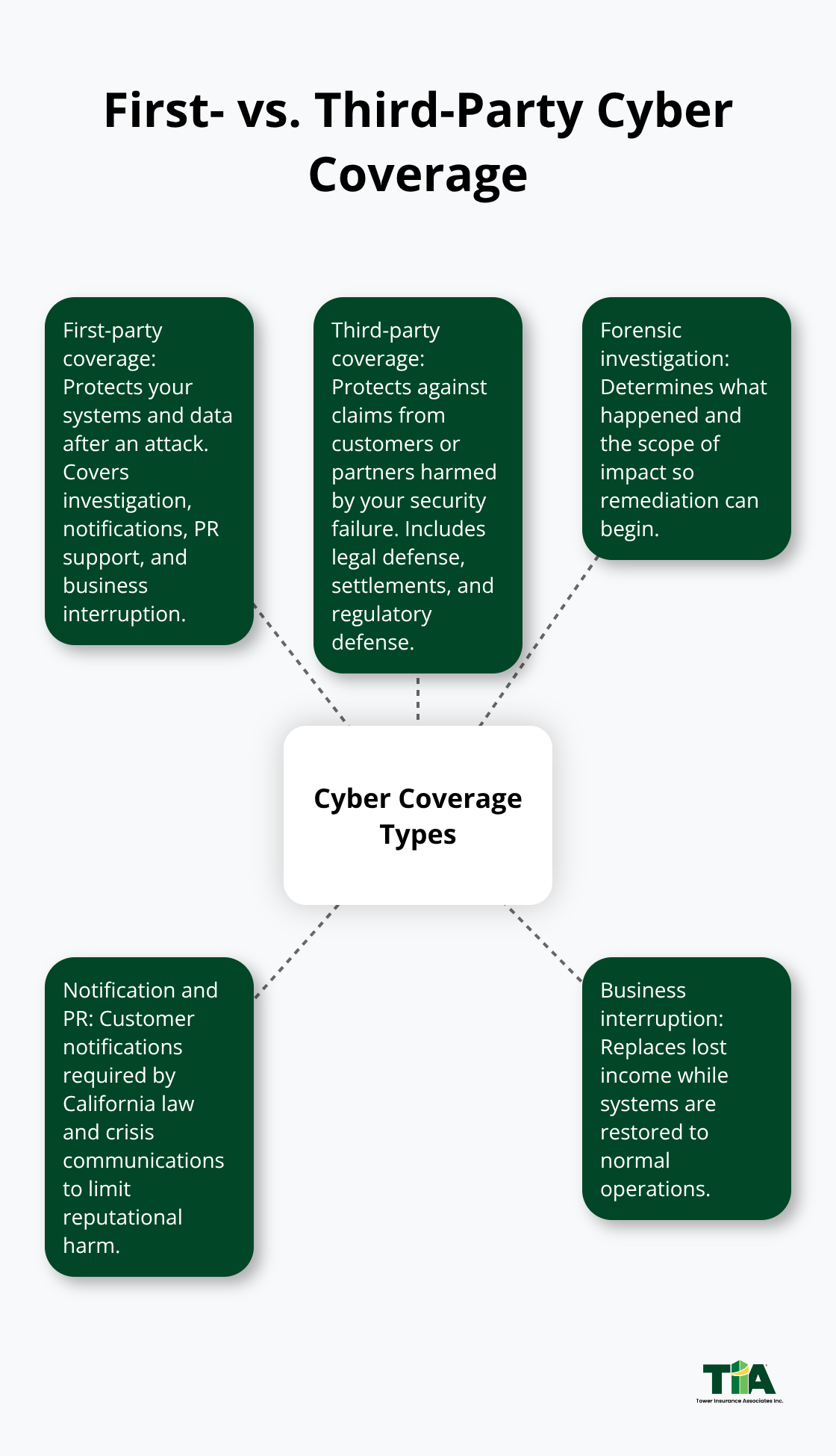
Cyber policies typically split into first-party coverage, which protects your own systems and data, and third-party coverage, which protects you against claims from customers or partners harmed by your security failure. First-party benefits include forensic investigation costs when you need to determine what happened, notification expenses required by California privacy law to inform affected customers, crisis management and public relations support to limit reputational damage, and business interruption coverage that replaces lost income while systems are restored. Third-party coverage handles defense costs if someone sues you for exposing their personal information, settlements or judgments against your company, and regulatory defense costs if the California Privacy Protection Agency or state attorney general investigates your breach.
Coverage Limits That Match Your Business Size
Protection limits vary widely based on your company’s data exposure and customer base. Small Los Angeles businesses typically purchase between $250,000 and $1 million in coverage, while midsize companies often need $2 million to $5 million depending on how much customer data they hold and process. A healthcare practice or law firm handling sensitive client records requires higher limits than a consulting firm with minimal data storage. Your actual exposure determines the protection level you need, and carriers help you calculate appropriate limits during the underwriting process.
How Carriers Calculate Your Premium
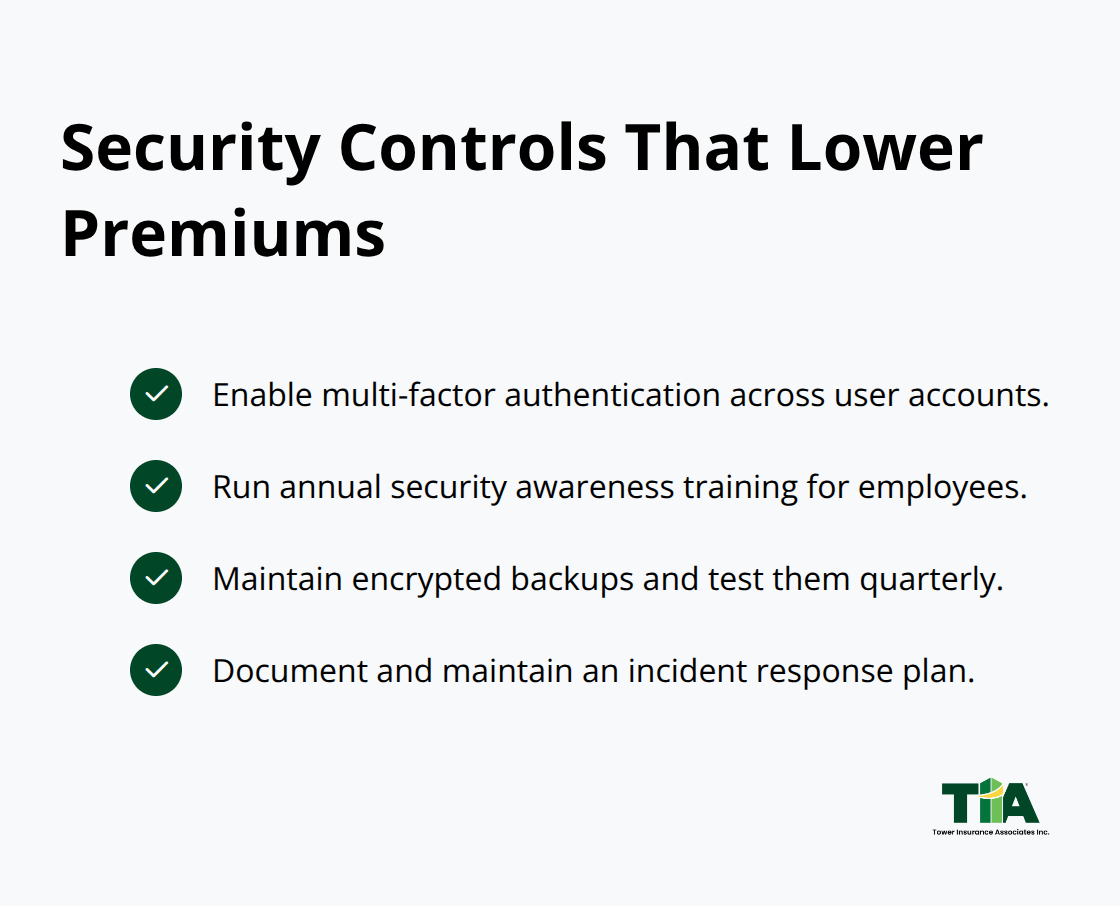
Cyber insurance carriers base premiums on concrete risk factors specific to your business, not guesswork. They examine your revenue, the number of employees with data access, whether you store payment card information or health records, and critically, your current security controls. Companies with multi-factor authentication enabled, annual security awareness training, encrypted backups tested quarterly, and documented incident response plans pay significantly lower premiums than businesses without these controls. A Los Angeles professional services firm with 30 employees and strong security practices might pay $1,500 to $2,500 annually for $1 million in coverage, while a similar firm lacking documented security controls could face $4,000 to $6,000 or even be declined coverage entirely.
Security Controls Lower Both Risk and Cost
Carriers increasingly require evidence of your cybersecurity posture before issuing a policy, which aligns directly with the CPPA’s audit requirements and the FCC’s guidance on small business security practices. This convergence means your investment in preventive security measures reduces both your actual risk and your insurance costs simultaneously. The controls that satisfy regulatory auditors-multi-factor authentication, employee training, tested backups, and incident response documentation-are the same controls that qualify you for better insurance rates. Understanding what coverage options exist is only half the equation; the other half involves evaluating which policy actually fits your company’s specific risk profile and data exposure.
Matching Coverage to What Your Business Actually Needs
Document Your Data Inventory First
Your company’s cyber insurance requirements depend entirely on three concrete factors: how much customer data you collect and store, what types of information you process, and what your current security defenses actually are. Start by documenting your data inventory-the specific personal information your business holds, where it lives, how long you retain it, and who has access to it. A Los Angeles marketing agency storing only client contact names and email addresses faces far lower exposure than a healthcare clinic holding patient medical records and insurance information, so their coverage limits and premiums differ substantially. The California Consumer Privacy Act compliance requirements mean you need documentation anyway, so use that same inventory to identify your genuine data risk.
Assess Your Security Posture Honestly
Evaluate your security defenses without minimizing gaps or weaknesses. If you lack multi-factor authentication across user accounts, have not tested your backups in over a year, or have no documented incident response plan, carriers will either decline coverage or charge premiums that reflect that vulnerability. The FCC’s Small Biz Cyber Planner provides a structured framework to evaluate your current controls against industry standards, which gives you concrete talking points when discussing coverage with carriers. Your revenue also matters-a $2 million company needs different protection limits than a $20 million firm-so calculate your potential exposure based on how many customer records you maintain and what regulatory fines you could face under California privacy law if a breach occurs.
Obtain Quotes from Multiple Carriers
Comparing quotes from multiple carriers is non-negotiable because cyber insurance pricing varies dramatically based on how different underwriters assess your risk. Obtain quotes from at least three carriers and request that each one clearly itemize what they are covering, what limits they are offering, what security requirements they impose, and what their specific exclusions are. Some carriers impose strict requirements like mandatory annual penetration testing or SOC 2 audits before they will issue a policy, while others focus primarily on your revenue and employee count. A Los Angeles professional services firm might receive quotes ranging from $1,800 to $5,200 annually for identical coverage limits, so the difference in your final cost depends entirely on which carriers you approach and how thoroughly you document your security practices.
Work with an Independent Agent
An independent agent who represents multiple top-rated carriers can shop your risk across different companies and identify which carrier’s underwriting criteria best align with your business profile. Local expertise matters enormously in this process-an agent familiar with Los Angeles business conditions understands the specific threats targeting regional companies and knows which carriers actively write cyber policies for businesses in your industry. Tower Insurance Associates, Inc., an independent insurance agency in Culver City since 1961, represents multiple top-rated carriers and works with you to compare actual coverage terms, not just price, ensuring you understand exactly what protection you are purchasing and what gaps remain.
Final Thoughts
Cyber attacks on Los Angeles businesses accelerate while regulatory requirements tighten simultaneously. IBM’s 2024 report shows breaches cost companies an average of $4.45 million per incident, and California’s mandatory audit requirements add compliance pressure that most businesses cannot ignore. A Los Angeles cyber policy tailored to your actual data exposure and security posture protects your company from financial devastation when prevention fails.
Document what personal information your business collects and stores, then evaluate your current security controls against industry standards using resources like the FCC’s Small Biz Cyber Planner. Obtain quotes from multiple carriers and compare actual coverage terms, limits, and exclusions rather than focusing solely on price. Your security investments directly lower both your risk and your insurance costs, so the controls that satisfy regulatory auditors also qualify you for better rates.
An independent agent familiar with Los Angeles business conditions understands the specific threats targeting regional companies and knows which carriers actively write cyber policies for businesses in your industry. Tower Insurance Associates, Inc. represents multiple top-rated carriers and works with you to compare actual coverage terms, ensuring you understand exactly what protection you purchase and what gaps remain. Contact us today to evaluate your cyber liability options and secure the coverage your business needs.
Disclaimer: This blog post is for general informational purposes only and does not represent actual coverage, policy terms, or legal requirements. Insurance details vary by individual and jurisdiction. Please consult a licensed insurance professional for advice specific to your situation.