
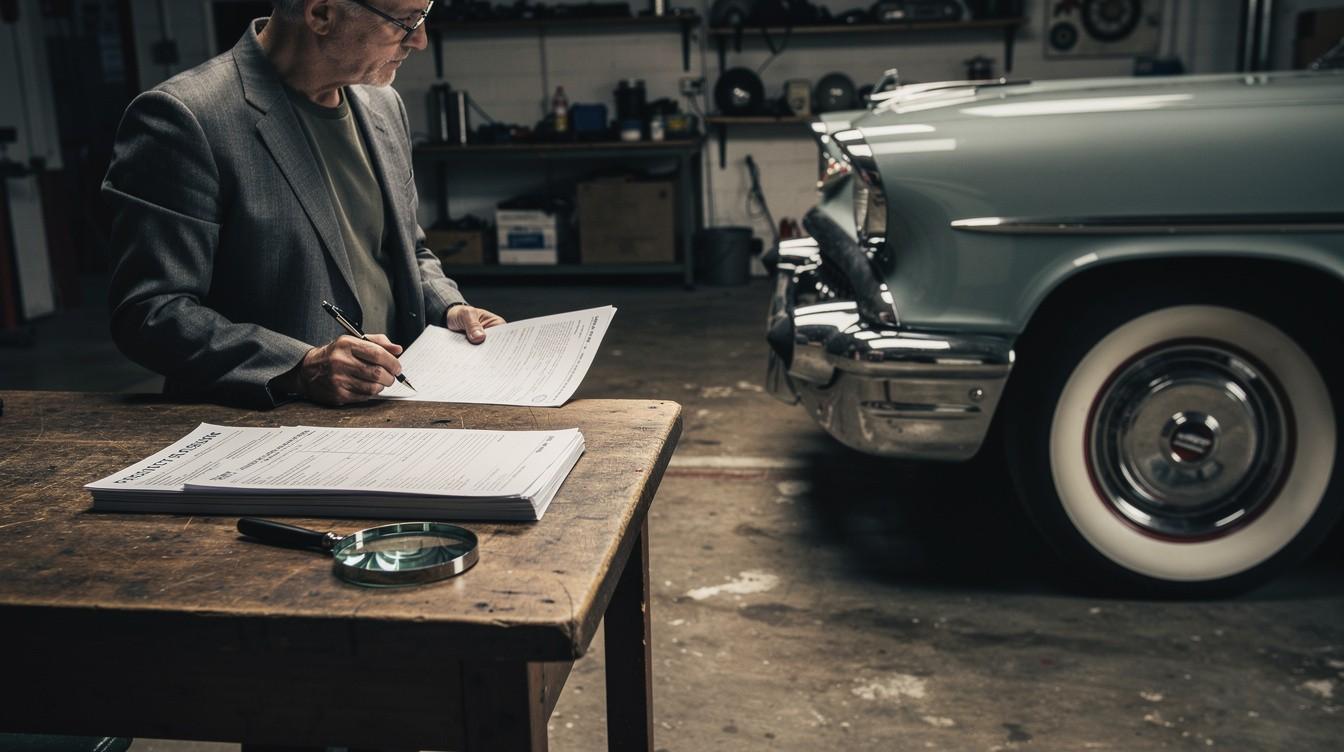
Your antique vehicle is more than transportation-it’s an investment that deserves specialized protection. Standard auto insurance simply won’t cover the true value of a collector car, which is why understanding antique auto policy basics matters.
At Tower Insurance Associates, Inc., we help collectors like you navigate coverage options designed specifically for classic and antique vehicles. Let’s walk through what you need to know to protect your collection properly.
What Counts as Antique and Why It Matters
Age Thresholds and Usage Rules
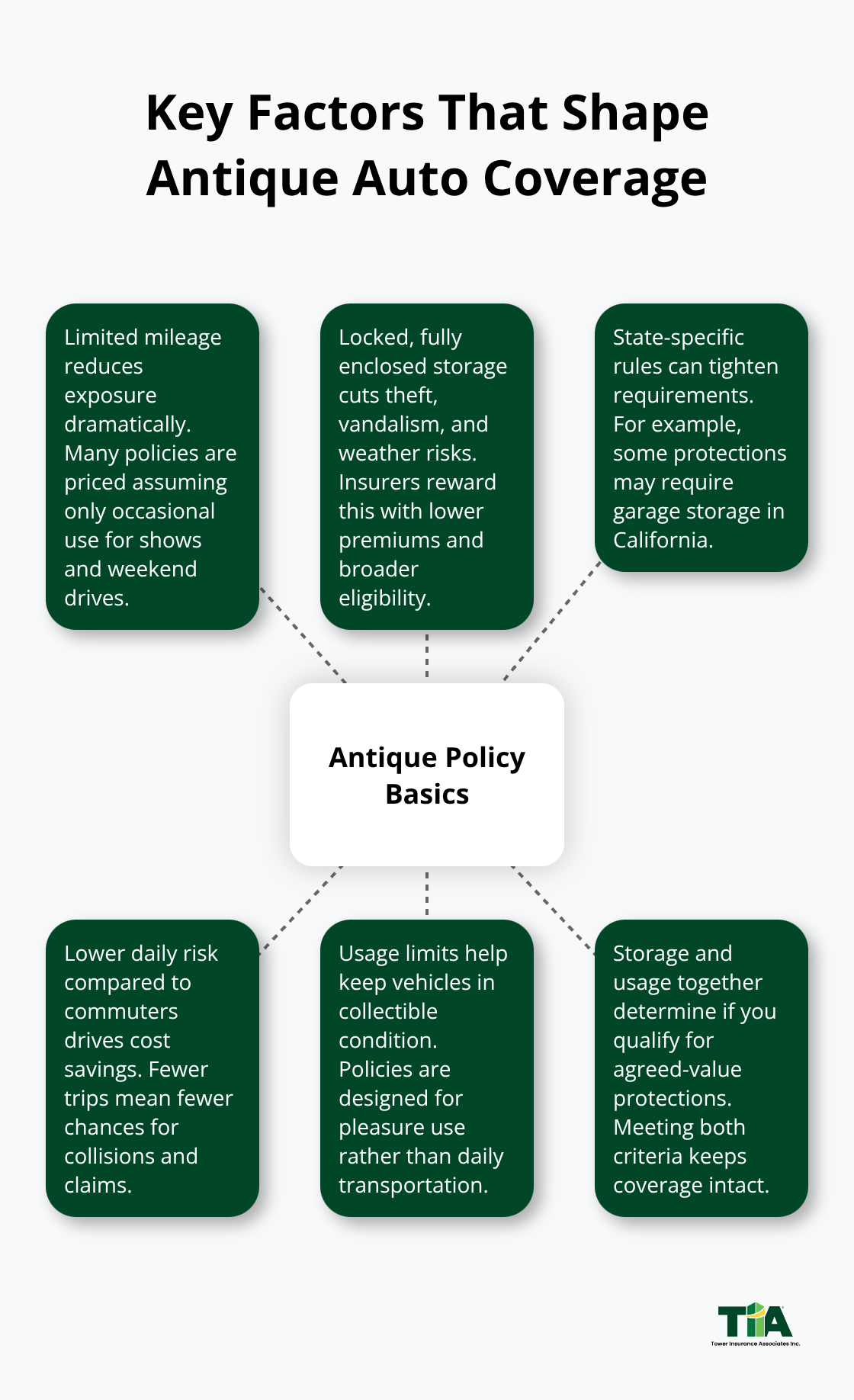
The Insurance Information Institute defines classic cars as vehicles typically 25 model years or older, though some insurers use 20 years as their threshold. What matters more than the exact age is how you use the vehicle. If your 1985 Porsche sits in a locked garage and comes out for weekend drives or car shows, it qualifies for antique auto coverage. If that same car serves as your daily commuter, standard auto insurance becomes necessary instead.
The distinction shapes your entire coverage approach because antique policies assume limited mileage. Many carriers cap annual usage at 2,500 to 5,000 miles and require storage in a fully enclosed, locked structure when not in use. Some states impose stricter storage rules; California, for example, may require garage storage to qualify for certain agreed-value protections. This usage-and-storage model is why antique auto policies cost significantly less than standard coverage-you’re not insuring a vehicle that faces daily traffic, weather exposure, and commute-related risks.
Why Standard Auto Insurance Fails Collectors
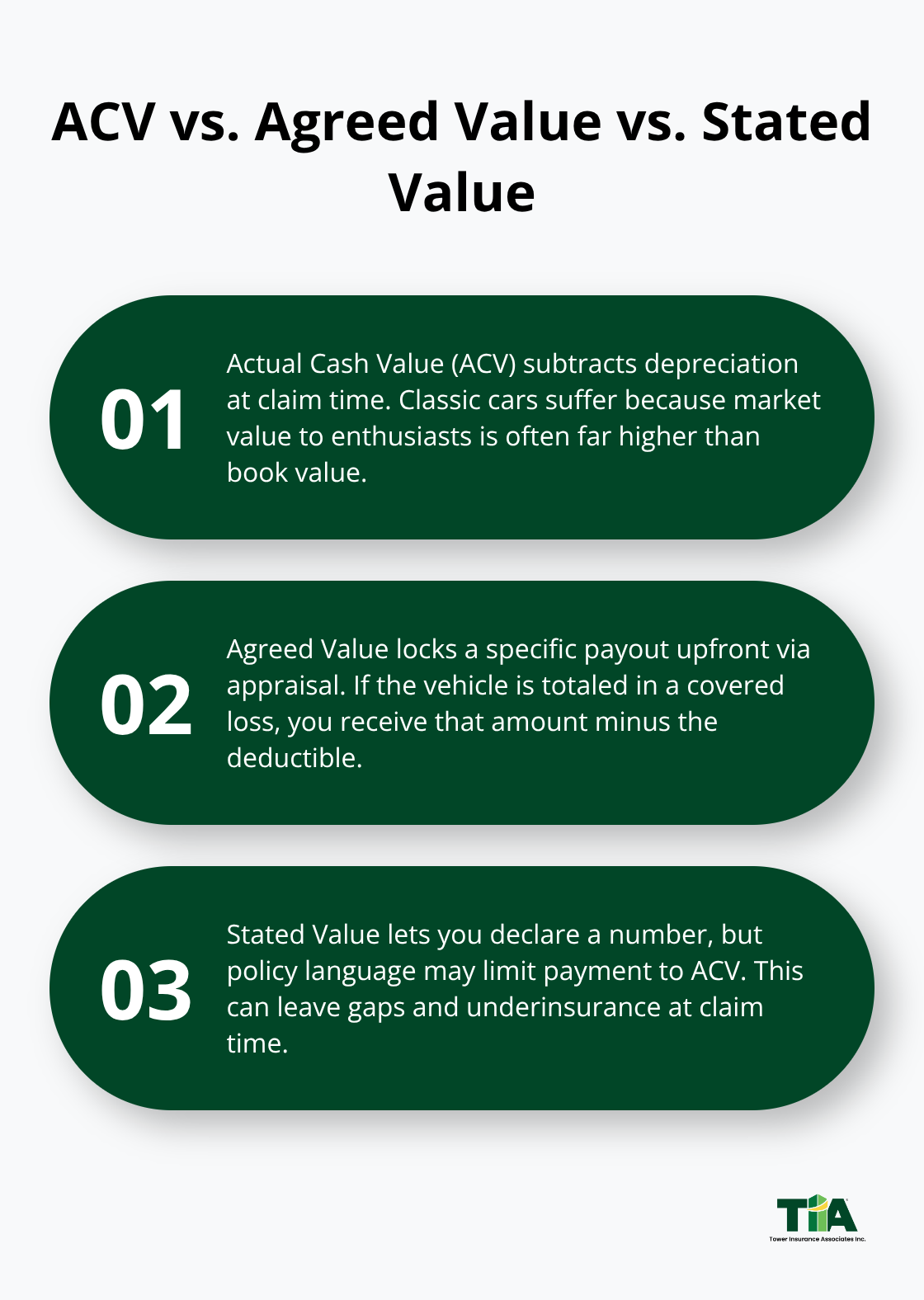
Standard auto policies fail collectors in one fundamental way: they pay actual cash value, which factors depreciation into every claim settlement. A 1972 Chevrolet Chevelle worth $35,000 today might see a $2,000 payout under standard coverage if an accident totals it, because the insurer calculates what a 50-year-old vehicle is worth on the used-car market, not what you paid or what it’s worth to enthusiasts.
Antique auto policies flip this approach entirely. Agreed-value coverage locks in a specific amount upfront through appraisal, so you receive that full amount if a covered total loss occurs, minus your deductible. Stated-value policies let you declare a value, though payouts may still be limited to actual cash value depending on policy language.
The Homeowners Insurance Gap
Standard homeowners insurance compounds the problem further-it won’t touch your vehicles at all. Your homeowners policy covers the house and contents inside it, not anything on wheels. If a fire destroys your garage and the classic cars inside, homeowners coverage protects the building but leaves your vehicles uninsured.
This gap forces many collectors to carry multiple policies: homeowners for the property, standard auto for any daily-driver vehicle, and antique auto coverage for the collection itself. The right combination of policies protects your entire investment. Understanding these distinctions helps you identify exactly what coverage you need and where potential gaps exist in your current protection plan.
Protecting Your Collection With the Right Coverage
Why Agreed Value Stands Above Other Options
Agreed-value coverage forms the foundation of serious antique auto protection, and we believe it’s the only sensible choice for valuable collectors. An agreed-value policy locks in a specific amount through a professional appraisal at the start of your coverage term. If your 1965 Mustang Fastback receives an appraisal of $42,000, you receive exactly that amount if it’s totaled in a covered loss, minus your deductible. This certainty matters because antique vehicles don’t follow depreciation curves like modern cars.
A 1963 Jaguar E-Type worth $85,000 today may be worth significantly more in five years, yet a standard actual cash value policy would pay based on outdated market assumptions.
Stated-value policies create confusion because they let you declare a value, but insurers often pay the lesser of your stated amount or actual cash value at claim time, leaving you underinsured. Agreed value eliminates this gap entirely. You’ll need a professional appraisal to establish that value, typically costing $300 to $800 depending on the vehicle’s rarity and condition. Keep that appraisal documentation alongside photos, service records, and any receipts for restoration work or parts upgrades.
Comprehensive and Collision Coverage for Your Vehicles
Comprehensive and collision coverage rounds out your protection by addressing specific risks that agreed-value alone doesn’t solve. Comprehensive covers theft, fire, vandalism, weather damage, and animal strikes-the reason why storage in a locked garage matters so much for your premium. Collision covers impact damage from accidents, though many collectors rarely face this risk given the mileage limitations. These coverages should be based on your agreed value, not some depreciated figure.
Roadside Assistance and Show Coverage
Roadside assistance deserves serious consideration if you actually drive your vehicles to shows or weekend events, since modern tow trucks cost $150 to $400 per call and standard services may not safely handle classic cars. Specialized flatbed towing protects against further damage during transport. Legal liability coverage in your antique policy works differently than standard auto liability-it’s designed for the unique exposures of car shows and exhibitions where your vehicle sits stationary. If someone trips on your display stand at a collector event and suffers injury, this coverage responds.
Spare Parts and Additional Protections
Most carriers include basic liability, but you should verify your limits match your risk appetite. If you’re displaying a $75,000 collection vehicle, minimum liability limits become inadequate. Additional spare parts coverage protects replacement components you keep specifically for that vehicle, which matters if you’ve invested $8,000 in NOS (new old stock) engine parts or suspension components.
Moving Forward With Your Coverage Plan
Agreed value is non-negotiable for serious collectors, comprehensive and collision should align with that agreed value, and roadside assistance plus show coverage deserve consideration based on how you actually use your vehicles. The next step involves documenting your collection’s condition and value-a process that requires more than casual snapshots and rough estimates.
Getting Your Collection Properly Valued and Insured
Professional Appraisals Form Your Coverage Foundation
A qualified appraiser costs $300 to $800 per vehicle and produces documentation that becomes the foundation of your agreed-value policy. This isn’t optional-it’s the document insurers use to lock in your coverage amount. The appraisal reflects your vehicle’s true current market value plus any documented upgrades, so accuracy matters far more than speed. Many collectors make the mistake of undervaluing their vehicles to reduce premiums, then face insufficient payouts after a loss. Your appraisal should capture the car’s actual worth, not a discounted figure.
Documentation That Protects Your Investment
Photograph your vehicle from multiple angles in natural light, capturing the interior, engine bay, undercarriage, and any restoration work or modifications. Include close-ups of the odometer, VIN plate, and any unique features. Store these photos alongside service records, restoration invoices, parts receipts, and previous appraisals.
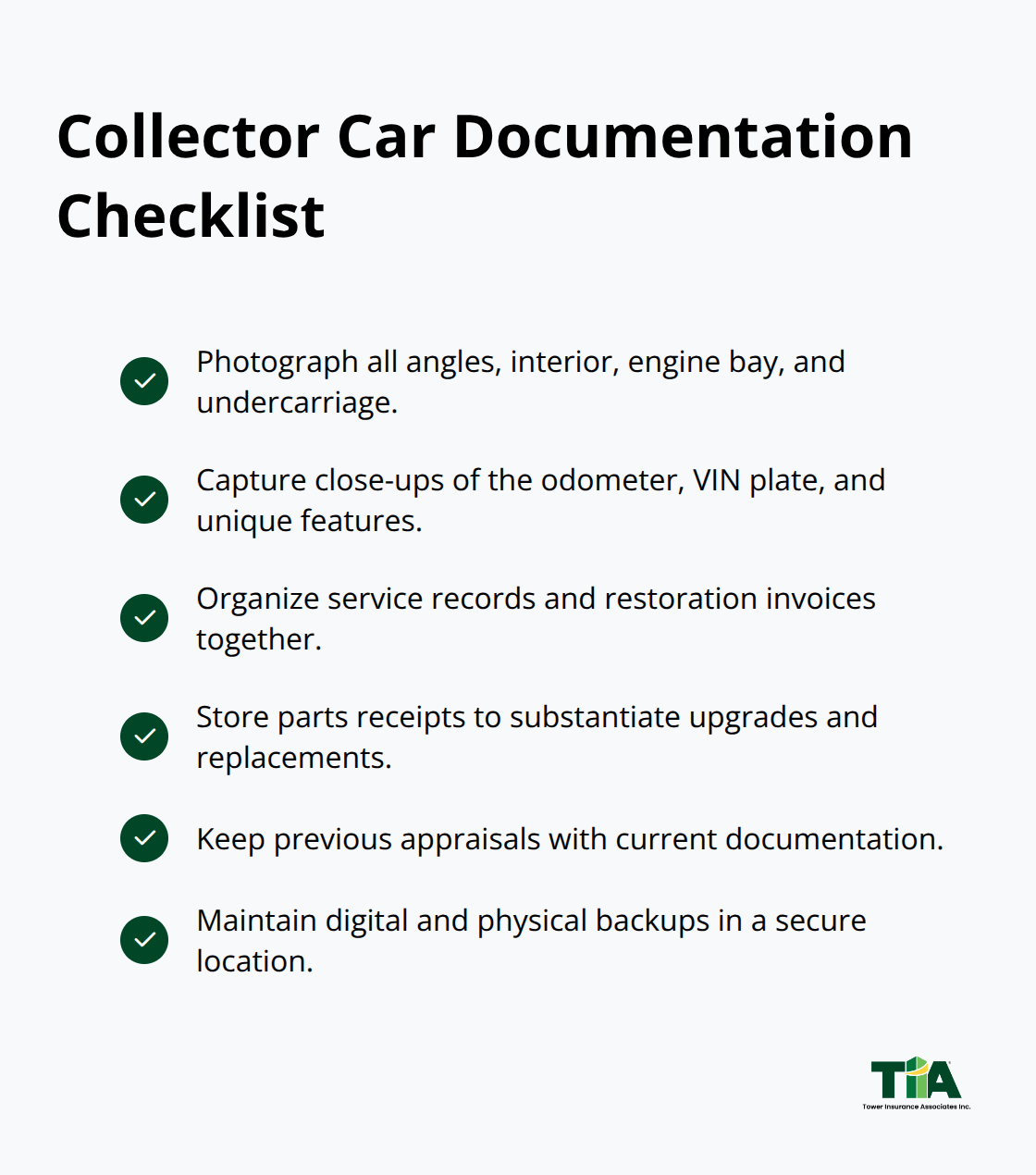
If you’ve invested $12,000 in engine rebuilding or $8,000 in upholstery restoration, those receipts prove the current value and justify a higher agreed amount. This documentation becomes critical during a claim, as it substantiates both the vehicle’s condition at policy inception and the value of any upgrades that contributed to your agreed-value amount.
Selecting the Right Insurance Agent
Work with an insurance agent who specializes in collector vehicles, not a generalist who handles standard auto policies. The difference matters because specialty agents understand agreed-value mechanics, know which carriers offer the coverages you need, and navigate state-specific storage requirements like California’s garage mandate. Ask your agent whether your policy covers spare parts and at what limit, since $5,000 in coverage may be inadequate if you’ve accumulated $15,000 in NOS (new old stock) components. An independent agent can shop multiple carriers to find the combination of agreed value, deductible options, and storage flexibility that matches your situation, whether your vehicles sit in a garage or a secured storage facility.
Annual Reviews Keep Your Coverage Current
Review your policy annually because vehicle values fluctuate and your collection may grow. If your 1967 Camaro appreciated from $38,000 to $48,000 since your last appraisal, you’re underinsured without an updated agreed value. Check your deductible structure too-some specialty carriers offer $0 deductible options that eliminate out-of-pocket costs after a claim, though this affects your premium. These annual reviews catch gaps before they become costly problems and ensure your coverage reflects both market changes and any additions to your collection.
Final Thoughts
Specialized antique auto coverage protects what standard policies cannot. Your collector vehicles appreciate in value, sit in secure storage, and serve purposes entirely different from daily transportation. Agreed-value coverage guarantees you receive the full appraised amount after a total loss, eliminating the depreciation problem that makes standard auto insurance inadequate for serious collectors.
Protecting your collection starts with three concrete steps. First, obtain a professional appraisal that reflects your vehicle’s true market value plus any documented upgrades or restoration work. Second, photograph your vehicles thoroughly and organize service records, parts receipts, and previous appraisals in one accessible location. Third, review your coverage annually as values change and your collection grows.
Contact Tower Insurance Associates, Inc. today to discuss your antique auto policy basics and protection needs. We’ve served Culver City and surrounding areas since 1961, and we’re ready to help you find the right coverage for your collection.
Disclaimer: This blog post is for general informational purposes only and does not represent actual coverage, policy terms, or legal requirements. Insurance details vary by individual and jurisdiction. Please consult a licensed insurance professional for advice specific to your situation.